Recognition for work beneath the waterline
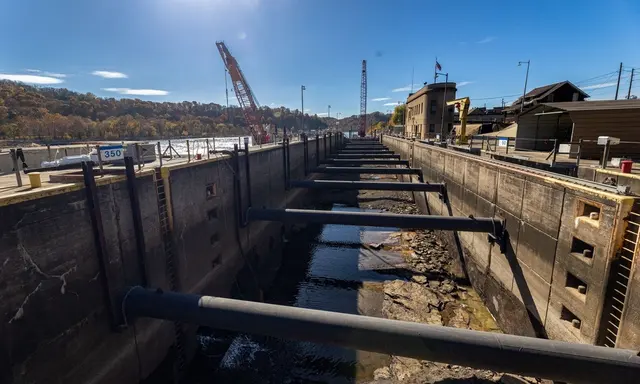
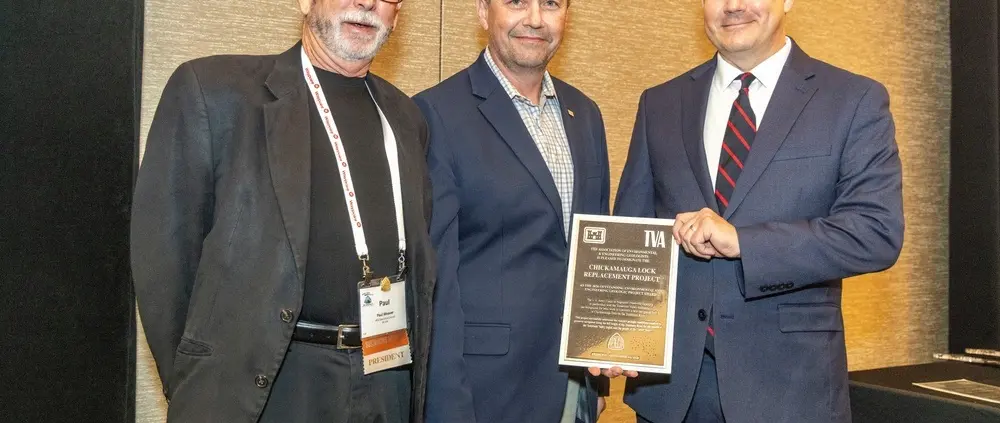
The engineering behind the replacement of Chickamauga Lock in Chattanooga, Tennessee, has received national recognition. In a report published on 6 November 2026, the US Army Corps of Engineers confirmed that the Association of Environmental & Engineering Geologists had recognised the joint work of its Nashville District and the Tennessee Valley Authority. The award was presented on 16 September, rather than on the date of the November announcement. It draws attention to an important but seldom visible aspect of navigation infrastructure: the integrity of the ground supporting the structure.
For owners and captains of luxury motor yachts exploring the inland waters of the United States, this development is an opportunity to consider the long-term reliability of the Tennessee River corridor. It is not a notice that the new lock has opened, nor does the award itself change the operating instructions that apply to recreational vessels. Its significance lies in the recognition of the technical work needed to provide a dependable connection between sections of a navigable river.
Why a lock is more than a passage
A river lock allows a vessel to move between stretches of water at different elevations. Unlike a marina entrance, a lock forms part of a regulated hydraulic system. A skipper cannot simply approach the structure and pass through at will. The operator determines when the gates can move, how the chamber fills or empties, and how traffic enters or leaves. Each of these functions depends on both the condition of the machinery and the integrity of the surrounding civil works.
A cruising yacht with substantial displacement, enclosed accommodation and a professionally managed itinerary can be particularly dependent on this infrastructure. Losing access to a link in the route may necessitate changes in overnight stops, fuel planning, guest transfers and maintenance arrangements. A redundant route is not always geographically possible. Reliable waterways therefore matter not only to barge operators but also to the businesses that service recreational boating.
The existing structure and its replacement
The Corps identifies progressive expansion within the concrete of the original lock, which dates from 1940, as a reason for the replacement programme. This type of chemical deterioration can alter the dimensions of masonry and concrete around gates and fittings. An installation may consequently require increasing maintenance and engineering intervention even when its external appearance offers little indication of the underlying problem.
The replacement project provides for a chamber measuring 110 by 600 feet, approximately 33.5 by 183 metres. That scale reflects the commercial transport role of the river. It does not establish the maximum size of recreational yacht authorised to pass, since operating conditions and vessel restrictions must be assessed independently. The infrastructure is shared by users with very different requirements, from cargo operators coordinating multiple barges to private vessels moving between cruising destinations.
Working with difficult ground
Foundation engineering is especially consequential for a lock because its walls, gates and moving equipment must retain their alignment under changing loads. Water on either side of a gate can produce enormous differences in pressure. A movement that might be tolerable in a less constrained building may have greater consequences when machinery is designed to operate within closely controlled clearances.
At Chickamauga, the project team has faced a complicated geological setting involving inclined rock strata, limestone cavities and weaker clay horizons. Rather than relying on a uniform foundation assumption, the designers had to respond to variations in the material beneath different parts of the structure. The detailed engineering programme included deep foundation elements and treatment of underground voids. This is the aspect of the work that the geology award brings into focus: the solution must suit the actual site, rather than an idealised representation of it.
The importance of alignment and continuity
A yacht owner is familiar with the need for precision in components such as propulsion shafts, rudder bearings and stabiliser installations. The same principle, at a vastly different scale, applies to the relationship between a lock gate and the walls into which it closes. A reliable seal and predictable motion depend on structural geometry as well as mechanical condition.
Civil engineering also involves processes that are not readily reversible. Once a large concrete element is in place, altering its foundations can be difficult, expensive and disruptive. Understanding ground conditions early in a project therefore reduces dependence on subsequent corrective measures. During construction, observations and testing can help the engineers determine whether actual conditions correspond with their design assumptions. Recognition for geological engineering reflects the importance of those disciplines working together, rather than being treated as separate activities.
A corridor extending beyond Chattanooga
The value of this particular navigation connection is not confined to the immediate vicinity of the dam. The Corps estimates that the project protects access to 318 navigable stream miles upstream. A yacht travelling along the river experiences the waterway as a network of connected reaches, not as an isolated collection of individual locks and reservoirs.
That distinction matters when choosing cruising bases. A destination may have attractive berthing, shore services and sheltered water, yet the practical accessibility of those facilities can depend on a structure many miles away. A skipper planning an extended passage should establish the status of each essential link, rather than assuming that an open marina implies an unrestricted upstream route. The availability of a berth and the availability of a navigable passage are different questions, and both need answering before departure.
Commercial traffic and recreational planning
The Corps expects substantial improvements in commercial lockage efficiency from the larger replacement chamber, including the ability to accommodate nine large barges in a single tow movement. Those engineering expectations must not be translated directly into forecasts of recreational waiting times. The time experienced on a particular passage depends on scheduling, traffic, water conditions, equipment availability and the instructions of the lock operator.
For luxury yacht operators, the principal benefit of improved shared infrastructure would be greater confidence in the viability of the route over time. A faster commercial process may also help reduce some sources of congestion, but that outcome cannot be guaranteed for every visiting yacht. Recreational skippers should allow flexibility when preparing itineraries. Precise arrival deadlines contingent on immediate passage through a lock can introduce avoidable pressure, particularly when guests expect onward ground transport or have arranged flights.
Implications for yachts in the 12–24 metre market
A vessel in the Luxury Yacht Guide size range occupies a different operational space from a small open leisure boat. It may need more extensive shore support, have a higher air draft, carry additional tender equipment, and require a greater depth of water. The combined configuration of the yacht and its equipment matters. A tall aerial or mast that can be lowered may alter clearance planning; a fixed flybridge or radar arch may present different restrictions.
Lock chamber dimensions alone do not resolve these considerations. Approach channels, overhead obstacles, prevailing river levels, local traffic controls and the availability of suitable waiting areas all influence passage planning. A captain should use current official navigation information, the yacht's actual dimensions and the specific instructions issued for the route. An award announcement is useful background for understanding the infrastructure, but cannot substitute for those sources. The decision to attempt a passage remains operational and must reflect the conditions at the time.
Benefits for the surrounding marine economy
A navigable inland waterway can sustain a diverse local marine economy. Businesses involved in yacht repair, mechanical servicing, berthing, fuel supply and provisioning benefit when visiting vessels can reach them reliably. The potential influence extends ashore to hospitality and other visitor services, particularly where cruising itineraries include longer stays rather than a simple through passage.
The reverse is also worth considering. Uncertain access can make long-term investment decisions more complex. A marina operator considering additional facilities for larger recreational vessels must assess the entire route by which prospective clients would arrive. A yacht manager assessing a service centre must consider how the vessel can reach it and return to its cruising area. Such decisions should depend on verified navigation capability and commercial demand, not merely on the nominal capacity of a future lock.
What owners should monitor next
The award provides an encouraging account of the engineering effort, but it does not provide a commissioned opening date or confirm current availability of the new structure. Subsequent official project updates and navigation notices will determine when its operating capabilities become relevant to actual itineraries. Captains planning a Tennessee River passage should also confirm the status and restrictions of other structures along the chosen route.
The wider lesson from Chickamauga is that the quality of a cruising destination is partly determined by infrastructure that guests may never notice. A safe and predictable journey depends on maintenance, foundation stability, trained operators and functioning equipment throughout the network. The November announcement makes that usually hidden work visible, recognising a contribution that underpins both commercial navigation and the continued enjoyment of the river by recreational yacht owners.
Sources and photograph
Source documentation: https://www.dvidshub.net/image/10075868/corps-engineers-tva-earn-national-geology-award-chickamauga-lock-project, https://www.dvidshub.net/news/578777/corps-engineers-tva-earn-national-geology-award-chickamauga-lock-project. Photograph: Chickamauga Lock geology award presentation, 16 September 2026 — U.S. Army Corps of Engineers Nashville District / Christopher Grissett, via DVIDS. Official public-domain U.S. Army photograph, credited to the named photographer; The appearance of U.S. Department of War (DoW) visual information does not imply or constitute DoW endorsement. See DVIDS copyright information.