An autumn programme documented by the Corps
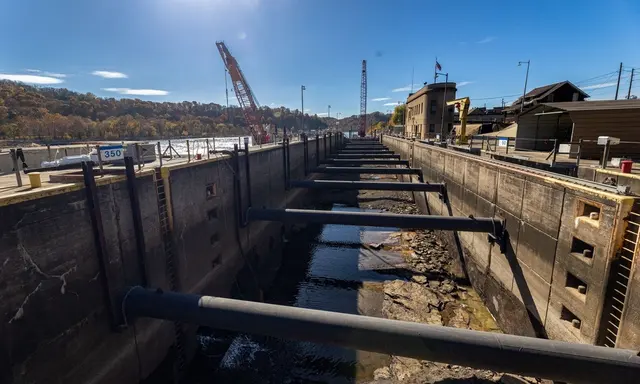
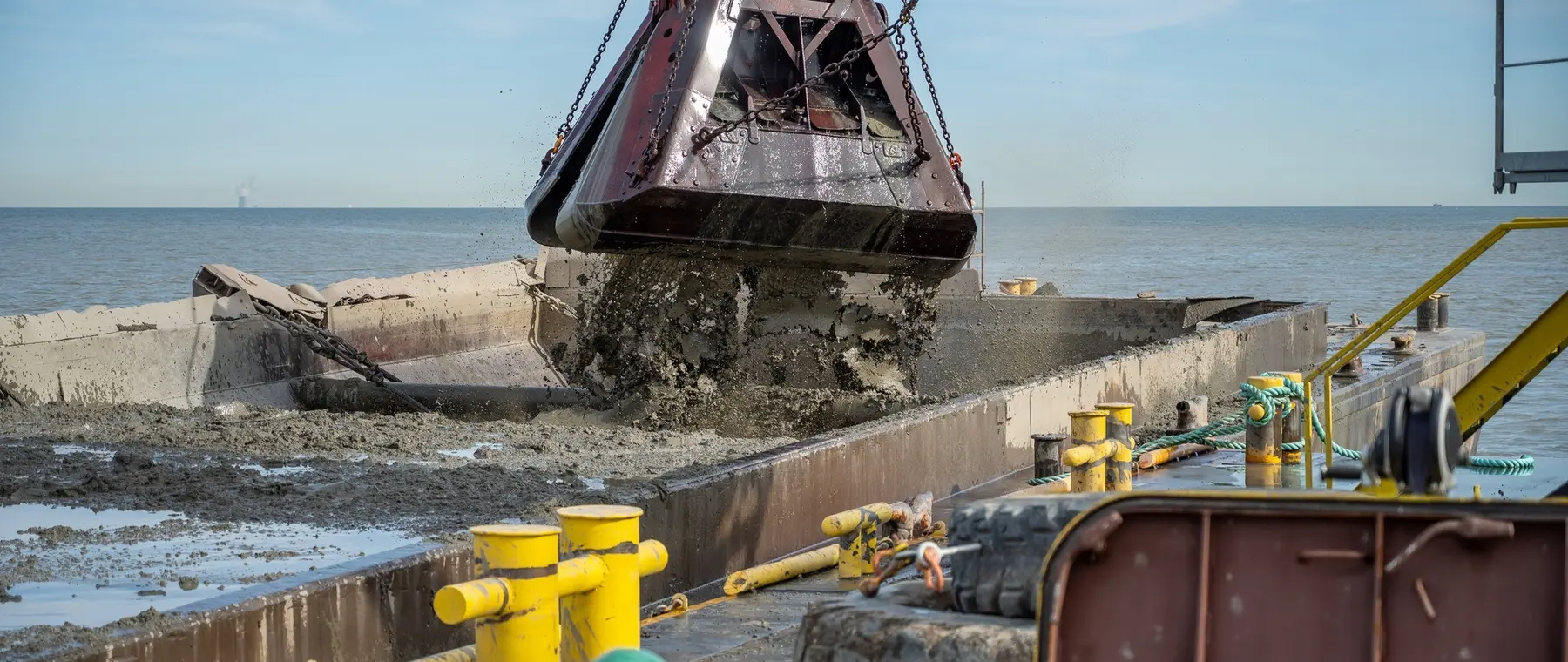
The United States Army Corps of Engineers has set out the arrangements for its largest annual Great Lakes dredging operation at Toledo Harbour. In its 30 September 2026 announcement, the Buffalo District identified 2 October as the scheduled start of work, with the programme expected to extend into January 2027. Approximately 750,000 cubic yards of sediment are contracted for removal. Official photographs taken on 9 October and published on 13 October document work taking place in the Maumee River federal navigation channel. The published material establishes that the programme was under way in October, but does not provide a cumulative November removal figure or confirm the date on which it will finish.
The autumn maintenance programme has relevance beyond commercial transport. Owners and operators of 12-to-23.99-metre yachts visiting the western part of Lake Erie use some of the same waterways and must take account of the activity associated with a substantial industrial harbour. Understanding the geographical scope and original timetable of the work can help crews plan cruising and maintenance schedules without confusing the completion of one part of a project with unrestricted access throughout the wider port.
From Maumee Bay to the upstream turning basin
According to the September announcement, the programme addresses sections of the river and lake channel, extending from the Maumee River mouth at Maumee Bay towards the upstream turning basin. This is a working navigational system in which the dimensions required by commercial ships differ considerably from the requirements of many yachts. Sediment arriving through natural processes and waterways can gradually alter navigable depths. Maintenance dredging is a response to those changes.
For yacht owners, the channel has significance as the connection between lake waters and facilities served by the river. The existence of a maintained channel does not establish the depth or suitability of every route outside it. The approach to an individual yacht berth may take a vessel through water managed by an entirely different organisation. A skipper should therefore identify the boundaries of the maintained channel, the berth approach and any areas where recent survey information may be required. The relevant chart datum and actual water level should also be understood before making decisions concerning the vessel's under-keel clearance.
A two-year contract and distinct annual tasks
The contractor for the programme is Ryba Marine Construction Company, based in Michigan. The Corps identifies a two-year contract totalling $11.1 million. The first task order, issued on 6 August 2026, amounts to $5.3 million. A second task order estimated at $5.8 million is expected in 2027.
These figures describe the commercial arrangement under which the dredging is managed. The contracted quantity does not establish the amount of material actually removed by any particular date. Similarly, the anticipated second task order should not be interpreted as a complete guarantee of identical work locations or schedules in the following year. Maintenance programmes respond to the condition of the navigation channel and the funds made available. The importance of a multi-year arrangement lies in providing a degree of continuity for planning the equipment, staff and sediment placement requirements. Visiting yacht crews should pay attention to the actual operating notices for the relevant period rather than treat the overall financial commitment as evidence that the channel is continuously free of work.
The difference between an authorised channel and a measured depth
A navigation channel is maintained towards a defined set of requirements, but its actual physical condition can vary over time. A change in the level of the water can alter the depth available beneath a vessel even where the underlying riverbed has not changed. Sediment movement can create localised variation as well. Yachts with relatively shallow draught may have more freedom in some circumstances than deep commercial ships, but they still face restrictions associated with the operating environment.
The work being undertaken at Toledo should therefore be understood as a programme to maintain navigable access, not as a blanket depth assurance for any proposed route. Chart information, official notices and the particular vessel's operating requirements should be considered together. The depth necessary at a marina or service facility also depends on where the yacht will actually manoeuvre and the clearance required when alongside. Crew members arriving from a different region should avoid assuming that the arrangements familiar to them in a tidal marine harbour can be applied unaltered to Great Lakes ports.
Removed material and confined disposal facilities
The Corps states that the sediment removed during the programme will be placed in confined disposal facilities operated by the federal agency and the Toledo-Lucas County Port Authority. These are important elements of the dredging operation because removing material from the channel requires an established destination to receive it. The handling process can involve equipment and vessels whose movements are connected both to the dredging site and to the placement facility.
The announcement does not provide the chemical or physical analysis of every portion of sediment to be removed. The placement arrangements should not be interpreted as evidence that removed material has a uniform composition or that a particular environmental outcome has already been achieved. For a yacht skipper the immediate relevance is that transportation of the material forms part of the active harbour operation. A vessel that is not at the actual dredging location may nonetheless encounter traffic associated with the programme. Local information concerning the work and the normal operation of the port remains useful throughout the wider area.
Understanding the scale of commercial traffic
Toledo handled approximately 11 million tons of cargo in 2023, according to the Corps' September report, which identifies iron ore, coal and lignite among the most important categories. Waterborne transport supports more than 2,800 direct, indirect and induced jobs in the associated transportation sector, according to the published economic figures. These observations explain why maintenance of the channel is given considerable attention.
A luxury yacht arriving in such a harbour should recognise the operational requirements of substantially larger commercial vessels. A ship may be constrained by its draught or by the space available to complete a manoeuvre. The movements that appear convenient to the smaller vessel may conflict with the operation of the ship or the work being performed in the channel. Skippers should plan for those conditions using the appropriate navigation rules, current information and observations rather than rely on an expectation that larger vessels will change their intended movements.
The economic figures supplied by the Corps do not measure the importance of private yachting in the port. Nor do they establish future cargo traffic levels. They are relevant because they provide context for the type of waterway in which yacht movements take place.
Planning an autumn or winter visit
The programme's original schedule extends beyond the principal summer cruising months. A yacht owner wishing to arrange a technical visit, seasonal berth or passage during that period should establish whether the intended marina or contractor is operating and what restrictions apply. Service availability may differ substantially between a summer visit and a late-season arrival.
The October photographs show that dredging equipment was present during the early part of the scheduled programme. They do not constitute a current notice to mariners or establish the precise location of equipment today. A useful planning process should include the current weather outlook and information concerning the harbour and destination. Crew members should also establish whether the yacht's own arrangements are suitable for the expected conditions, particularly if the plan includes a lengthy period alongside or time spent away from the normal cruising area.
It may be preferable to adjust arrival plans when forecast conditions are unsuitable or when an alternative time provides a less demanding passage. An announced completion date for engineering work should not become the sole consideration governing those decisions.
Following progress through verifiable notices
The September and October releases provide a factual basis for understanding the extent of the work at Toledo. The $11.1 million contract covers two annual tasks, while the current programme aims to remove approximately 750,000 cubic yards under the initial $5.3 million order. The Corps' official photograph released on 13 October illustrates the activity that was taking place in the river on 9 October.
For the yachting community, the most valuable information will continue to be the precise operational notices and updates applicable to the intended route. The published plan remains a schedule and does not establish the amount removed by 15 November. A visiting captain should confirm the navigational situation and the availability of suitable marina facilities separately. Toledo is a particularly instructive example of the relationship between industrial infrastructure and recreational navigation: an individual yacht's access is influenced by a maintenance programme whose scale and primary economic purpose extend well beyond yachting. Knowing that relationship helps owners approach a busy working harbour with an appropriate understanding of the environment in which they will operate.
Sources and photograph
Source documentation: https://www.dvidshub.net/image/10009325/largest-dredging-operation-great-lakes, https://www.dvidshub.net/news/575986/largest-great-lakes-dredging-operation-supports-1b-economic-impact, https://www.dvidshub.net/news/571994/largest-great-lakes-dredging-operation-starting-fall-2026. Photograph: Maumee River dredging at Toledo, 9 October 2026 — U.S. Army photo by Andre’ M. Hampton, USACE Buffalo District / DVIDS, 9 October 2026; public domain.. Official public-domain U.S. Army photograph, credited to the named photographer; The appearance of U.S. Department of War (DoW) visual information does not imply or constitute DoW endorsement. See DVIDS copyright information.