The unseen craft behind a cruising yacht's interior
The first impression of a luxury cruising sailboat usually comes from its light, layout and finishes. Behind those visible details is a demanding sequence of manufacturing decisions: every panel must fit the hull, every cabinet must remain secure at sea, and services have to be accessible without spoiling the design. Dufour has opened a window on this less-publicised side of boatbuilding in a 22 October 2026 account of its woodworking programme.
The French builder's explanation connects an industrial cutting facility at Le Thou near La Rochelle with the manual joinery carried out at its Périgny yacht factory. It is a useful reminder that a contemporary yacht interior is neither simply furniture assembled on a production line nor a fully handcrafted object. It depends on the cooperation of designers, computer-controlled machinery and skilled fitters, each doing work best suited to its strengths.
Le Thou turns design drawings into accurately cut components
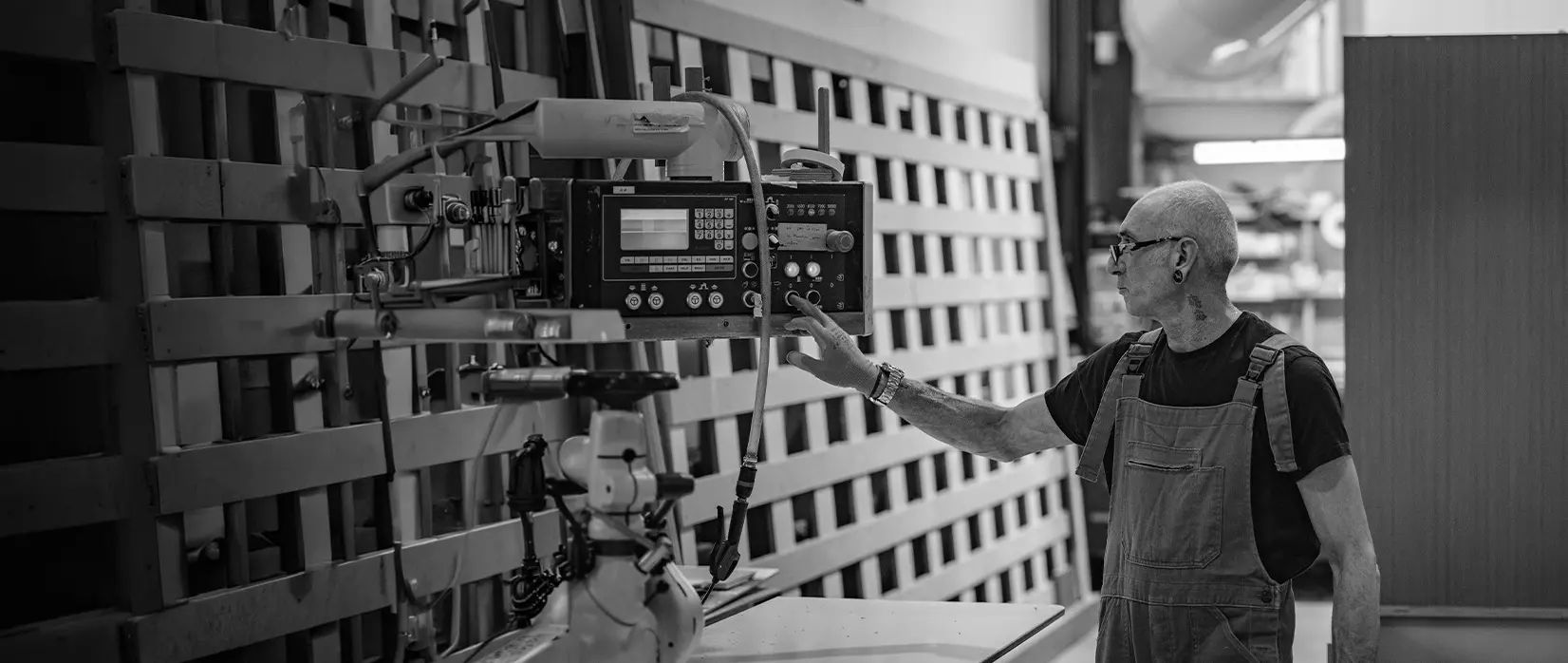
Dufour identifies Le Thou as the first major stage in its interior-woodworking chain. The group facility opened in 2019 and covers more than 6,000 square metres, preparing wooden parts to meet the requirements of the sailboat production lines. Design-office drawings are translated into machine programs, linking dimensions on screen to the panels and components that will eventually be fitted onboard.
An automated panel-storage system supplies cutting machinery according to the production schedule. Dufour says a CNC machine is dedicated specifically to its sailboat components. The principal advantage is repeatable accuracy: pieces produced for different hulls must meet the same drawing requirements before joiners can begin the fitting, finishing and adjustment work that distinguishes a carefully completed interior.
A different cutting strategy aims to reduce waste
One especially telling change began in 2025. Dufour says Le Thou introduced a system it describes as dynamic cutting, which can arrange components required for several boats on the same sheet rather than treating each yacht's list in isolation. Better utilisation of the panel is the stated aim. The builder has not published an independently reviewed waste-reduction percentage in this account, so the improvement should be understood as a production method rather than a quantified environmental result.
For prospective owners, this operational detail matters because efficient use of materials can coexist with strong attention to individual fit and finish. A computer-cut panel is only an intermediate product, however. Precision at the cutting stage cannot guarantee a silent locker, an accessible inspection hatch or attractive grain matching without the later stages being handled carefully.
The modular stage simplifies the work onboard
Dufour's second stage groups individual cut pieces into larger subassemblies before they reach the yacht. Some of that preliminary assembly is performed at Le Thou, shortening the work that must be carried out within the confined spaces of a hull. This modular method can make fitting sequences easier to organise and helps the factory repeat solutions that work across different boat configurations.
The approach also supports alternative interior plans. A cruiser used for family holidays may require a different cabin or storage layout from a boat primarily used by a couple sailing offshore, even if the external hull and deck dimensions are related. Dufour presents its production process as one that can accommodate these variations while maintaining a consistent standard of manufacture.
Périgny is where the machines give way to joiners
At the Périgny shipyard, Dufour's woodworking teams take over the preparation, assembly and installation of interior elements. According to the builder, this includes fitting solid-wood pieces, coordinating timber tones, applying edge banding by hand and installing natural teak. These are visible signs of workmanship, but their durability also depends on what lies behind the decorative surfaces.
A saloon table, locker front or galley module must tolerate the yacht's motion, vibration and repeated loading. An attractively aligned door is of limited value if its hinge loosens in a seaway or a hidden pipe cannot be inspected without damage. The yard therefore describes its joiners working in coordination with electrical, plumbing and other technical teams rather than finishing the woodwork entirely separately.
Why cross-trade coordination has real owner value
A modern cruising yacht places equipment into spaces that were once mainly storage. Refrigeration, charging systems, air conditioning, tank monitoring, entertainment cabling and water services all compete with usable lockers and living areas. When those systems are fitted without a coordinated interior plan, later servicing may require inconvenient dismantling or obscure important inspection points.
The Dufour release does not establish maintenance outcomes for any single boat, but it provides a practical question for buyers to ask at handover. Where are the electrical and plumbing service routes, which panels can be removed, and what is the approved procedure for gaining access? Clear answers can be as valuable in daily ownership as a beautifully finished bulkhead.
The finish should be assessed in ordinary use
Luxury in a cruising yacht is felt through details that survive repeated handling. Drawer slides must work when loaded, locker latches must remain secure at sea, and table edges should resist premature wear. As light changes through the day, matched timber tones and precisely aligned seams become more obvious than they are during a fast tour of a boat-show display.
A careful owner inspection might therefore include opening storage, testing catches and examining the transitions between wood, upholstery and moulded surfaces. Such checks are not an assertion that Dufour boats have hidden defects; they are sensible buying habits for any premium production yacht. The maker's new behind-the-scenes explanation gives interested owners a clearer understanding of the processes that those checks ultimately test.
Technology and craftsmanship serve different purposes
It would be simplistic to describe CNC technology as replacing a traditional craft. In Dufour's system the machines create precise components, modular production organises them, and trained joiners make the final selections, adjustments and connections within the vessel. Successful execution depends on all of these contributions. Accuracy becomes useful only when it is translated into a comfortable, well-installed interior that continues to perform as the yacht moves.
Nor should a production-efficiency improvement be confused with a guarantee of environmental performance. Fewer offcuts can be a worthy aim, but owners concerned about sustainability may also want to ask about timber sourcing, adhesives, coating systems, component repairability and the expected life of joinery. The October release explains a process; it does not supply a full independent lifecycle assessment.
What this 2026 insight means for the Dufour range
Dufour markets a family of cruising sailboats in which owners can select layouts and equipment to match their preferred style of sailing. Its latest woodworking account is consequently more than a factory tour: it describes how the yard attempts to provide variation at the design stage without losing repeatability during production. That tension between choice and consistency affects many mid-size luxury yacht builders.
For future owners, the most useful takeaway is the importance of asking questions beyond fabric colours and cabin counts. A yard should be able to explain how its furniture is manufactured, fitted, secured and serviced, and a sea trial should test more than straight-line speed. Dufour's 22 October 2026 account puts those practical details in the spotlight and gives buyers a framework for looking more closely at the craft behind the décor.