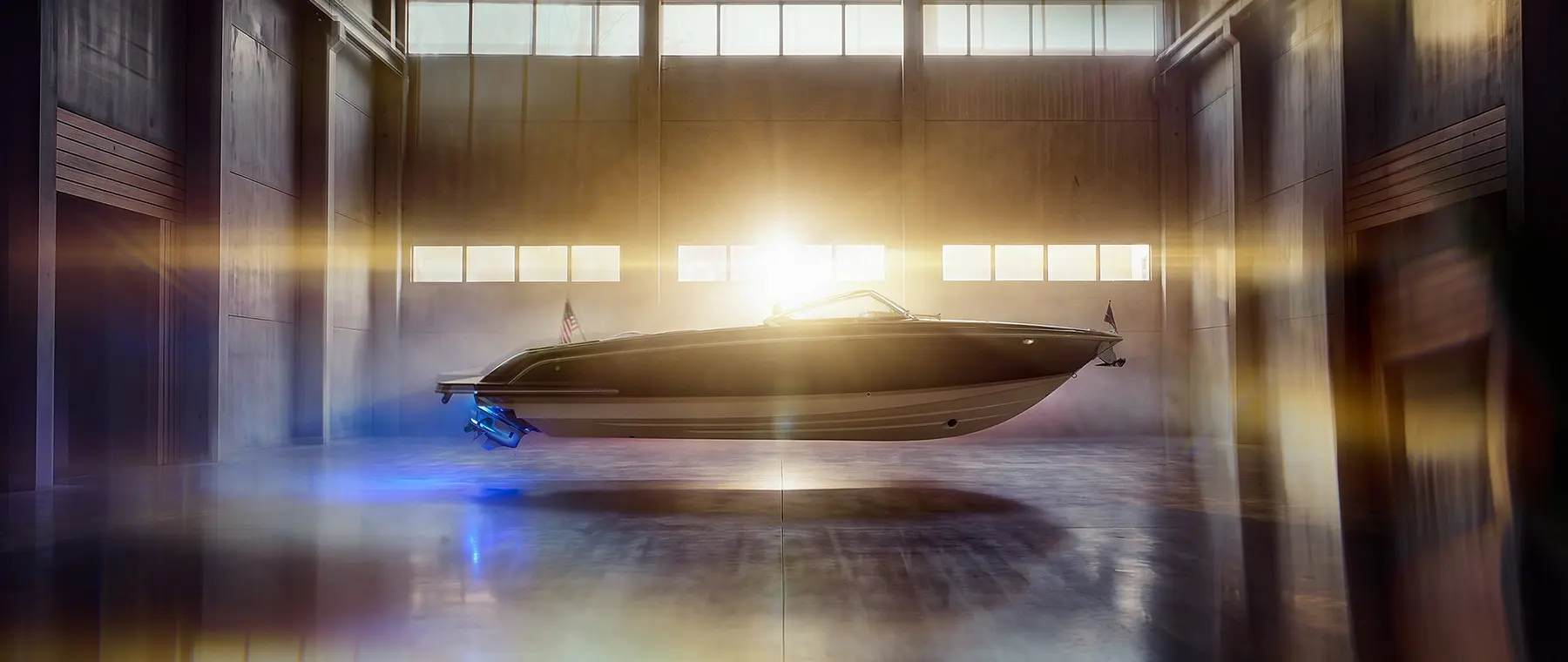
The Corsair name returns
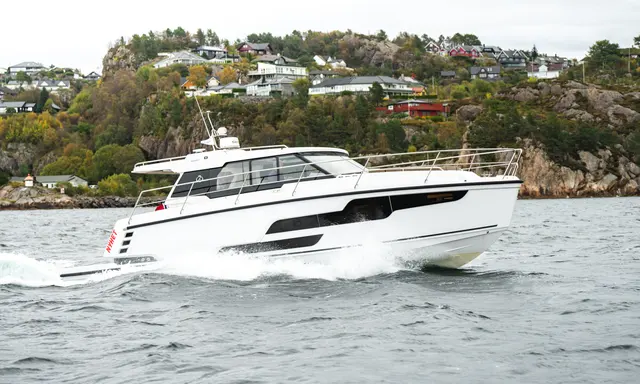
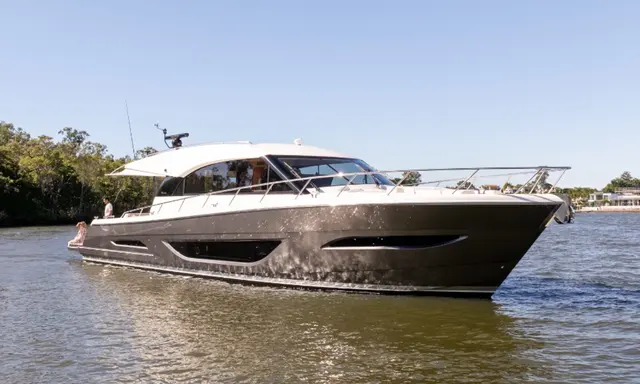
Chris-Craft has reintroduced the Corsair 27 as an intentionally elegant alternative to the ordinary open-bow dayboat. Announced in September 2026, the new model is due to make its autumn boat-show appearance at Fort Lauderdale between 28 October and 1 November. The builder has kept a low, classic silhouette and an enclosed teak foredeck, while reworking the helm, seating and electronics for contemporary ownership.
It is a combination with a clear audience. Owners who value American boatbuilding heritage and the finish of a luxury yacht can enjoy those qualities in a boat designed primarily for leisure days close to shore. The Corsair does not need to offer every function of a larger cruiser to justify its identity; the design puts social comfort and visual coherence ahead of versatility at all costs.
What the published dimensions tell us
The current Chris-Craft model page lists length overall as 27 feet 8 inches, or approximately 8.4 metres, and beam at 8 feet 6 inches. It gives a dry weight of 6,180 pounds with a specified Mercury engine installation and a 69-US-gallon fuel tank. These are manufacturer figures and can vary with equipment, load and engine choice.
The listed draft is 1 foot 8 inches with the engine up and 3 feet 1 inch with it down, figures worth noting for anyone using tidal creeks or tight marina entrances. A dayboat this size is manoeuvrable compared with a large cruiser, but propeller clearance and local depth are still limiting factors. The owner should verify the actual boat’s loaded draft and use contemporary charts before entering unfamiliar shallows.
A closed teak foredeck defines the design
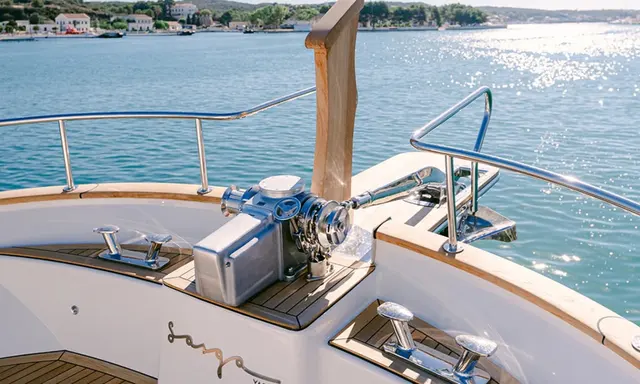
The fully enclosed teak bow is the visual signature of the revived Corsair. It stretches cleanly toward the stem rather than dividing the forward space into additional seats, and Chris-Craft says storage is provided beneath. This arrangement trades one style of seating flexibility for a long, uncluttered profile associated with classic luxury runabouts.
The manufacturer offers standard, Heritage Trim and Heritage Edition treatments, allowing buyers to choose different levels of timber detailing across the deck and cockpit. Beyond appearance, teak has practical maintenance implications, especially in sunny saltwater environments. Owners should ask the dealer about approved cleaning methods, the surfaces included in each trim and the upkeep required to preserve the intended finish.
The redesigned helm changes daily use
Chris-Craft describes wider helm-seat surfaces, improved cushioning and integrated stainless-steel grab points. The seats can rotate to face aft, connecting the driving position to the cockpit seating when underway duties have ended. That simple change matters on a runabout, where the helm is a large part of the usable social area.
The central navigation display is a Garmin 1543xsv ultrawide unit integrated with Garmin EmpirBus digital switching. Lighting, electrical power management, navigation information and vessel monitoring can be brought together in one modern interface. A good handover should still cover back-up controls, manual overrides and basic fault recovery, because the ease of a clean dashboard depends on what happens when electronics need attention.
Social space without visual clutter
The aft cockpit is where this design must justify its dayboat ambitions. Seating needs to support conversation at rest, secure passengers in a moving boat and leave enough room for everyone to move safely to and from the water. The revised helm arrangement appears intended to make those different activities feel natural rather than requiring guests to work around the furniture.
An optional powered Bimini extends shelter while remaining concealed when stowed, according to the builder. Shade may be a more valuable upgrade than a small theoretical performance improvement for a family using the boat in midsummer. Before choosing this option, buyers should examine coverage, actuator operation and how the mechanism behaves in unexpected rain or an interrupted deployment.
The stern is intended to invite swimming
A full-beam platform connects the cockpit with the water and forms the main boarding area for swimmers. Chris-Craft lists a manual swim step with a safety interlock and a pop-up towing point among the available equipment. The details are well aligned with a boat expected to spend time at anchor or at slow speed with people moving between deck and sea.
Watersports planning should include more than identifying a tow point on a specification sheet. The owner should confirm towing limitations, engine shutdown procedures around swimmers, rescue and reboarding arrangements and suitable storage for wet equipment. A beautiful transom is useful only when it remains safe and practical for the people who use it.
Power choices for different owners
The present model specifications list Mercury and Volvo sterndrive options from 300 to 430 horsepower. Chris-Craft states a maximum engine rating of 430 horsepower, but does not imply that every installation achieves the same performance. The boat’s range and fuel consumption will depend on its actual powertrain, propellers, loading and cruising conditions.
A sea trial with the selected engine is therefore the important test. Buyers should assess acceleration, visibility over the bow, low-speed steering, noise and handling in the sea states they expect to encounter. An expensive runabout should inspire confidence at relaxed cruising speed and while docking, not merely impress with a quoted maximum horsepower figure.
Choosing useful equipment
The current options list includes a bow thruster, cockpit refrigerator, teak table, freshwater arrangements, upgraded audio and various anchoring and swim-platform choices. Each can make sense for a different pattern of use, but an indiscriminate order can add weight, maintenance and cost. The best specification begins with the owner’s typical passengers and the sort of days they intend to enjoy.
For a waterfront-home boat, quick boarding, secure stowage and straightforward operation may be the priorities. For a yacht tender or an occasional longer coastal journey, communications, navigation redundancy and service support may deserve greater attention. The extensive options list is valuable if it helps tailor a coherent boat, rather than creating an expensive assembly of rarely used features.
A considered conversation about price
The manufacturer’s current website shows a starting price of $233,500 for the Corsair 27, before the final customer specification and applicable charges. That published figure is not a guaranteed delivered quotation, and prices can change. A buyer should ask for a dated written proposal covering the exact engine, equipment, transport, commissioning, sales tax or import duty and any local dealer preparation fees.
The planned Fort Lauderdale appearance offers a useful chance to inspect finishing details in person before ordering. An experienced buyer will examine the upholstery, hatch catches, storage access, finish beneath visible surfaces and the way the helm behaves with someone actually seated at it. It is also wise to confirm warranty coverage and service availability for every significant installed system.
A return with a distinct identity
The Corsair 27 arrives in a sector crowded with practical, open multipurpose boats. Its distinguishing argument is different: a carefully crafted closed foredeck, an elegantly finished cockpit and enough modern electronics to make daily operation feel straightforward. That may be particularly appealing to owners who already have a larger yacht and want a smaller boat with a consistent standard of fit and finish.
The finished product still deserves the normal due diligence of a new model, including a sea trial and confirmation of its final production specification. But the launch demonstrates that a dayboat can pursue a classic visual identity without abandoning contemporary comfort. For Chris-Craft, the Corsair name has returned as a focused expression of luxury rather than an attempt to offer everything to everyone.