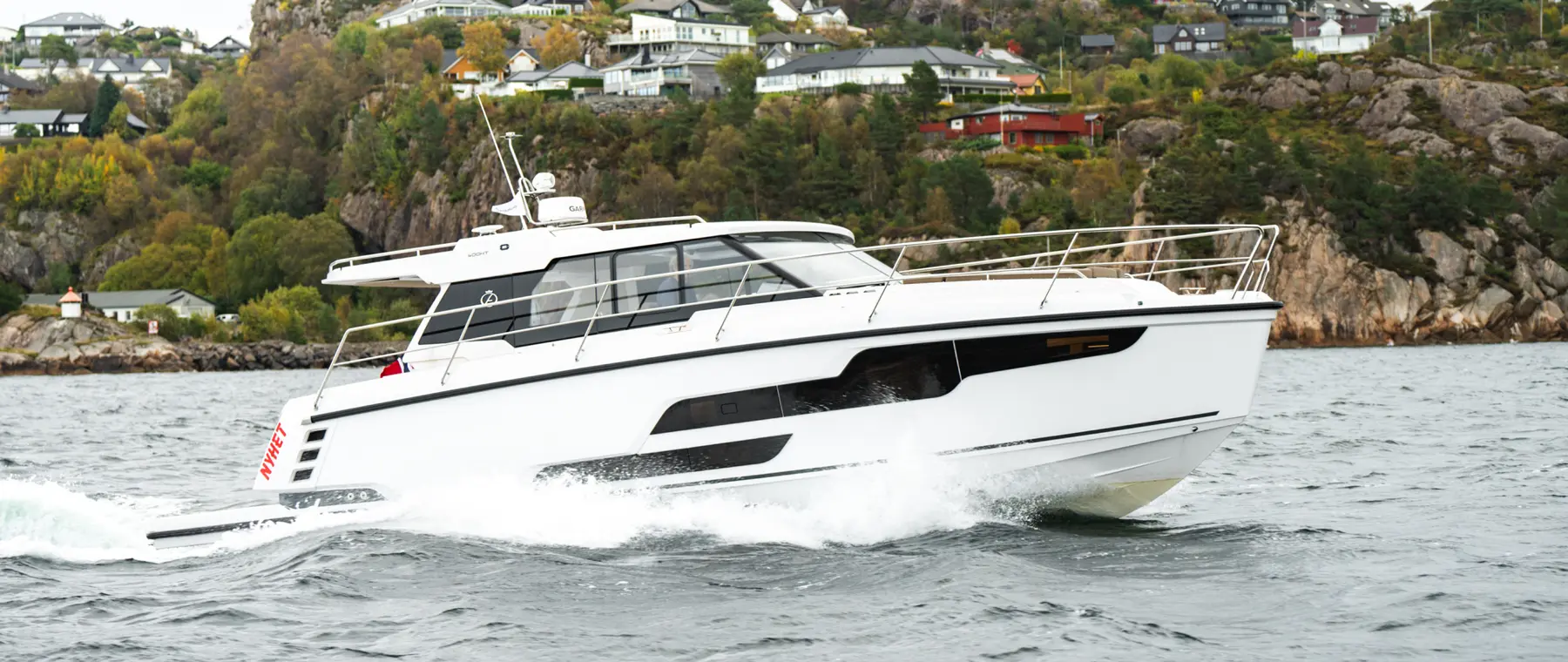
A Nordic approach to premium cruising
Luxury at twelve metres is less about the number of rooms in the sales brochure than about how easily a couple or family can spend a genuine weekend aboard. The Aquador 400 HT, the largest model in the Finnish brand's current range, makes that question central to its design. Its hardtop structure, extensive glazing and three-cabin arrangement suggest a boat intended for owners who want to use the water throughout a longer season rather than wait for a string of cloudless afternoons. That proposition is worth examining independently of the photographs, which naturally show the boat at its best.
Aquador is part of the Nimbus Group portfolio, and the 400 HT sits above the 250 HT and 300 HT in the modernised range. The manufacturer describes it as a 12.10-metre boat with a beam of 3.96 metres and Category B design classification, with engine packages and details that vary by configuration and model year. Unlike a much larger yacht, the 400 HT must make each metre earn its keep: circulation, sheltered seating, sleeping arrangements and direct access to the bathing platform have to coexist without making the helm awkward. That is the real measure of premium compact-boat design.
The hardtop as living space, not merely weather protection
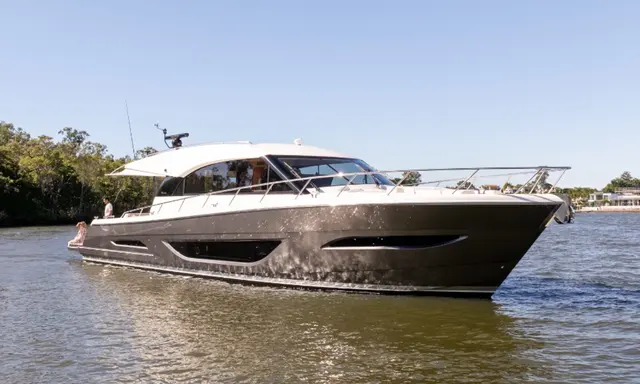
The immediate visual distinction is the enclosed-feeling cockpit and saloon sheltered by a substantial hardtop. Large windows and opening roof sections aim to reduce the usual compromise between an open sportsboat on warm days and a closed wheelhouse in poor weather. Owners cruising Scandinavia, the British Isles or the northern Adriatic may value that flexibility as much as a higher theoretical maximum speed. Yet a hardtop does not eliminate the need for sensible temperature management, ventilation and good defogging; buyers should examine how the boat works when closed up in rain as carefully as how it feels in summer sun.
At the helm, Aquador advertises up to two 16-inch multifunction displays and a twin helm seat. The adjacent co-pilot arrangement can face forward or aft and can convert into a chaise longue, which is more useful than it may first sound. A companion can share the watch underway, then turn towards the saloon when anchored without migrating to a different part of the boat. The ergonomic questions are practical: is there sufficient visibility past window pillars, can one person reach essential controls, and do the doorways and handholds still work when the vessel is moving in an uneven sea?
The builder's AquaDynamic hull language emphasises efficient planing and predictable handling, but prospective buyers should distinguish marketing description from an independent sea trial. Handling depends on engine choice, load, sea state and weight distribution, and the vessel's own trial data should decide whether it suits an intended cruising ground. A well-finished dashboard and an impressive instrument display do not compensate for blind sectors when manoeuvring in a crowded marina. Joystick docking and other assistance options should be assessed as useful tools, not substitutes for training or a considered passage plan.
What the deck layout gives a family
The aft part of the 400 HT is designed as a social area, with a large bathing platform and an adjustable lounge that can convert into a sunbed. That gives the boat an easy transition between dining, swimming and handling water toys. It also introduces familiar ownership trade-offs: large cushions need storage and weather protection, bathing ladders must work for children and less agile adults, and steps between levels should remain safe with wet feet. A prospective owner who spends most days entertaining guests may choose options quite differently from one who fishes or makes longer point-to-point passages.
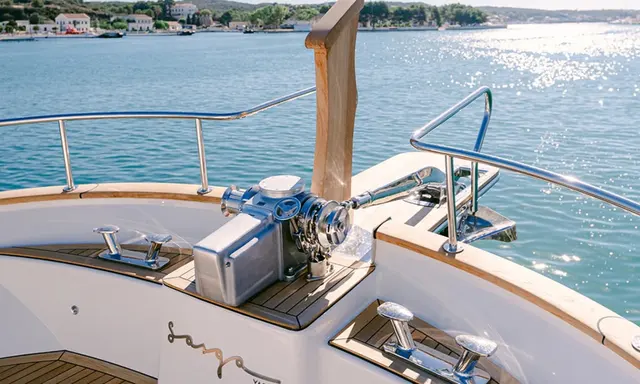
Forward, optional adjustable sun loungers turn the bow into a second relaxation zone. The distance between these spaces is short enough for people to feel connected, but safe side-deck movement remains a serious point to inspect. Aquador's builder description highlights walkaround usability, so a sea trial should include moving forward and aft in a lifejacket while someone else is at the helm. Good access to cleats, fairleads and windlass controls makes the boat easier to use as a couple and reduces the chance of a seemingly minor docking manoeuvre becoming a difficult one.
One attractive feature of the design is that the saloon does not have to serve only one purpose. On a short day trip it is a refuge from wind, while on a longer cruise it becomes the main family room. The manufacturer presents several seating and sunroof combinations, but the best layout depends on how often meals will actually be eaten aboard and on which seats can be used safely underway. It pays to bring all intended guests to a viewing and test the circulation with the table deployed, not just admire the room when the cushions are arranged for photography.
Three cabins below a compact footprint
Aquador's accommodation plan is unusually ambitious for a 12.10-metre boat, with three separate cabins and a dedicated head plus separate shower facilities. The manufacturer's descriptions and 2026 award material refer to up to eight berths depending on arrangement, while some dealer specifications describe six fixed berths. Those figures should not be treated as a contradiction to ignore: fixed sleeping positions, convertible saloon places and the exact chosen option package all affect how many people can sleep comfortably. A purchaser should request the general-arrangement drawing for the specific hull.
Headroom, air circulation, mattress access and storage often matter more on the third night of a voyage than they do at a daylight boat show. A full complement of guests needs places for wet clothing, shoes, food and bags, and additional sleeping capacity can sharply reduce privacy. The separate shower area is a genuine advantage if properly executed, because a wet bathroom otherwise becomes a bottleneck on family weekends. Buyers should also assess water capacity, hot-water supply, battery autonomy and the practical implications of living with several people without immediate marina services.
The resulting concept is less a floating apartment than an intelligently partitioned coastal cruiser. Its attraction lies in allowing parents, children or friends to have distinct sleeping spaces within a boat that still belongs firmly to the owner-operated size class. That outcome depends on how noise, light and ventilation have been resolved around the cabins. It is worth trying each berth, closing the doors and imagining a rainy night aboard; there is no better way to discover whether the published accommodation count describes a comfortable holiday or only a possible arrangement.
Power choices and the need to compare like with like
The Aquador model page currently lists three alternative propulsion packages: twin Volvo Penta D4 diesels rated at 320 hp each, twin Mercury V6 diesels rated at 270 hp each, or twin Mercury Verado V10 outboards rated at 350 hp each. These choices affect far more than acceleration. Machinery access, service arrangements, cockpit sound, transom layout, trim and the ease of inspecting propulsion systems can change considerably. Buyers should ask which package is certified and available in their market and should obtain actual sea-trial and fuel-consumption figures for the same installation and load.
The manufacturer's current online specification lists a 700-litre fuel capacity and an inboard dry-weight figure of 8,200 kilograms, while older 2025 dealer material quotes other figures. This is an important reminder to avoid lifting a single number from an archived brochure into a purchase decision. Model-year revisions, installed equipment and propulsion alternatives can change capacities and weights. Written confirmation for the exact production hull, including full-load displacement, usable fuel, maximum draft and maximum recommended persons, is more valuable than a general claim about range.
On a longer passage, economy and endurance matter in addition to top speed. Owners should calculate range with a prudent reserve from observed consumption at a realistic loaded cruising speed, then consider how readily fuel and service are available along the intended route. The choice between outboards and sterndrives may also affect shallow-water access and maintenance scheduling. There is no universally correct option for every cruising family; the correct package is one matched to the planned waterways, crew experience and annual use.
The 2026 specification and the 2027 ownership questions
The 400 HT has already reached the market and was named a finalist in the 2026 Motor Boat Awards family cruiser category in a Nimbus Group announcement. That recognition is evidence of industry attention, not proof that the design meets every buyer's needs. A current Aquador specification also notes a discreet electrically rising television module planned for model-year 2027, illustrating how the equipment menu continues to evolve. Owners ordering a future hull should get a dated build specification rather than assume every feature pictured on the website is supplied as standard.
A strong pre-purchase comparison should focus on practical use: unobstructed views while seated and standing, the quality of the joinery, sound levels at cruise, accessibility of the engine room, security of loose items and the experience of boarding from a high quay. The brand's extensive glazing and flexible seating are appealing, but ownership satisfaction depends on the less photogenic systems behind the panels. If operating without crew, every inspection hatch and daily check matters. Buyers should also discuss warranty support and winter storage with their regional distributor before committing.
The Aquador 400 HT ultimately offers an interesting answer to the premium compact-yacht question: combine genuine family sleeping space with a protected salon and sociable decks, all within a boat manageable by an engaged owner. Its strength is not a superyacht-like imitation of luxury but a more appropriate form of it, measured in ease of use, shelter and shared time on board. Final specifications and performance should be confirmed against the intended model year, and the decision should be taken after an independent sea trial rather than on images alone.
Verification and original sources
This analysis is based on Aquador's current official 400 HT model page, the manufacturer's range overview and Aquador's 2026 award statement. Engine, capacity and speed information can change, and dealer brochures for earlier years are not necessarily applicable to a new build. The accompanying official image is from Aquador's 2026 model photography; it is not an AI rendering or a substitute for inspecting a real hull.