What Balance showed in April
Balance Catamarans released a substantive construction report about the 540 sailing catamaran on 10 April 2026. The report described real work in progress, rather than a new launch in October or the findings of a completed sea trial. Its value lies in the detail of how a future cruising yacht is being configured for its occupants.
The builder discussed the aft opening, cockpit cooking and seating, two helm stations, the saloon, galley refrigeration and cabin alternatives. These decisions are linked because an offshore catamaran must function safely as both a sailing platform and living space. Owners should judge the combined effect on movement, watchkeeping, storage and service access.
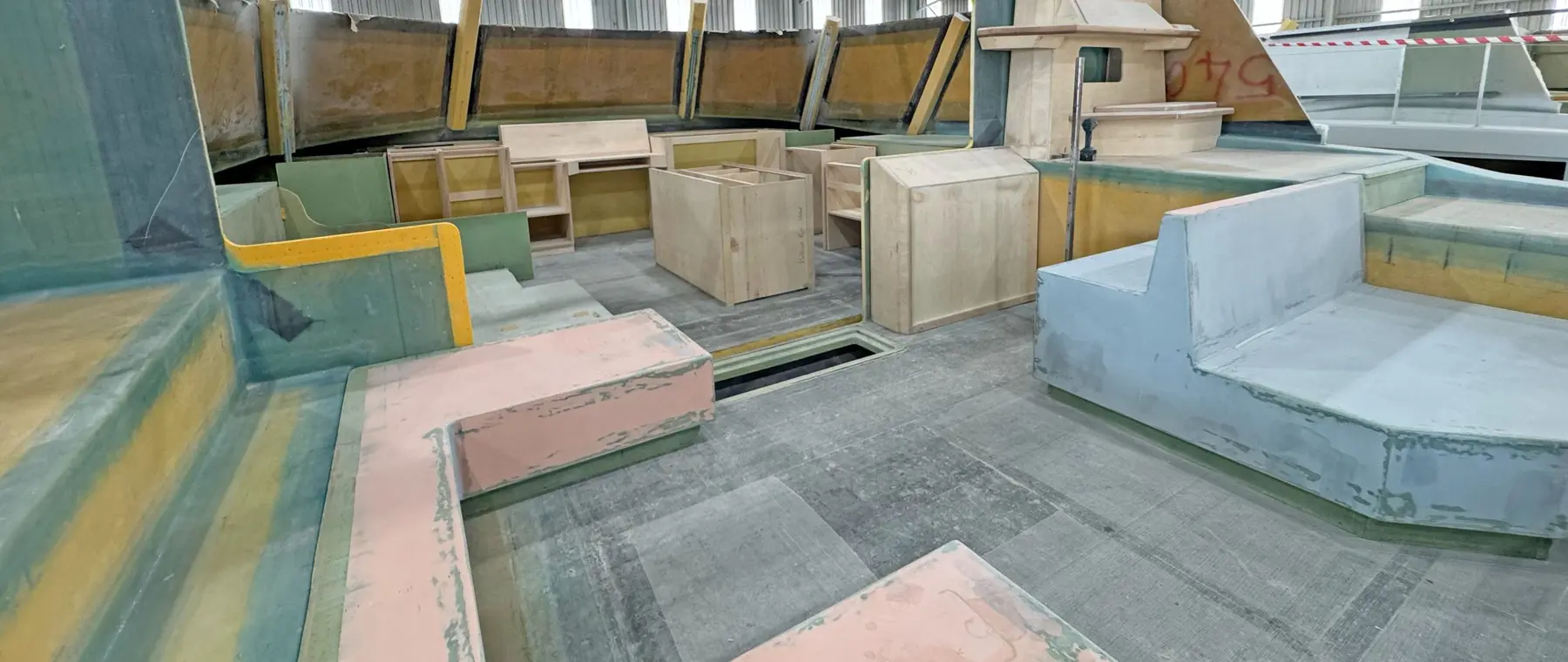
Some aspects of construction and finishing were incomplete when the report was released. That distinction matters because building a yacht involves iterative decisions and optional packages. A buyer should verify every important feature against the final hull-specific specification.
A safety-conscious stern and a social cockpit
The builder highlighted a revised VersaStern arrangement that uses a sliding closure instead of boards that were previously lifted out and stored separately. Balance linked the change to convenience and improved protection around the open aft area, particularly for children. A simpler barrier may be more consistently used, but the actual locking mechanism and safe operating procedures still deserve inspection.
The centre of the aft seat includes an intended food-preparation or barbecue station, with seating on either side. This places cooking activity near the social area rather than relying on a temporary surface. Owners must still consider ventilation, burn risk, secure storage and access in rough conditions.
The cockpit's character changes dramatically between a quiet anchorage and a lively passage. Handholds, drainage, step heights and clear routes between working areas deserve the same attention as seating comfort. A yard visit should include moving through the cockpit as it will actually be used, with doors and barriers secured for travel.
Two helm stations and sightlines
Balance described an upper helm and a lower station, the latter incorporating a fixed seat and a daybed with under-seat storage that can serve as cooler space. The arrangement could provide comfortable watch positions and social flexibility. Neither quality makes up for compromised visibility when approaching a crowded berth.
Skippers should examine sightlines to the leeward bow, sail tell-tales, stern corners and nearby traffic from both helms. They should also identify what each station controls and whether a helm transfer can be made without ambiguity. Practical exercises under sail are more informative than a static seat-height measurement.
The builder also moved the navigation station toward the saloon's centre to improve the forward outlook. Navigation screens, charts and communications must work in daylight and at night, without distracting the person steering. Owners should make sure the layout supports a clear watchkeeping routine.
Making the saloon and cockpit connect
A large Goiot aluminium sliding door was selected to open the saloon towards the aft cockpit. It is intended to stack to either side and create a continuous living area in settled weather. Owners will appreciate that openness most when the mechanism also closes quickly and seals reliably before conditions deteriorate.
The interior plan shown by Balance includes an L-shaped seating group, removable ottoman and a central island with generous storage and a rising television. Those components support flexible use, but loose furniture and moving hardware need to be restrained during a passage. Storage should be accessible without blocking essential walkways.
Large doorway systems invite questions about the threshold, tracks, seals, drainage and maintenance. A buyer should test opening and closing repeatedly rather than evaluating the feature only through photos. The most useful design is one that remains dependable after years of salt spray and vibration.
A cruising galley with electrical implications
The April report describes two 160-litre cold-storage units divided into refrigerator and freezer drawers. An oven, sink and optional dishwasher are part of the galley scheme. The capacity is attractive for longer voyages, provided the electrical system can sustain the load in warm conditions.
Owners should seek a daily energy budget for refrigeration, ventilation and other domestic equipment. Compressor access and good airflow influence whether the system can be maintained without substantial cabinetry work. Drawer catches and seals should be checked while imagining the yacht underway.
Balance acknowledged that some counter heights and finishes were still being developed at that stage. An owner ordering the yacht should verify appliance dimensions, worktop heights and the position of key lockers. Construction-stage photographs can help frame questions but cannot replace the delivered specification.
Cabin flexibility and sail handling
The progress walkthrough described one four-cabin option with an owner's cabin aft to starboard and a forward guest cabin in the same hull. The port side also houses guest accommodation, with bathroom arrangements depending on the option selected. Balance says there are multiple three- and four-cabin configurations rather than one universal plan.
A notable detail is a sail locker accessible from both a forward cabin and an outside hatch. That could simplify retrieving sails but requires careful attention to damp gear, secure closure and drainage. Owners should inspect the arrangement and decide whether the convenience outweighs any loss of bedroom storage or privacy.
The most convincing elements of this update are practical choices affecting day-to-day movement, maintenance and cabin life. Buyers should compare these with their sailing style, guest numbers and need for redundancy before selecting options. This report uses the builder's April 2026 construction information and makes no claim that a new Balance 540 was launched in October.