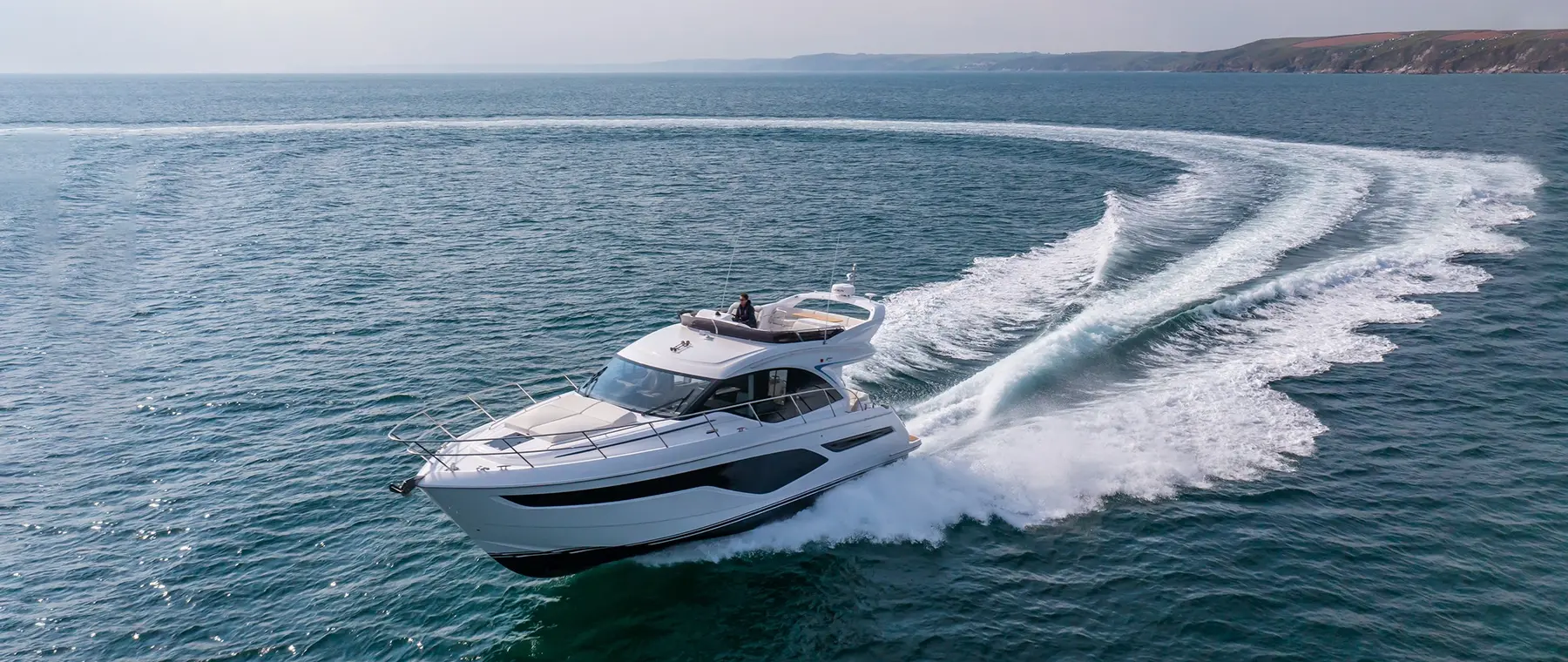
A practical interpretation of the 50-foot yacht
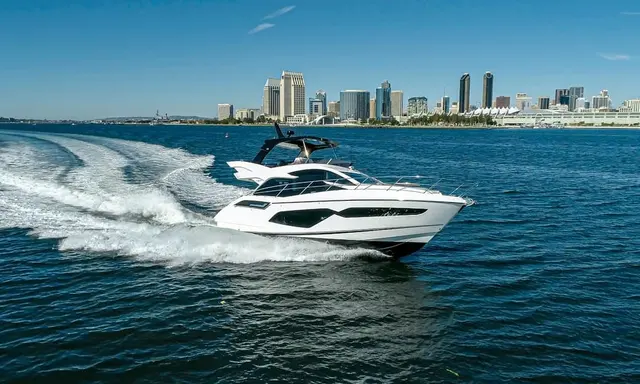
A flybridge yacht of about 15 metres must work harder than its dimensions suggest. Owners expect outdoor seating, comfortable guest accommodation, a proper galley and easy handling, all within a length that still feels manageable at a marina. Princess addresses those demands in the F50 through a layered layout, placing the main social spaces close to one another while using the upper deck for a second, distinct place to spend time.
The F50 is not a brand-new model presented for the first time in 2026. Princess traces its introduction to 2019 and a subsequent evolution in 2022, which makes it useful to examine as an established design rather than as an invented launch announcement. Its current published specification gives a length overall of 15.65 metres including the pulpit and a beam of 4.30 metres, setting the proportions for an owner-operated family cruiser.
That beam and the forward superstructure support a substantial saloon without making the yacht visually heavy. A deep-V resin-infused hull is part of the design specification, while the flybridge adds usable area without extending the yacht's overall footprint. The appeal is fundamentally architectural: a relatively compact vessel can support several simultaneous activities instead of requiring all six guests to share the same table.
Living spaces from the cockpit upwards
Step aboard the aft cockpit and the principal saloon is close at hand, making it simple to move refreshments and meals between interior and exterior seating. The galley sits at the aft end of the main deck and the saloon includes a U-shaped seating arrangement with dining for six. That connection is useful during a Mediterranean lunch at anchor, but equally important when a change in weather brings everyone inside.
The flybridge offers an additional helm, generous U-shaped seating aft and forward L-shaped seating that converts into a sunbathing area. This makes the upper deck a genuinely separate destination rather than a token raised driving position. Guests can enjoy the view and conversation while another group remains near the galley, which gives the yacht the social flexibility usually associated with a bigger hull.
Outdoor layouts also influence practical seamanship. Owners should consider wind exposure on the upper deck, handhold positions and how safely passengers can use the stairs when the boat is moving. Beautiful upholstery is only one part of comfort; safe circulation, shaded seating and the ability to clear away cushions before a passage are what make an exterior area convenient over years of use.
Six berths without an oversized hull
Below deck, three guest cabins provide accommodation for six people, with two of the rooms enjoying en-suite arrangements. The forward stateroom includes a double bed, and Princess offers a scissor-berth configuration to increase flexibility. That matters to mixed groups because the ideal sleeping arrangement for children and relatives may change from one voyage to the next.
Privacy is never infinite on a yacht of this size, so the placement of bathrooms and cabins deserves close inspection. A buyer who often hosts two couples may value the en-suite facilities more than an elaborate entertainment system. A family travelling for several nights should also examine storage, ventilation and the ease of reaching the deck from the cabins after dark.
The stated water capacity is 428 litres, with a black-water tank of 150 litres, and those figures are useful planning references. They do not translate directly into a fixed number of comfortable nights because individual habits vary greatly. Owners intending to anchor for extended periods should calculate consumption against their realistic number of guests and understand the yacht's water-making, electrical and waste-management options.
IPS performance and ownership questions
Princess lists twin Volvo D8 IPS 800 diesels rated at 600 metric horsepower each, with a builder-estimated maximum speed range of 32 to 34 knots. Such a figure is a potential rather than a promise for every sea trial, especially once equipment, fuel, stores and passengers increase displacement. The published fuel capacity is 1,850 litres, and any sensible passage plan should work from a measured consumption curve rather than an optimistic headline.
The F50's published draft is 1.39 metres and its approximate displacement is 21,331 kilograms under the builder's defined test loading conditions. Buyers should compare those figures with the berths and lifts they plan to use, allowing for tender weight and equipment variations. Joystick controls and available stabilisation technology can make everyday operation more convenient, but training and routine servicing remain essential.
The strongest case for the F50 is the way it accommodates ordinary life on board. It has a proper six-person dining space, three cabins, a meaningful flybridge and enough outdoor seating to make a short voyage feel varied. Rather than promising to do everything, this Princess concentrates on making family cruising and modest entertaining comfortably repeatable, which may be a more enduring measure of luxury than novelty.