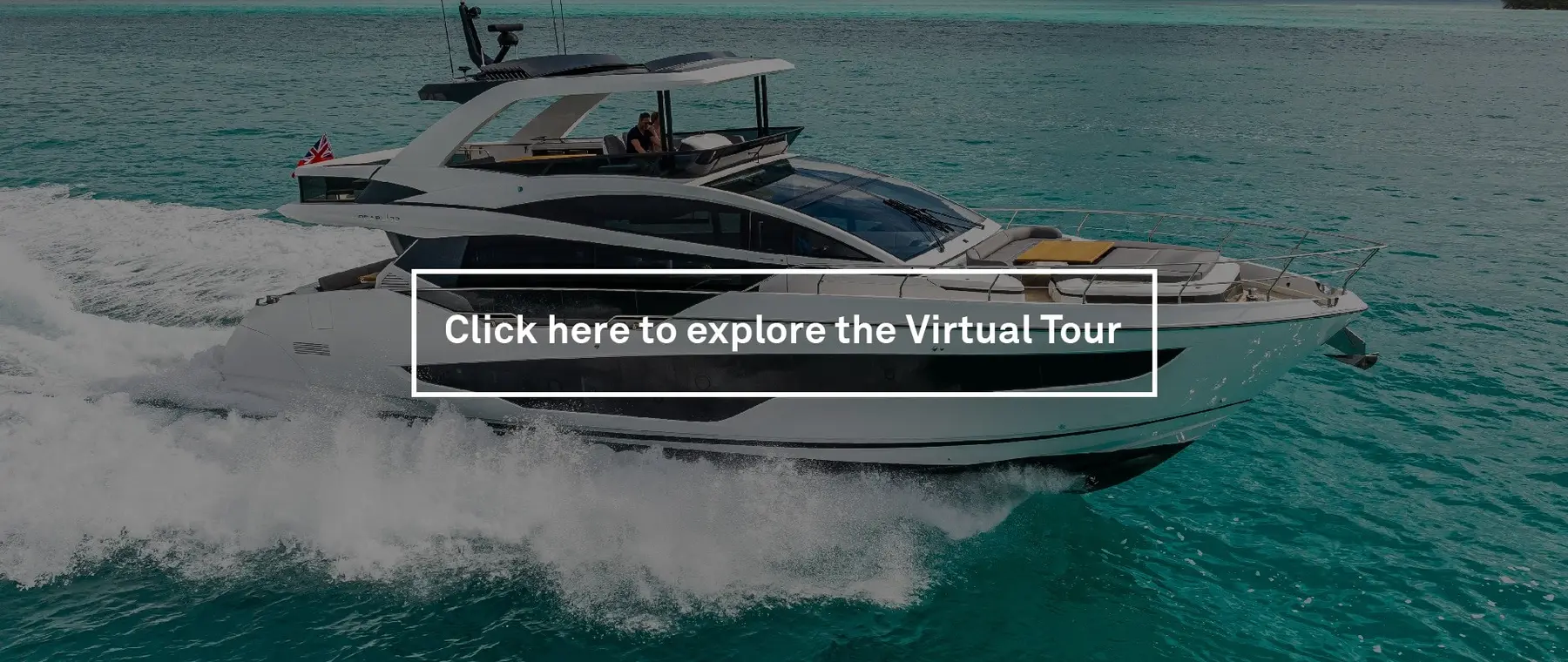
A 22-metre motor yacht with an unusual owner plan
The Pearl 72 has a layout feature that separates it from many motor yachts of comparable length: two cabins designed to function as principal suites. Pearl places one master forward with a dedicated entrance and another full-beam suite amidships. Rather than assuming every owner prefers the same bedroom arrangement, the builder gives the family or host two distinct private retreats aboard a 21.99-metre yacht.
That arrangement matters in several kinds of ownership. A couple travelling with adult relatives can preserve independent space, while two families sharing a holiday may avoid the familiar division between one dominant owner's cabin and a clearly secondary guest suite. Buyers should inspect the relative privacy, storage and bathroom arrangements carefully because the word master does not guarantee two identical spaces.
Pearl lists a maximum beam of 5.75 metres, creating useful interior width but also influencing berth selection and manoeuvring in older marinas. Overall dimensions must be checked with the installed tender and any additional exterior equipment, not merely copied from a design summary. The best choice of home port depends on the actual layout, draft and how frequently the boat will cruise.
Dixon exterior design and Kelly Hoppen interiors
Pearl attributes the exterior styling and naval architecture to Dixon Yacht Design, while interior schemes are associated with Kelly Hoppen. The pairing creates a recognisable contrast between a purposeful exterior and relatively restrained residential detailing. A buyer should view both in person, however, because photographs can flatten differences in material texture, daylight and the sense of proportion between rooms.
The builder's published specification offers multiple interior schemes, giving owners the ability to select a mood without commissioning every element from scratch. This approach can simplify procurement compared with an entirely bespoke interior, but it also means buyers should examine the materials fitted to the exact hull. An option shown at a yacht show may not match a boat already in stock.
Interior quality has practical dimensions beyond visual design. Walkways, the height of steps, access to the galley and sound separation between cabins all influence how a family uses the yacht. Prospective owners should undertake a normal daily circuit from bedroom to saloon and the water, carrying bags or towels rather than touring the yacht as if it were an empty display suite.
Beach-club thinking on a compact footprint
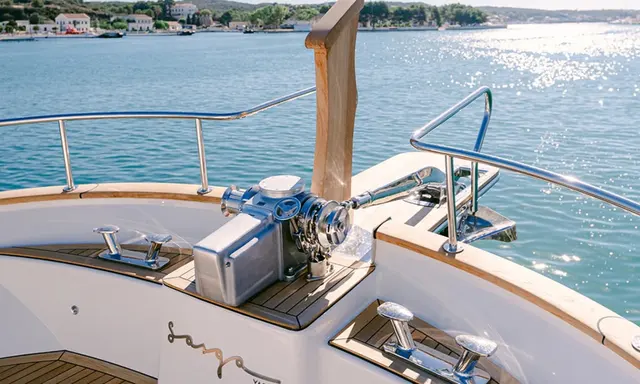
The Pearl 72 uses fold-down side balconies at water level, creating a wider social area close to the sea when conditions and local rules permit their use. This beach-club arrangement is an ambitious feature within a yacht whose overall length remains below 24 metres. The terraces provide more contact with the water, but they should be inspected for locking arrangements, drainage, surface grip and safety provisions.
A stern garage is specified to accommodate a Williams 345 tender and a personal watercraft. That is a substantial piece of practical equipment for a yacht of this size, particularly for owners who want to visit beaches, reach shore from anchorages or enjoy short excursions. Actual tender compatibility must be confirmed by weight, dimensions and launching equipment rather than by model name alone.
The beach-club philosophy works best when the crew can transform the area without lengthy preparation. Buyers should ask for a full demonstration of garage doors, lift or recovery systems and the side balconies, including how they are secured for passage. The labour required to put the equipment away often determines whether an owner uses it daily or only for special occasions.
Volvo IPS and the handling conversation
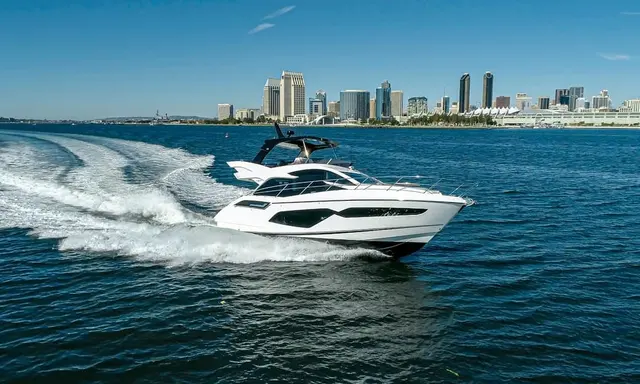
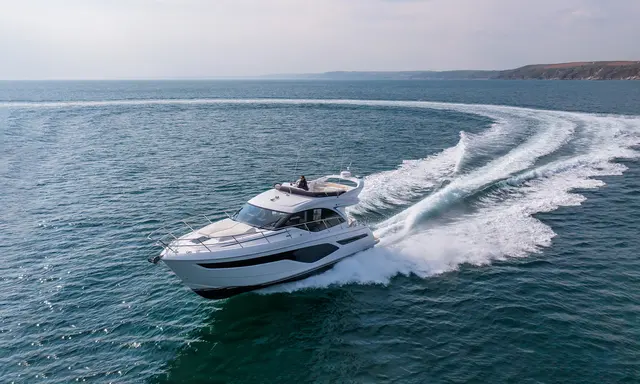
Pearl specifies Volvo Penta IPS propulsion for the model and publishes a potential top speed of up to 32 knots. IPS can change the handling and packaging choices compared with conventional shafts, but it is not a guarantee of effortless docking in every wind and current. The installed engine package, pod-maintenance history and operator training should be part of any purchase discussion.
The manufacturer quotes a cruising range in its marketing materials, but the precise figure depends on reference conditions and varies between published presentations. Buyers should request the performance report for the actual power package and check the test load, sea state and fuel allowance. A range number without those details is unsuitable for planning a passage between islands.
At this size the skipper's view, position of manoeuvring controls and access to exterior helm stations deserve close attention. A demonstration in a familiar calm berth does not prove how the yacht will behave in a confined harbour under crosswind. Familiarity with propulsion controls, clear communication with crew and realistic margins remain essential parts of safe handling.
The appeal of four guest cabins
The model's standard published arrangement includes four en-suite guest cabins plus crew accommodation. This gives the boat a useful split between private sleeping rooms and shared social areas, enabling several couples or a family with children to cruise for more than a weekend. The suitability of individual bunks, doorways and bathrooms must be judged against the guests who will actually use them.
The forward principal suite with its separate entrance is a particularly interesting planning decision because circulation can preserve a sense of independence. In a mixed-generation group, early risers and late-night guests may move around the boat without disturbing everyone else. The second principal cabin amidships supplies a different relationship to the hull and the main accommodation passage.
Owners who entertain regularly should consider how the galley supports these guest numbers. Provisioning space, refrigeration, laundry arrangements and fresh-water capacity can become the constraints on longer trips. A spacious suite layout is only successful if the supporting systems let those cabins be occupied comfortably for the intended voyage duration.
Where the Pearl 72 fits in a buying comparison
The Pearl 72 is a persuasive candidate for an owner who values two genuinely substantial suites and a water-level social area more than the simple pursuit of maximum length. The 21.99-metre dimensions, IPS propulsion and tender-plus-personal-watercraft garage form a coherent package. Each feature is meaningful in day-to-day use, although every claimed advantage deserves a demonstration aboard the exact yacht.
The market has since seen evolution within Pearl's range, including the newer Pearl 73, so buyers should distinguish the specification and delivery status of the particular 72 they are considering. Published warranty references and optional fittings need written confirmation of applicability. Model names can remain familiar even as build years, finishes and available equipment change.
This analysis is based on Pearl Yachts' published Pearl 72 descriptions and the manufacturer's regional yacht presentation. Speed and range figures are promotional specifications, not the result of an independent sea trial in this article. For families seeking a luxurious motor yacht under 24 metres, the two-master configuration is a concrete reason to arrange a detailed viewing.