A closer look at the design choices behind the Dufour 41
A cruising yacht can feel spacious in a marina yet become demanding to handle once it is sailing hard on the wind. Dufour has set out how it sought to balance those competing pressures in the Dufour 41, using five technical design decisions to explain the relationship between living space and helm response. Its October 2026 design briefing focuses on hull shape, rudder and keel geometry, joined-up interior planning, resin-infusion construction and rig options.
For owners comparing premium cruising yachts in this size range, the interesting point is not that any one component creates the whole result. It is that each choice affects another. Carrying volume forward changes the shape of the hull, moving the mast alters both structure and interior space, and a sail plan needs to remain controllable when a couple rather than a racing crew handles the boat.
Fuller forward sections make room without just adding beam
The builder identifies a maximum beam of 4.30 metres, with the distinctive feature being how that width is carried forward. The chine runs along much of the hull, while fuller bow sections add useful volume ahead of the saloon. This differs from designs that concentrate their volume at the vessel's widest midship section and leave the forward accommodation comparatively narrow.
The practical effect can be a more comfortable forward cabin and useful living space in the saloon without demanding a larger boat overall. Yet extra interior volume brings questions about displacement, wave interaction and deck layout that need to be resolved in naval architecture. Buyers should therefore compare not only cabin dimensions but how the hull performs in wind and sea states typical of their intended cruising.
Stability comes from a combined hull, keel and rudder system
Dufour emphasises that the 41's balance is not supplied by a single appendage. As the yacht heels, hull shape and keel contribute to the righting response while the rudder continues to supply directional control. The builder has retained a single rudder rather than using twin rudders, a decision intended to give a direct feel at the wheel while remaining effective under sailing loads.
The standard keel draws 2.10 metres, with a shallower 1.75-metre version offered for owners whose berths and cruising waters make reduced draught useful. That choice is not just a number on a sales sheet. It may influence available anchorages and marina access, and it also changes the underwater configuration, so a prospective owner should discuss handling and stability implications as well as shallow-water convenience.
The rig and the interior were developed together
Dufour says its design office worked in close collaboration with Umberto Felci and Luca Ardizio for almost two years, considering interior arrangements and naval architecture together. The mast location, sail plan, hull volumes and the placement of accommodation each impose constraints on the others. Treating them as one design problem is intended to avoid a roomy layout that then demands compromises elsewhere in the boat.
This is an important lesson for the owner choosing between cabin versions. A berth, bulkhead or locker is not free space that can be moved without consequence; structural and mechanical systems also pass through the hull. The detail of each approved configuration is therefore worth reviewing rather than assuming that the designer can rearrange every element while leaving the sailing balance unchanged.
Resin infusion provides repeatability
The builder describes using resin infusion for the Dufour 41 hull, with resin drawn through dry reinforcements already positioned in the mould. Its stated objectives are to manage the fibre-to-resin proportion, reduce unnecessary material and improve consistency from hull to hull. Infusion can also reduce the risk of air being trapped in the laminate, although final quality still depends on process controls and inspection.
An owner does not normally see this work once interior panels and liners are in place. Nevertheless, production technique is part of the yacht's structure and deserves a sensible handover discussion. Buyers can ask about laminate documentation, inspections, repair instructions and how the builder manages quality control across successive examples of the same model.
A sail wardrobe tailored to the crew
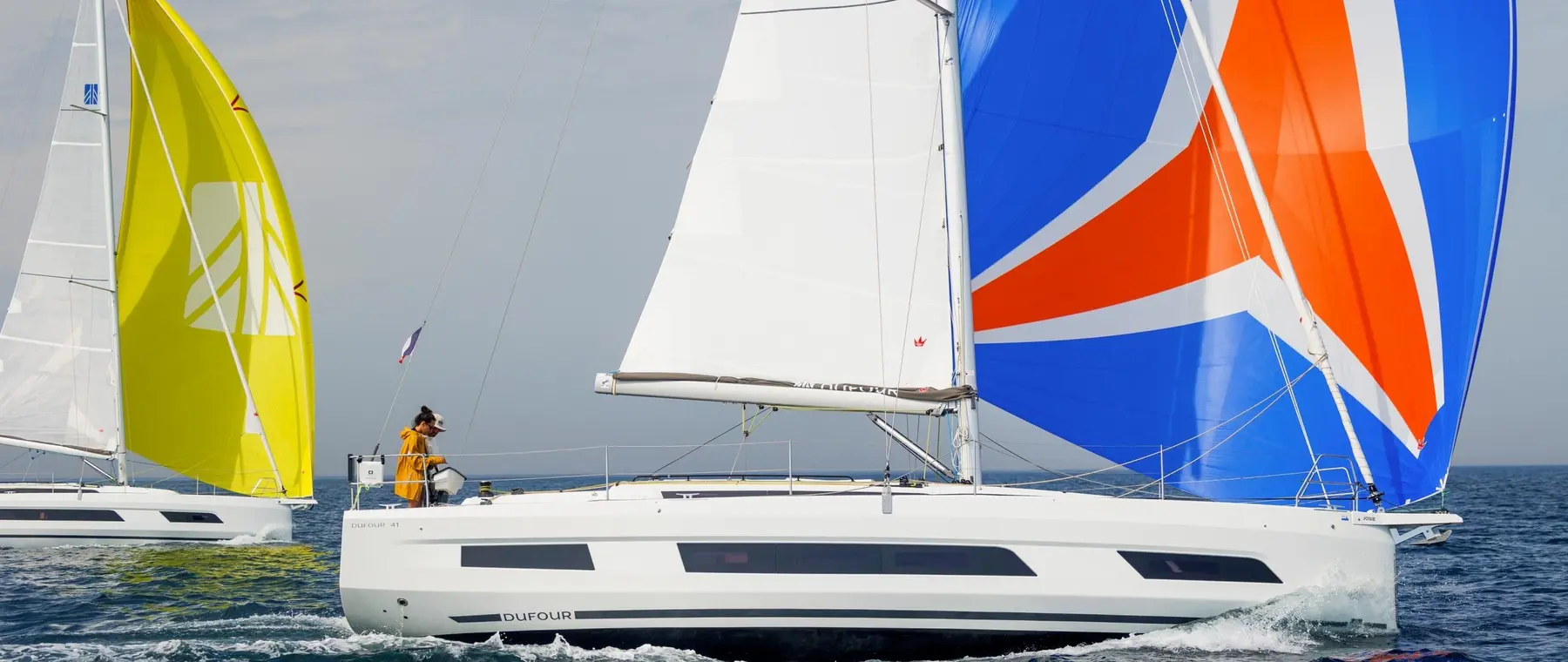
Dufour's outline distinguishes a straightforward self-tacking jib from a larger 108-percent genoa and optional light-air or reaching sails, including a Code 0 and asymmetric spinnaker. These choices can substantially change how the yacht is sailed without requiring a different hull. A couple prioritising uncomplicated coastal passages may favour a simpler headsail arrangement, while an owner planning longer offshore legs may value a broader wardrobe.
The right combination depends on actual sailing plans rather than an ambition to fit every available option. Handling a Code 0 or asymmetric sail entails additional deck equipment, storage and crew procedures. Buyers should request a demonstration that reflects their expected crew number and should discuss sail-handling loads as carefully as performance expectations.
Where interior comfort meets sailing feel
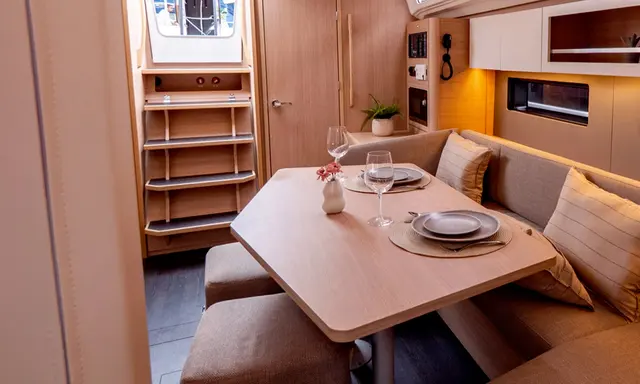
The commercial attraction of a wide-beam cruiser is easy to understand: a brighter saloon, larger private accommodation and comfortable places for guests to relax. The design task is harder, because a fuller hull still has to move through water efficiently and remain predictable when the wind builds. Dufour frames the 41 around resolving this challenge through coordinated naval architecture and internal planning.
For a luxury yacht owner, ergonomics deserve equal attention alongside styling. Can the helm be used comfortably from both sides? Can crew move forward without stepping around unnecessary obstructions? Does the galley remain workable underway and are there secure handholds when the yacht heels? Such questions translate technical design language into the everyday reality of sailing.
The thoughtful sea trial matters more than a single headline specification
The Dufour 41 design briefing supplies the rationale for these features, but builder explanations should be viewed as the starting point for evaluation rather than independent proof that one yacht outperforms another. A well-organised sea trial can compare wheel feel at different heel angles, tacking effort, visibility from the helm, motion in a chop and the experience of using the interior underway.
A buyer interested in the shoal-draught version should seek information specific to that variant rather than relying entirely on feedback from the standard-keel yacht. The same applies to sail options. Finally, the exact as-built specification, warranty, service access and commissioning checks will matter throughout ownership long after the first test sail.
Dufour's wider message for modern cruising yacht design
The Dufour 41 remains a production sailing yacht, but its October explanation shows how much coordination lies behind apparently simple features. Hull volume, a single rudder, configurable keel, infusion-made structure and selectable sails are part of a combined engineering and lifestyle decision. None deserves to be assessed in isolation from the way the owner intends to use the boat.
Dufour's official 14 October 2026 technical feature provides the primary account of these design decisions. The most useful response from prospective owners is to take that account to the boat: inspect the layout, question the yard about the variant on offer, and make time for a demanding but safe trial at sea. A yacht's real luxury lies as much in how naturally it sails as in how comfortably it accommodates its crew.