Designers reveal the thinking behind a new cruising yacht
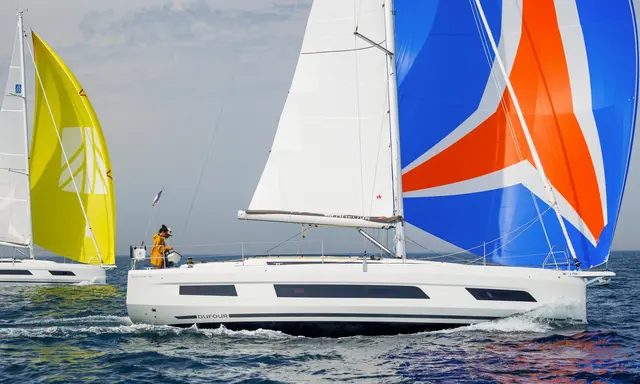
Dufour has published a fresh conversation with naval architect Umberto Felci and interior designer Luca Ardizio about the decisions behind its Dufour 39. Released on 22 October, after the model's autumn boat-show debut, the discussion moves the story beyond the first appearance of a new yacht and into the design process that shaped it. The French builder places the model between the Dufour 37 and Dufour 41, where buyers may want more living space without giving up a manageable cruising boat.
The important idea is collaboration rather than a single headline feature. A naval architect can create space within a hull, but it will only become useful accommodation if deck structure, circulation, mechanical services and furniture are developed with that hull. Dufour says its own team and external designers worked together from the early stages, so the interior and the sailing platform were treated as linked parts of the same product.
Why the space between the 37 and 41 matters
Owners do not always choose a sailing yacht by moving steadily up in length. A boat with one extra cabin may be attractive to a family, yet an additional few feet can change berth availability, operating costs and the physical effort required in close quarters. Dufour's stated purpose for the 39 was to address an identified gap in its range with a design that responds to different ways owners actually sail.
The manufacturer's broader model description gives the 39 an overall length of 12 metres and a beam of 4.1 metres. Those dimensions should be read alongside the accommodation plan, deck equipment and sail-handling arrangements rather than treated as a complete measure of capability. Two boats of broadly similar length may serve quite different cruising programs depending on the way their spaces and working areas are distributed.
Felci's role: the hull as a working foundation
Umberto Felci's contribution is naval architecture, the part of the project that establishes the underwater shape, sailing characteristics and essential spatial envelope. The builder describes a chined hull and volume carried forward, alongside a single rudder selected for direct steering feel. Its own technical material also describes hull production by vacuum infusion and deck production using injection moulding.
None of those individual features provides an automatic guarantee of performance or quality. The useful editorial question is how they function together when the yacht is loaded for a passage, heeled under sail and manoeuvring near a marina. A prospective buyer can ask to see the stability information, compare the standard and optional equipment on the intended specification, and arrange a sea trial that represents the crew and conditions likely to be encountered.
Ardizio's role: modularity without an incoherent interior
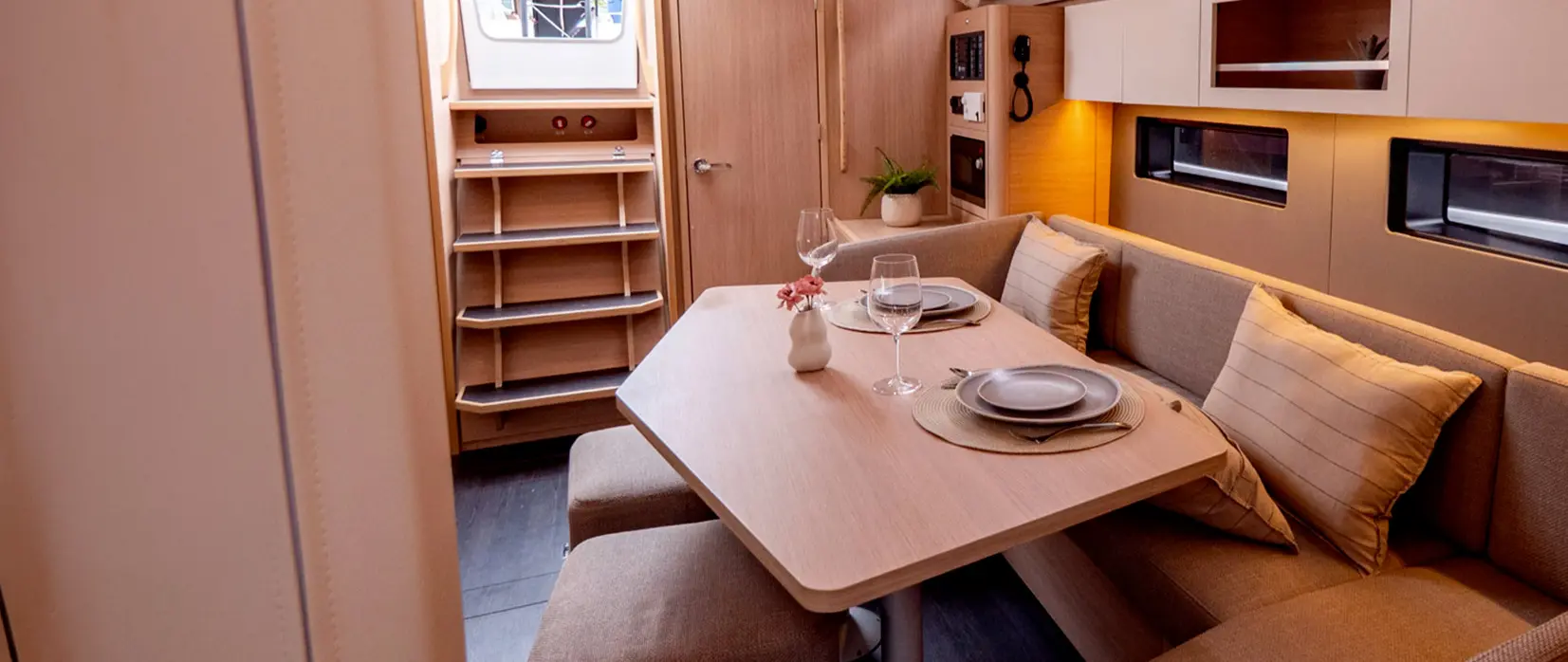
Dufour says a central challenge for Luca Ardizio and his interior design team was creating unusually adaptable accommodation for a yacht of this size. The builder presents flexibility and personalisation as design objectives, not merely a selection of decorative finishes. Its public model information describes two- and three-cabin versions, with secondary spaces that may be assigned different uses.
A potential owner should examine the real trade-offs behind those choices. Converting storage into an office or additional bathroom may suit one family's cruising pattern while reducing capacity for sails, spare parts and passage equipment. Likewise, a cabin count that looks attractive during a marina viewing may mean less convenient access to machinery or fewer lockers. The best configuration is the one whose compromises have been tested against an owner's intended use.
Deck variants address different styles of sailing
The manufacturer's model outline describes three broad approaches: minimalist, comfort and performance. The minimalist version emphasises direct access to the sea and a simpler deck arrangement, while the comfort specification can add social features such as expanded cockpit seating, a Seaside Kitchen and a dedicated lounging area forward. The performance version focuses on sail control, with additional winches and trimming arrangements.
These are not interchangeable lifestyle labels. Each variant may require a different approach to crew work, ongoing maintenance and the movement of guests when the vessel is underway. An open transom can feel inviting at anchor, but an owner should think through access and safety arrangements; a galley module in the cockpit may enrich day use, but also needs cleaning, winterisation and sensible storage. For a serious sailor, the location and accessibility of winches can be more consequential than their number.
Design coordination happens before the first sea trial
The interview emphasises that flexibility must be developed during the design process rather than simply added after the hull and deck are fixed. Moving a bulkhead can have structural implications, and altering furniture can affect movement through the boat when it heels. A large window changes the experience of the cabin, but it also has to be integrated into the surrounding structure and weather protection.
The practical consequence is that buyers should obtain plans for the exact configuration they are considering. Marketing renders can help explain the concept, but only accurate deck drawings, cabin plans and equipment schedules establish what will actually be delivered. It is worth checking access around engines, batteries, pumps and through-hulls as closely as the size of berths and the finish of joinery.
How to assess the builder's claims in person
Dufour's design interview is useful because it sets out the questions its designers attempted to answer; it is not an independent comparative test of the completed yacht. A buyer who is persuaded by the promise of easy sailing and generous space should arrange a demonstration with the intended sail wardrobe and as close as possible to the crew complement expected in normal use.
During that trial, small details are revealing: sightlines at the helm, traveller and sheet access, the effort required for a tack, the security of handholds below, and whether the companionway and galley remain workable when the yacht is moving. A separate static inspection can focus on ventilation, private cabins, stowage and how quickly the cockpit shifts from entertaining to active sailing. Together, these checks provide a fairer assessment than a single quoted performance figure.
A design story that continues after launch
The 22 October discussion adds a new chapter to a yacht that was already introduced at the autumn shows. Felci and Ardizio explain the intention to combine a responsive sailing platform with owner-led interior choices, while the shipyard supplies the framework that turns those choices into buildable configurations. It is a more useful perspective than treating a boat's premiere as the end of the story.
For prospective owners, the next step is to compare approved layouts, equipment and sea-trial impressions against a written cruising brief. Ask which options have been engineered and validated for the specific yacht, whether changes affect weight or maintenance access, and what the delivery specification will include. Dufour's newest explanation does not remove those due-diligence questions; it gives buyers a clearer starting point for asking them.