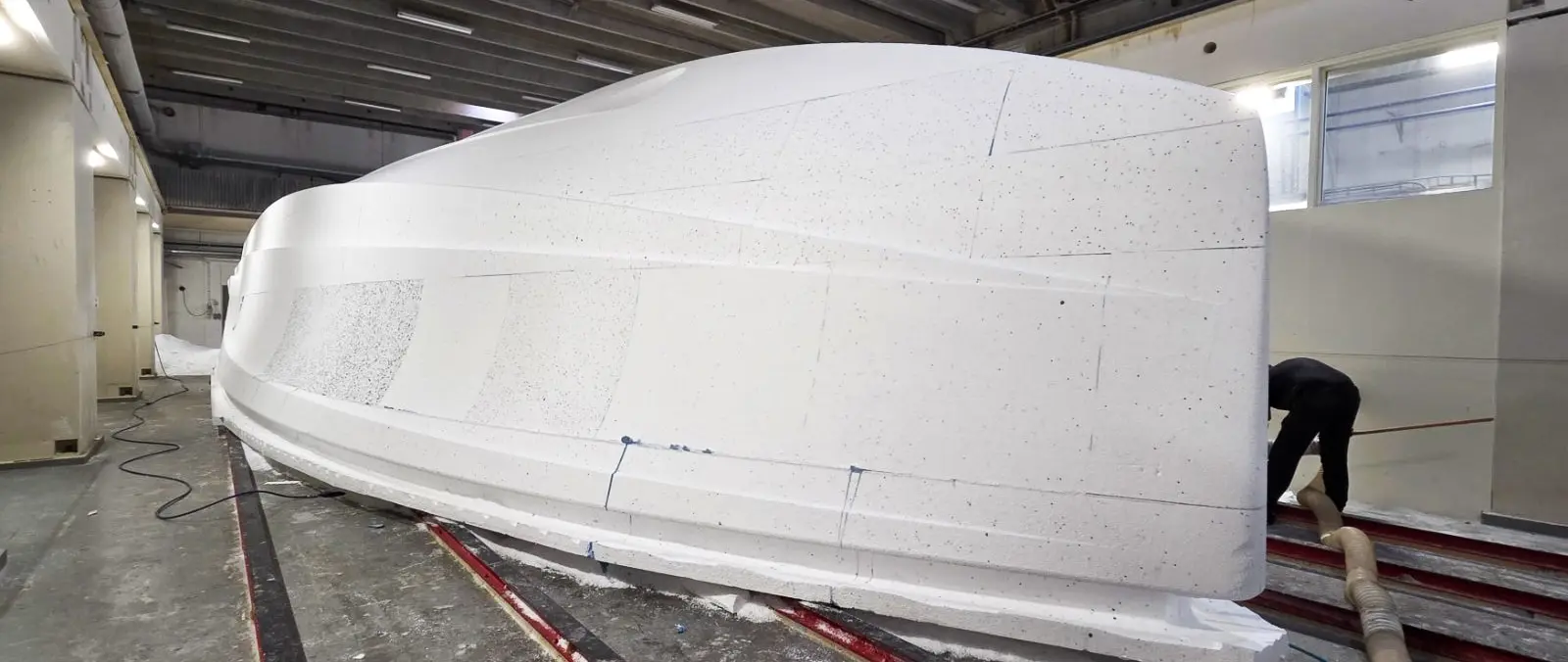
A tangible production step for Windy's new flagship
Windy Boats has reported a fresh construction milestone for the SR77, confirming on 23 October 2026 that the hull mould for its forthcoming flagship is being transported to the company's shipyard in Västervik, Sweden. The update moves the project beyond a design-only proposition and into a more concrete phase of production preparation. It does not mean that the first finished SR77 has launched or that an owner delivery is imminent.
The Norwegian-founded, Sweden-based builder positions the SR77 as its largest yacht tender and chase boat project. At 23.98 metres in published length overall, it also sits at the substantial end of the luxury dayboat category, where the brief extends beyond simply ferrying guests from a larger yacht. The attraction for prospective owners is the possibility of combining a highly specified support role with independent cruising capability and spaces comfortable enough for extended time aboard.
Why the mould matters
A hull mould is a critical piece of production tooling, not the finished hull itself. It defines the form from which composite hull structures can be manufactured and helps translate a carefully developed design into repeatable physical construction. Moving it to the shipyard is therefore meaningful because the next steps can take place within the production environment where the boat will ultimately be built.
Windy has already documented earlier stages of this tooling process. In July, the company reported successful CNC milling of the hull plug, which was being prepared for lamination. The later announcement that the hull mould is on its way to Sweden indicates further development of that physical tooling. These are sequential milestones, and readers should be wary of treating them as equivalent to completing a hull or commencing sea trials.
For a complex bespoke project, progress is measured not only by what can be photographed but also by the engineering work completed behind it. Tooling accuracy influences how well the intended hull form is realised, while the structural build and eventual systems integration come later. The October announcement is encouraging evidence of activity, but commissioning, testing and customer acceptance still lie ahead.
The SR77's role in the luxury yacht market
Windy describes the SR77 as a premium chase boat and yacht tender that can also function as a sophisticated weekend cruiser. This dual purpose is significant. An owner of a large yacht may want a fast, capable second vessel for shore trips, watersports support and outings beyond a mothership's anchorage, while a separate buyer may be attracted by the SR77's deck space and styling as a yacht in its own right.
The platform is conceived around an expansive guest deck, generous access to the water and flexible accommodation. Rather than prescribing a single fixed layout, the builder highlights tailored configurations for open and sheltered spaces as well as bespoke interior finishes. Buyers should establish which elements belong to the base design and which require individual development before comparing proposals or setting a budget.
The distinction between chase boat and cruiser also has operational consequences. A supporting vessel may run comparatively short, intensive journeys around a mothership, while a more independent cruiser is expected to manage longer days with guests, luggage and provisions aboard. Suitable storage, guest protection, fuel planning, handling procedures and crew arrangements all become central to the specification.
A design led by Malcolm McKeon
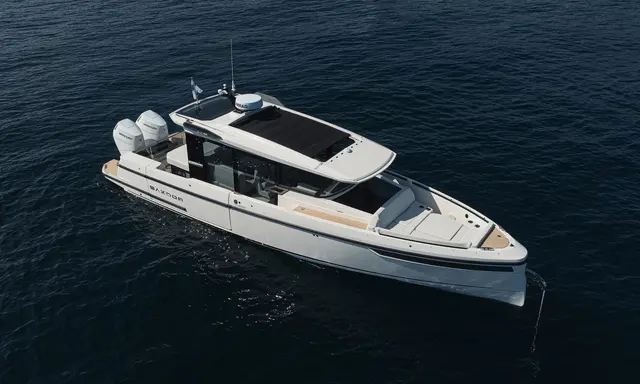
The builder credits Malcolm McKeon Yacht Design with the SR77's naval architecture and exterior design. The intended visual language is recognisably Windy, but the project aims to push that style into a larger and more configurable platform. Low lines, broad social areas and carefully managed sightlines are all part of the design proposition shown in the official material.
These visualisations should be understood as illustrations of the intended design, not evidence that a completed yacht has already been built. A final specification will depend on selected equipment, structural decisions and the agreed configuration. Buyers interested in a particular sun deck, helm arrangement or cabin layout should seek the latest approved drawings from the builder rather than assuming that every promotional view shows a standard production boat.
A practical design review should also look below the attractive deck renders. Helm visibility with guests aboard, access for maintenance, safe boarding from a larger yacht and protection in adverse conditions matter every day. The SR77's scale increases both the opportunities for luxurious arrangements and the importance of understanding the eventual operating profile.
Propulsion and hydrodynamics under development
Windy's published technical information lists alternative propulsion approaches, including Volvo Penta IPS and MAN V12 engines coupled with waterjets. Those options imply different considerations for handling, machinery installation and after-sales support, so they should be assessed against the owner's intended use rather than treated as interchangeable packages. Final specifications, service access and performance should be confirmed on the chosen build.
Earlier in 2026 the builder also reported a computational-fluid-dynamics study by Cape Horn Engineering, covering seakeeping, manoeuvrability and roll behaviour, with specific attention to Sleipner stabiliser-fin effectiveness. That is a relevant engineering milestone, but simulation findings are not a substitute for recorded performance and handling tests on a completed vessel. The later mould announcement belongs in the same development story: engineering, tooling and construction need to converge before the performance promises can be verified.
Figures presented on a builder's model page can help define preliminary expectations, but owners should make comparisons on a consistent basis. Displacement, fuel load, guest complement, sea conditions and propulsion selection all influence real-world results. An independent sea trial will ultimately be more informative than any single headline speed or range value published in advance.
What a prospective buyer should ask next
The immediate questions are about timetable, build slot and configuration. Windy's SR77 model information identifies 2028 as the planned launch year, but a prospective purchaser should request an individual production schedule and clarify what could change it. The presence of a mould is an important stage, not a contractual delivery commitment.
Owners intending to operate the SR77 as a tender should involve the mothership captain early. Docking arrangements, tender-garage feasibility if relevant, fuel compatibility, communication systems and the ability to transfer guests safely may shape the specification more than cosmetic choices. For a stand-alone yacht, marina dimensions, crew responsibilities, storage and weather protection may take priority instead.
With a vessel of this size and level of customisation, clear documentation matters. Ask for the agreed general arrangement, systems list, selected machinery, applicable certification, commissioning plan, warranties and arrangements for service in the cruising region. A transparent change-control process can prevent expensive misunderstandings as the project moves from tooling into fabrication and outfitting.
An important step, with the launch still ahead
The announcement confirms that the SR77 development programme is progressing through physical production milestones at a key moment for Windy's bespoke tender business. A mould heading to Västervik makes the project more tangible than a new render or model announcement, especially after the builder's earlier update on the CNC-milled plug.
The appropriate conclusion remains measured: the first SR77 is not yet a delivered yacht, and all final performance claims await completed-boat evidence. The latest facts can be checked against Windy's 23 October production update, its earlier tooling report and the official SR77 model information. For buyers who value both design and engineering substance, those milestones will be worth following through to the eventual launch.