TechXplore brings young people into a working maritime environment
Damen Yachting has confirmed that its Vlissingen facility in the Netherlands will host TechXplore from 1 to 3 December 2026, introducing nearly 4,000 students from Zeeland to engineering and technology. The builder announced the event on 24 November and says it will be both host and participating company. The programme includes approximately 180 practical activities intended to demonstrate different technical disciplines. The scale makes this a significant workforce-development undertaking rather than a conventional open day for a handful of invited visitors. It is particularly relevant to the yacht industry because large vessels depend on a broad range of skills rarely visible in a finished yacht photograph. The people who build, service and manage those systems need opportunities to learn what the work involves.
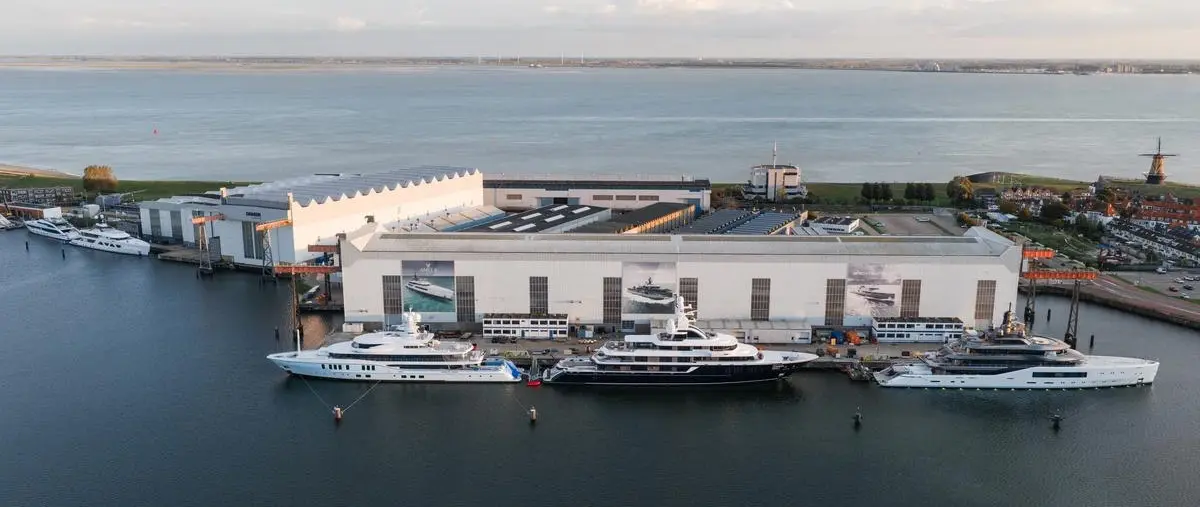
The official announcement is a plan for an event in the coming week, not a report that thousands of students have already attended. Visitor numbers therefore remain an expected participation figure. The image supplied with the source shows Damen Yachting's Vlissingen yard and provides a view of the industrial setting; it does not depict students participating in TechXplore. The programme's success will depend on the practical quality of activities, the safety of the visit and whether participants leave with a better understanding of possible careers. Bringing young people into a yard is a useful starting point, but ongoing education and training are needed for lasting results.
The students are at a decisive educational stage
Damen states that the participants will be in the second and third years of secondary education, a period when many pupils begin to think about subjects, qualifications and future work. Technical careers can appear remote if students only encounter them through textbooks or promotional material. Seeing how a component relates to a real shipyard process may make engineering more understandable. An event with varied activities may also show that maritime work includes design, electronics, planning, production and maintenance rather than one narrow occupational category. That breadth matters when an industry is seeking people with different strengths and interests.
A single visit cannot determine a student's career, and no responsible report should assume that a particular proportion will later become marine engineers. The event may nevertheless help pupils ask better questions about apprenticeships, vocational routes and further study. It can also introduce jobs that families may not have encountered directly. For businesses, the challenge is to explain technical work without making it seem either impossibly complicated or artificially effortless. A truthful demonstration should communicate both the creativity and discipline involved in building vessels, while giving visitors a chance to participate rather than simply watch professionals at a distance.
Approximately 180 activities create a broad programme
The official release says the TechXplore programme will comprise around 180 hands-on activities spanning different technologies. That number indicates a wide variety of opportunities, but it does not mean every visitor will complete all the exercises. Organisers will need to manage movement, group sizes and the time available for each demonstration. Activities have different requirements: a short digital simulation can accommodate participants differently from a physical workshop exercise. Good event planning should allow young people to engage meaningfully rather than rush through an enormous sequence of stands.
The yard's role as both host and contributor is important. A shipyard can connect a general technology theme to real maritime applications through the equipment, materials and systems used in vessel construction. But the official statement does not provide a complete list of the 180 activities or identify which specialist company runs each one. It would therefore be misleading to claim that a specific workshop will demonstrate a named machine unless the organisers confirm it. The strongest editorial point is the breadth of the programme, with technology presented as something students can explore through direct experience.
Drones and hydrogen appear among the technologies
Damen identifies drones and hydrogen among the subjects that students will encounter. Drones can make abstract concepts such as navigation, remote sensing and control systems easier to approach, while hydrogen prompts discussion of different ways energy may be stored and used. Neither subject should be simplified into a promise of a particular solution for superyachts. A small educational demonstration and the engineering demands of a large vessel are very different. The value lies in introducing basic principles and showing the kinds of questions professional designers and technicians must address.
Hydrogen in a maritime context involves complex issues of storage, safety, infrastructure and overall energy efficiency. The company's release does not state that TechXplore will demonstrate an operational hydrogen-powered yacht, and that should not be inferred. Equally, a drone demonstration does not mean the yard has adopted a particular autonomous aircraft for routine production. Students can benefit from understanding concepts without being told that every technology is commercially mature. For future marine engineers, critical thinking about limitations may be as useful as excitement about an invention. The event can encourage that curiosity if presenters acknowledge what remains difficult.
Maritime simulations bridge theory and practice
The programme also includes maritime simulations, which can offer a controlled way to explore decisions made in a complex operational setting. Simulations are widely used to illustrate how people interact with systems, but their effectiveness depends on the learning objective and how the exercise is explained. A young participant may discover that vessel operations involve timing, communication and awareness, not simply pressing controls. A simulation can also introduce the idea that safety depends on preparation and procedures as well as equipment. Such lessons have relevance across commercial shipping and yacht operations.
However, a short public demonstration should not be confused with formal certification or professional bridge training. The release gives no claim that students will acquire maritime licences or complete an approved training course during the visit. A simulation may spark interest, but the path to competence requires structured study and supervised experience. That distinction is important for families considering technical education. The best outcome may be a clearer appreciation of why ships need skilled people in many roles, from initial planning and production through to ongoing operation and maintenance.
Local colleges and schools form the organisational foundation
TechXplore is an initiative of Tech-Oriëntatie, part of Sterk Techniek Onderwijs Zeeland, according to Damen Yachting. The company identifies HZ University of Applied Sciences, Scalda, regional secondary schools and businesses among the collaborators. The mix links schools, vocational and higher education, and employers within one programme. Such a network can help visitors understand that technical skills develop through different educational pathways rather than a single route. It also gives employers an opportunity to hear questions from young people and teachers who experience the training system from another perspective.
The existence of many partners does not prove that all participating institutions offer a particular maritime qualification or that an employer has guaranteed future jobs. Those details require separate evidence. Collaboration is nevertheless meaningful because educational choices and workforce needs are interdependent. A student may become interested in electrical work without previously considering applications aboard yachts, while another may discover mechanical engineering through a practical task. Good partnerships can help turn that interest into information about available courses. The official announcement establishes the organisations involved in TechXplore, not the results of their future recruitment activities.
Zeeland's maritime economy provides the setting
Vlissingen is closely associated with the maritime sector, making the choice of venue relevant to regional education. A shipyard operates within a larger ecosystem of suppliers, contractors, logistics companies and specialist service providers. A modern yacht may contain equipment sourced from numerous businesses, while its construction requires coordination among trades that work to precise standards. Students may not otherwise realise how many different disciplines contribute to the completed product. Showing part of that system in a real industrial location can help make the opportunities more visible.
Damen's announcement does not publish detailed regional employment statistics or prove that a specific number of positions will become available after the event. It would be inaccurate to attach unsupported recruitment forecasts to the 4,000-student figure. The value for the industry is the possibility of a stronger connection between local education and the technical work taking place nearby. That relationship can support future discussions about apprenticeships, training resources and changes in technology. A sustainable workforce requires more than one successful visit, but a large collaborative event can make those conversations easier to begin.
The public is invited on Wednesday 2 December
The programme has a second audience beyond school groups. Damen says the venue will open to the wider public on Wednesday 2 December, including parents, jobseekers and people considering a change of career. That element makes TechXplore relevant to adults as well as teenagers. A person with experience in manufacturing or electronics may be curious about maritime applications, while a parent may want to understand the opportunities available to a child. The chance to ask questions directly can be valuable, provided expectations about attendance and access are clear.
Visitors should check the organiser's actual admission arrangements, hours and safety instructions. The official release identifies the public date but does not establish that every industrial area of the yard will be freely accessible or that all activities are suitable for every age. A working shipyard must maintain operational and visitor safety. People attending should therefore follow published instructions rather than assume they can enter workshops without supervision. The event is best understood as a structured introduction to technical careers, not an unrestricted tour of every part of the facility.
Building the workforce requires sustained engagement
Damen's production personnel coordinator Robert Baas emphasises the importance of inspiring the next generation of maritime talent. The practical challenge behind that statement extends across the vessel lifecycle. A yacht builder needs staff who can work with materials, electrical systems, machinery and increasingly complex integration tasks. Specialist suppliers and refit yards face related demands. An educational event can show the appeal of these occupations, but recruiting and retaining skilled people will also depend on training quality, safe workplaces, progression and realistic employment conditions.
An industry can be proud of its technology without portraying technical work as glamorous at every moment. Welding, installation, testing and maintenance require attention, patience and compliance with standards. Those attributes deserve as much recognition as high-profile design work. Students considering a career need to understand what a normal working day might involve and which qualifications are necessary. Employers can support informed choices by being clear about both opportunities and responsibilities. TechXplore offers a chance to begin those conversations in a setting where the practical outcome of skilled work is visible.
What the 24 November announcement confirms
The first-party Damen Yachting release establishes a TechXplore event planned for 1–3 December 2026 at the Vlissingen yard, with nearly 4,000 secondary-school students expected and approximately 180 practical activities. Drones, hydrogen and maritime simulations are among the stated subjects, and Wednesday 2 December includes access for other interested visitors. The named educational partners include Tech-Oriëntatie, STOZ, HZ University of Applied Sciences, Scalda and regional schools and businesses. Those are verified programme details, not evidence of attendance or outcomes before the event takes place.
Luxury Yacht Guide reports the initiative as a concrete marine-industry education development, rather than a new yacht launch or a completed training programme. The lead photograph is an official Damen Yachting yard image used to illustrate the announced location, with the original media attribution retained. Readers interested in attending should verify current visitor arrangements directly with the organisers. The long-term significance will depend on whether students and other participants find pathways into education, training and skilled work. The immediate story is a shipyard using its industrial setting to make maritime careers more tangible to thousands of potential future entrants.
Sources and image credits
Reporting based on Damen Yachting: first-party official 2026 statement.
Lead photograph: Damen Yachting Prepares to Welcome 4,000 Students to Vlissingen Yard — official Damen Yachting first-party press photograph, LYG 25 November 2026. © Damen Yachting; original image and underlying artwork rights remain with their owners. First-party press source, editorial attribution. Original official image source.