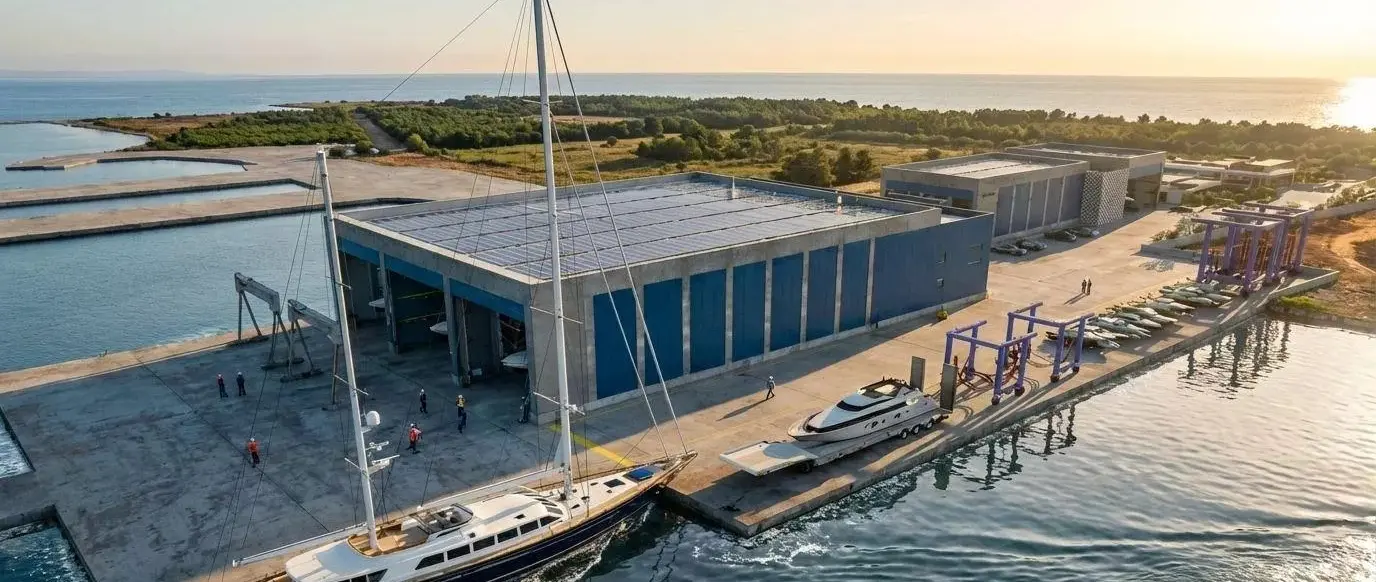
A dedicated yacht-building facility is planned for Yalova
RMK Yachts is developing a purpose-built waterfront shipyard at Yalova near Istanbul, with approximately 70,000 square metres of space intended for yacht construction. The Turkish company announced the start of building works on 7 February 2026 and identified a planned relocation phase beginning in the final quarter of the year. It set a target of full operational capacity in 2027. These dates make the announcement relevant to the industry's forthcoming production arrangements, although the first-party February release does not establish how far construction has progressed by 25 November. It is therefore more accurate to discuss the planned transition than to report a completion milestone that has not been verified.
The company's decision concerns the organisation of its manufacturing activities, not the launch of a particular yacht. Large construction facilities can influence the type and complexity of projects a builder is able to pursue, but available area is only one part of that capacity. Facilities need skilled employees, functioning utilities, machinery, quality systems and dependable suppliers. A development may look impressive in an architectural rendering long before its production processes are fully established. RMK's stated aim is to create a specialist yard for yachts, while the actual delivery of that ambition will need to be assessed once the new location is operating.
Seventy thousand square metres create different options
The site area is a central detail in the announcement. A 70,000-square-metre waterfront property can potentially accommodate a combination of construction halls, technical spaces, logistics routes, outfitting facilities and outdoor activities. However, the official statement does not give a final breakdown between buildings, quay space and open land. It should not be assumed that every square metre is enclosed production floor or that the yard has a particular number of build slots. Buyers seeking precise capacity information should request current specifications from the company.
The value of a large site depends on how it is arranged. Materials and equipment must move safely through different stages of construction, often across substantial distances. Separate areas may be needed for fabrication, assembly, painting, interior installation and commissioning. These activities have different environmental and safety requirements, and their coordination can affect schedules and quality. A yacht's exterior may be distinctive, but the competence of the production organisation influences whether the finished vessel meets its agreed specification. Expansion therefore represents an operational challenge as well as a statement of commercial ambition.
Waterfront access matters throughout construction
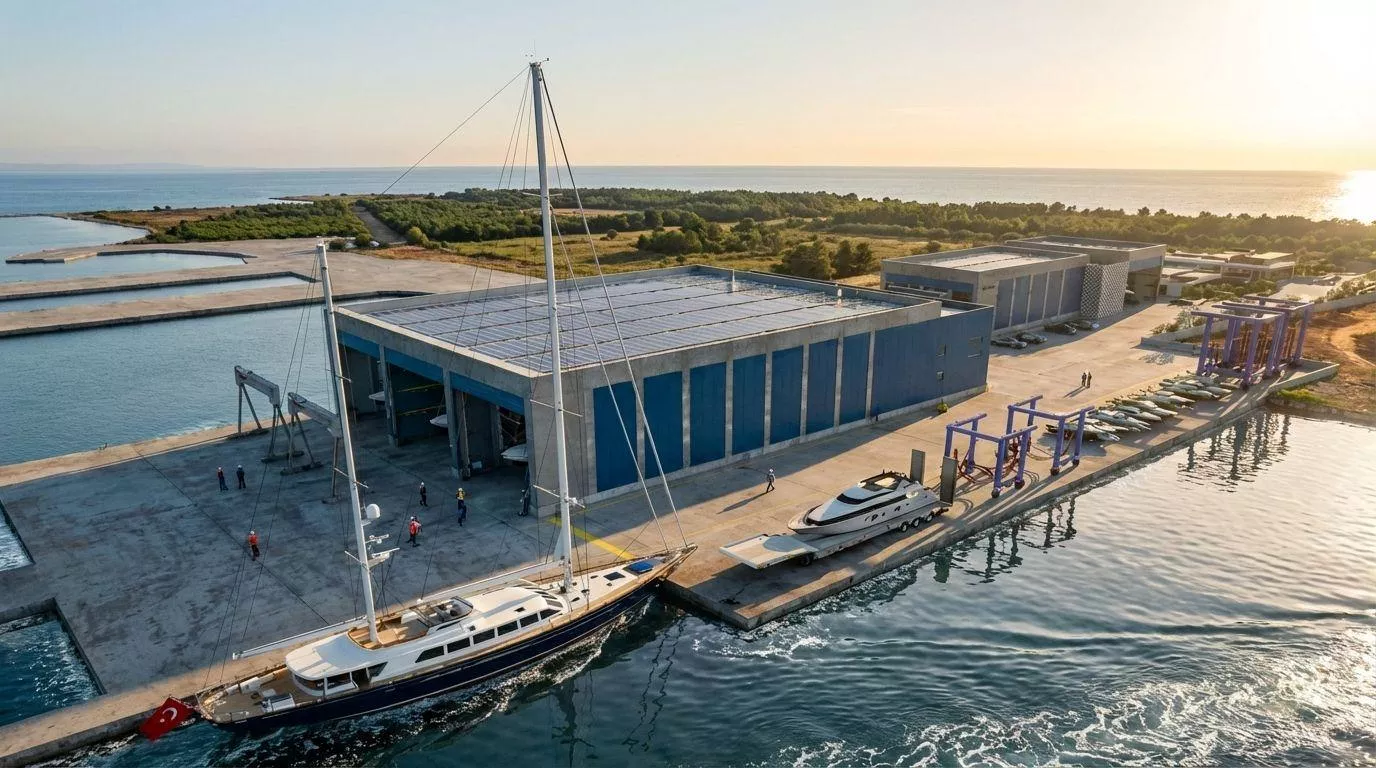
RMK identifies the Yalova site as being directly on the waterfront, an important feature for a business constructing large vessels. The route between a construction hall and the water can shape how hulls are moved, how heavy equipment is handled and how completed vessels proceed toward sea trials. Waterfront access may also support delivery of materials and service activities, subject to the actual berth and lifting arrangements. The February announcement does not publish verified dimensions for every quay, lift or dock. Those details should not be invented from a rendering.
A yacht builder must coordinate work on land with eventual operations in the water. Launching, commissioning and sea trials require different technical preparations, with attention to safety and the condition of the vessel. A purpose-built site can give designers and managers more opportunity to arrange these stages coherently. Yet a favourable location does not guarantee that every project will be completed on time. Weather, approvals, equipment availability and the progress of individual construction programmes can still influence schedules. The waterfront setting is a meaningful advantage only when combined with effective planning and reliable infrastructure.
Tuzla is set to take on a different role
The release says RMK's existing Tuzla facilities will focus exclusively on commercial and military projects after the yacht-building activities move to Yalova. This is a significant organisational distinction. Commercial vessels, naval work and luxury-yacht construction can share certain industrial skills, but their customer requirements, project processes and support arrangements are not identical. Separating the activities may allow managers to plan equipment and production capacity around more clearly defined project types. It could also help prevent different kinds of work from competing for the same facilities, depending on actual implementation.
The statement does not disclose the financial structure of the investment, the number of employees who will transfer or the future order books of each site. A reduction in overlap between facilities is a stated intention, not independently demonstrated evidence of higher output. The practical test will be whether work moves efficiently and whether both locations can maintain quality during the transition. For customers, continuity of service matters as much as the identity of the building in which a yacht is produced. Existing commitments need to be supported while the new manufacturing arrangement takes shape.
The final quarter of 2026 is a transition period
RMK's original schedule envisages beginning relocation to Yalova during the fourth quarter of 2026. As of 25 November, that period is under way, but the first-party statement alone does not confirm which buildings or teams have already moved. A plan should not be presented as a completed event simply because its target date has arrived. A responsible industry update distinguishes a forecast from an independently observed milestone. The company has identified its intended sequence; further reporting needs new evidence of what has actually happened.
Moving an industrial operation can involve more than transporting machinery. Production records, supplier arrangements, safety procedures and staff training may need to be transferred or recreated. Ongoing projects can require careful sequencing to avoid interruption. A new facility may offer better layout options while still needing time to establish dependable routines. Yacht customers will be interested in how the builder manages this process and whether delivery commitments remain clear. No revised delivery dates or affected vessel names should be inferred without official confirmation. The transition is commercially important precisely because it must be managed alongside normal project responsibilities.
Full operational capacity is targeted for 2027
The company identifies 2027 as the target year for full operational capacity at the Yalova yard. That does not mean every construction bay will necessarily be occupied or that a specific number of yachts will be delivered in the year. Capacity can refer to infrastructure and production readiness rather than completed sales or launches. Builders may need additional commissioning, staff recruitment or process refinement before a new location reaches its intended operating level. The distinction is essential when interpreting investment announcements.
Owners considering a future build should examine the project's actual progress and the timetable offered for their individual vessel. A shipyard expansion may create opportunities, but it does not remove ordinary requirements for detailed technical specifications, contractual safeguards and independent inspections. Buyers should clarify where work will be performed and which subcontractors or service providers will be involved. The production location is one factor among many in assessing a builder's suitability. A meaningful 2027 update would need evidence about the completed infrastructure and the projects actually passing through it.
Infrastructure can shape quality as well as volume
RMK frames the Yalova development around architectural vision, advanced technical infrastructure and a sustainability-oriented philosophy. These are company objectives, not independently certified environmental results. A modern facility may offer opportunities to improve material handling, energy management and working conditions, but the outcome depends on the installed systems and how they are used. Without published measures or external verification, it would be inaccurate to claim that the future yard will reduce emissions by a particular amount or achieve a named certification.
Quality is likewise influenced by what happens inside a building. Construction methods, inspection procedures and the coordination of specialist trades are central to the finished yacht. A large hall may allow more efficient work around an individual hull, while a disciplined management system helps ensure that design requirements are followed. Facilities can support these processes without guaranteeing them. Customers should therefore ask not only what has been built at Yalova but also how the yard verifies its work. The most useful evidence will ultimately come from completed projects, technical records and observed operational performance.
The development sits within Türkiye's marine industry
RMK's decision to invest near Istanbul reflects the importance of Türkiye as a location for maritime construction and specialist suppliers. The announcement presents an ambition to strengthen the company as a global participant in the megayacht market. This is a strategic statement by the builder, and it should not be treated as proof that its future market share has already increased. Competition in yacht building involves design capability, delivery reputation, after-sales service and financial dependability as well as manufacturing space.
A new specialist facility may create opportunities for local businesses providing components, materials and technical services. However, the release does not publish independently verified job figures or identify every future supplier. Such economic impacts should be assessed through subsequent reports rather than assumed. For the wider marine sector, the project is an example of a company separating specialised yacht work from other vessel-building activities. That decision raises practical questions about production focus and the long-term development of technical expertise, regardless of how large an individual yacht may be.
Buyers and crews should follow the operating evidence
An owner commissioning a yacht will be interested in a builder's track record, technical team, service support and clarity of communication. A new yard can form part of that assessment, but it should not overshadow evidence from completed vessels and documented production standards. During a transition, owners may wish to understand how their project will be supervised, where key inspections will take place and how the builder will manage any handovers between sites. The official February announcement does not supply those answers for individual contracts.
Captains and technical managers also depend on continuity after launch. Spares, maintenance advice, warranty procedures and access to the builder's expertise can be important throughout the vessel's operating life. A modern production facility could help organise some of those functions, but RMK has not specified a complete new after-sales programme in this statement. Customers should seek current information directly rather than infer services from the existence of a large waterfront site. An expansion becomes valuable to owners when it translates into reliable project delivery and support.
What the original RMK announcement confirms
RMK's official statement dated 7 February 2026 confirms the start of construction of a dedicated yacht-building shipyard at Yalova, a waterfront site of approximately 70,000 square metres near Istanbul. It says the existing Tuzla facilities are intended to focus on commercial and military projects, identifies a relocation phase beginning in the fourth quarter of 2026 and sets 2027 as the target for full operation. These are company-reported plans and milestones; the source does not independently verify the construction status as of late November.
Luxury Yacht Guide records the project as an industrial development with implications for yard organisation, technical capacity and future production rather than as the launch of an individual yacht. The accompanying official RMK image illustrates the proposed or announced facility and is credited to the publisher and original creator; it should not be mistaken for independent proof of completion. Further news should be based on confirmed commissioning or operational updates. For now, the important story is a Turkish builder organising its specialist yacht activities around a new waterfront location and a clearly stated transition timetable.
Sources and image credits
Reporting based on RMK Yachts: original first-party announcement.
Lead rendering: RMK Details 70,000sqm Yalova Shipyard and 2027 Capacity Plan — official RMK Yachts image, Luxury Yacht Guide 25 November 2026. © RMK Yachts and original photographers or creators. Original first-party publisher illustration; third-party rights remain with their holders. Original official image source.