Cyclops Marine has set out its perspective on the integration of rig-load information with other onboard systems, using a Vision cruising catamaran as the starting point for a published discussion of connected yacht technology. The article, dated 2 October 2026, describes an approach in which formerly separate instruments and monitoring devices can communicate through compatible equipment and display their information in a centralised environment. It identifies the company's Smart Rig Manager as one example of this development. For owners of substantial cruising yachts, the subject is particularly pertinent when considering which measurements are genuinely useful in managing a vessel over an extended period. The manufacturer presents an industry and ownership perspective rather than announcing a new model of yacht or a newly completed installation.
From individual instruments to a network
A sailing yacht has long been equipped with instruments reporting information such as position, speed, wind direction, depth and engine status. These remain important regardless of whether the information is presented separately or consolidated on a compatible display. The development highlighted by Cyclops concerns the increasing range of physical components from which measurements can be obtained, including elements of the yacht's rig and sail-handling equipment.
Combining information from several sources may allow an owner to consider the state of a vessel more comprehensively than when viewing one instrument in isolation. However, the usefulness of a centralised display depends on the reliability and interpretation of the information being collected. A connected system does not automatically make every reading accurate or relevant. The equipment installed aboard the individual vessel, its configuration and the way it is used are all important elements in assessing its actual value.
The Vision cruising catamaran example
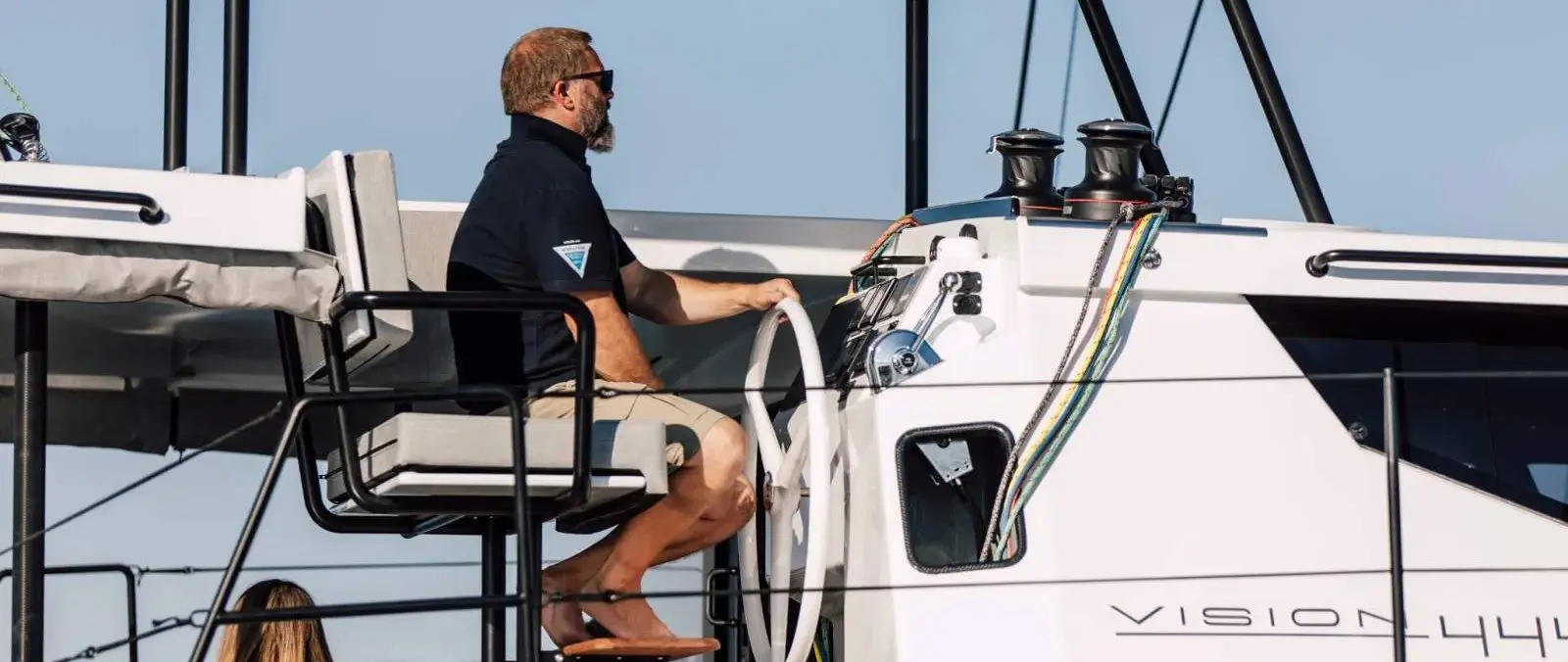
The company's article refers to the experience of an owner of a Vision bluewater cruising catamaran who chose an interconnected approach to the yacht's equipment. This illustrates the interest among some buyers in having monitoring systems incorporated into the boat rather than acquiring a series of devices independently after delivery. The announcement does not identify the particular hull, disclose the complete equipment schedule or publish a detailed analysis of its recorded loads.
For the purchaser of a new yacht, it may be useful to discuss information requirements alongside the specification of navigation, electrical and sailing systems. This gives the builder an opportunity to address compatibility and installation at a stage when changes are generally easier to accommodate than after completion. A buyer should nevertheless establish which functions are included in the agreed contract and what equipment is necessary to achieve the intended integration. The published example is not evidence that all Vision yachts receive the same installation.
Understanding measurements of rig load
A conventional visual assessment of the shape and condition of sails and rigging provides a great deal of information to an experienced sailor. Instrumented monitoring can add a different kind of information by recording forces at selected points within a system. Depending on the equipment and its location, the resulting measurements can help the crew understand how the loads change as the yacht is sailed.
Cyclops presents load information as a means of improving knowledge of the dynamic behaviour of rigging. An individual load measurement needs to be interpreted in relation to the arrangement of the rig and the circumstances in which it has been recorded. It does not, by itself, establish the condition of all the other components. Appropriate limits should be determined through the relevant equipment documentation and professional advice, not inferred from a general description of another vessel. The aim is to provide useful evidence for decisions rather than encourage an owner to treat a display as an independent certification of structural safety.
Smart Rig Manager and compatible displays
The manufacturer's article identifies Smart Rig Manager as a system intended to present load information for rig tuning, sailing and subsequent analysis. It refers to compatibility with multifunction displays from Raymarine, B&G and Garmin. The ability to use established onboard interfaces is important because it can reduce the need to install a separate screen for each new measurement.
Compatibility must be established for the actual devices and versions of software aboard a particular yacht. The announcement does not imply that every model of display from the named manufacturers will accept every possible sensor configuration. An owner considering a retrofit should obtain current specifications and discuss the installation with an appropriately qualified technician. The required interfaces, power arrangements and means of accessing recorded information are all relevant. Where the system depends on several components, responsibility for maintaining their integration should be clearly defined.
Dynamic data and tuning discussions
One practical application of recorded load information is the opportunity to support a discussion between an owner, sailing team and rigging specialist about the operation of the yacht. A set of measurements collected over time can provide more context than a recollection of the conditions experienced during a passage. It may allow the professional to consider whether additional inspection or adjustments are appropriate.
The quality of that discussion will depend on the circumstances in which the readings were obtained. Load changes can arise from several interacting factors, and a particular value may have different significance in different operating conditions. It is therefore important to retain relevant contextual information and avoid interpreting an isolated peak as conclusive evidence about the condition of the entire rig. A properly managed record can inform professional judgement, while the actual inspection and assessment of the yacht remain essential.
Applications in yacht maintenance
Cyclops suggests that monitoring data could be useful to riggers during servicing. This is a plausible application of information collected during normal yacht operation, particularly when the equipment has experienced varying loads over an extended cruising or racing programme. An accurate history may help identify matters requiring closer attention.
Owners should distinguish this potential from an assurance that recorded information can determine the remaining service life of a component. Material condition, environmental exposure, installation and previous maintenance may influence the relevant assessment. Some defects may not be evident in the readings obtained from a particular sensor. The system's measurements can support a maintenance programme, but they should not be regarded as a substitute for the intervals and procedures recommended by the designer, manufacturer or qualified service provider.
Collaboration between equipment manufacturers
Cyclops identifies North Sails, Harken, Karver, Sta-Lok and Seldén among companies with which it has worked to integrate load-measuring technology. These relationships illustrate a wider industry opportunity: a component can be supplied with a means of obtaining operational information rather than requiring the end user to devise an entirely separate measurement installation.
An integrated product may also introduce additional requirements concerning compatibility, calibration and servicing. A buyer should understand how the monitoring element is maintained and what happens when a component is replaced. A practical specification should include arrangements for continued access to the data and support for the installed software. The manufacturer's account identifies examples of collaboration but does not establish a uniform set of functions for all products associated with those companies.
Potential uses in managed fleets and brokerage
The article also outlines possible applications of recorded data beyond the immediate sailing experience, including charter fleet management, insurance discussions and the assessment of a yacht by a prospective buyer. These applications should be understood as possibilities identified by the equipment manufacturer, rather than evidence that all insurers or brokers have accepted particular measurements as a standard form of documentation.
Owners and fleet managers should establish who can access recorded information and the circumstances under which it may be shared. Data can be helpful when considered alongside the physical and documentary history of a yacht. It should not be used to make unsupported conclusions about a vessel or the actions of a previous crew. A purchaser should still arrange an appropriate independent survey, and insurance coverage must be established from the actual policy and the insurer's requirements.
Retaining independent operational capability
The attraction of a connected yacht is the ability to access useful information through a coherent interface. This also makes it important to consider the effect of a failure within the network. A problem affecting a display or communications interface may interrupt access to some information without necessarily affecting the physical operation of the equipment being monitored.
The intended sailing and watchkeeping arrangements should not depend on an assumption that every connected instrument will remain continuously available. Owners should discuss appropriate independent provisions and the process for diagnosing equipment failures with their technical advisers. A system that can be understood and maintained by the crew is more useful than one whose operation is entirely opaque. The practical benefits of integration depend on its implementation, not merely on the number of devices linked together.
A development in the ownership experience
The Cyclops report provides a useful account of the direction in which some builders and equipment manufacturers are developing their products. The Vision cruising catamaran example illustrates the interest in combining rig monitoring with other onboard information, while Smart Rig Manager provides a specific example of a system intended to use compatible existing displays.
Luxury Yacht Guide has not independently tested the installation or established that any particular insurance, maintenance or resale benefit will result. The article draws on Cyclops Marine's dated October 2026 publication and its accompanying official image. Owners considering an integrated yacht specification should assess the measurements they need, the support available and the actual compatibility of the proposed equipment before committing to a particular installation.
Related Luxury Yacht Guide reporting
- Cyclops Marine Smart Rig Manager Earns DAME Special Mention
- Sentinel Connects Yacht Builder Data With a Longer Ownership Relationship
- IRC Revises Yacht Measurement Manual Ahead of 2027
- Fountaine Pajot Releases First FPY70S Sailing Photographs
Primary reporting and image credit
Primary source(s): https://www.cyclopsmarine.com/how-digitalisation-is-changing-sailing/. Cyclops Marine / Vision Yachts; official image accompanying the October 2026 connected-yacht article. Image is used only for correctly attributed factual editorial coverage and never represented as open-licence stock photography. Original source image.