Recognition for making rig loads intelligible
Cyclops Marine has received a Special Mention in the Manufacturing, Support Products and Materials category of the 2026 DAME Design Awards for its Smart Rig Manager software. The organisers listed the product among the recognised entries after announcing the results at METSTRADE on 17 November. Cyclops is participating in the Amsterdam exhibition at stand 03.101, where the industry is gathering from 17 to 19 November.
The recognition is for a system designed to translate information from compatible load sensors into visual guidance that can be displayed at the yacht's existing multifunction display. It is not a category win, nor does it represent the introduction of an entirely new rig or sail. Cyclops describes the software as supporting several stages of the sailing experience, from commissioning at the berth to interpreting recorded information after a passage.
For a luxury sailing yacht between 12 and 23.99 metres, the interesting question is whether information which would previously have been gathered by specialist personnel during a rigging exercise can become more readily accessible during ordinary operation. That is the context in which the company's software deserves attention. The extent of the information available depends on the sensors and other equipment fitted to the actual yacht.
From a physical load to information on the helm
The manufacturer's product documentation identifies three essential components: Cyclops load sensors, its Multi Gateway and a Smart Rig Manager software licence. Together these form a system through which measured information may become available at a compatible multifunction display. It is important to distinguish the sensors themselves from the software that interprets and presents what they measure.
A sailing yacht's rig transfers forces through a collection of components that may include standing rigging, spars, fittings and connections to the hull. Some loads may be relatively steady while the boat is at its berth, while others vary considerably with sail selection, wind and the motion of the boat at sea. A sensor at an appropriate location can provide information concerning a particular load path. Its measurements do not reveal every force acting elsewhere in the structure.
For the designer or rigger, it is therefore essential to establish what each measurement represents. The position of the sensor, the specification of the equipment and the way in which the readings are interpreted are all relevant to the use of the system. An impressive graphical interface cannot compensate for a measurement that does not adequately represent the condition being investigated.
The software's role is to help organise that information into a form useful to the crew or specialist. Cyclops identifies rig illustrations and graphical presentation as elements of its approach. The company has not established in the exhibitor listing that every yacht's installed display will accept the software, so a compatibility assessment remains necessary.
Dock Tune and the commissioning process
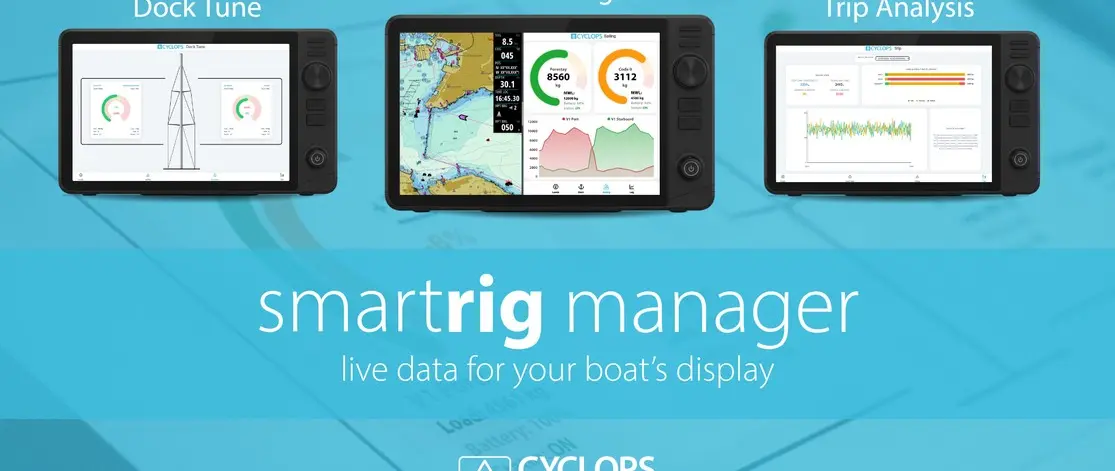
The first of the three functions described by Cyclops is Dock Tune. The company says the feature supports the use of predetermined target loads intended to reflect the rig manufacturer's design specification. Instead of presenting an isolated numerical value, it can provide visual indications of the relationship between the measurement and the target selected for that installation.
The existence of a target is not the same thing as a universal recommendation for sailing yachts. A rig's dimensions, geometry, materials and design requirements vary between boats. The appropriate target needs to come from the documentation and professional judgement applicable to the particular vessel. The manufacturer's announcement does not provide target values for individual yacht models.
During commissioning, a rigger may need to examine more than the tension indicated at a single location. The alignment of components, the condition of connections and the requirements of the wider structure are also relevant. These are questions for the responsible specialists to evaluate. A load indication can help them document an aspect of the work, but does not automatically establish that the entire rig has been assembled or adjusted correctly.
For a builder delivering a series of luxury sailing yachts, the availability of a recorded measurement may assist in documenting the commissioning process. For a yard maintaining an older yacht, it could provide another point of comparison if reliable historical records exist. The value depends on the consistency and interpretation of the measurements, rather than merely on the presence of the software.
Live Sailing and the limits of an indication
Cyclops describes a second function, Live Sailing, for observing load information during operation. The manufacturer says the software supports configurable safe working load limits and the display of load information alongside navigation functions on suitable multifunction displays. Such an arrangement may allow a skipper to see how selected measured loads change during sailing without leaving the primary helm interface.
The thresholds used in such an application must be understood in their engineering context. A safe working load for an item of equipment is not necessarily identical to the allowable load of the structure in which it is installed. Other parts of the rig may be subject to different forces and limitations. A displayed value within a configured threshold cannot establish the safety of the entire yacht.
A number of circumstances may also affect the usefulness of the measurements. A sensor could lose communication, the data could become unavailable or an installation could have been configured incorrectly. The crew should understand how the system indicates missing or unreliable information and what normal operational arrangements remain available when the equipment is not functioning.
The software should be viewed as an additional means of awareness, not authority to exceed limits published for the yacht or its equipment. Decisions about sail handling, heavy weather and continued operation remain the responsibility of the skipper, taking account of the vessel and actual sailing conditions.
Trip Analysis and the history of a yacht's rig
The third function, Trip Analysis, addresses recorded loads after sailing. Cyclops describes the ability to review trends and occurrences of higher loading as part of its system. That could be relevant to a skipper reviewing the events of a passage or a rigger investigating whether a closer inspection is advisable after demanding conditions.
There is a distinction between identifying a recorded event and diagnosing structural damage. A particular reading may merit professional investigation, but the condition of the yacht's components cannot be determined solely from that number. Inspection may still be required, especially if the vessel has experienced an incident, unusual loading or a change in the observed behaviour of the rig.
The approach also has implications for record keeping. A measurement obtained during a voyage is more useful to a service specialist when its context is available. Information about the sensor, configuration and circumstances of the passage may help explain what was recorded. Without that context, comparing observations made at different times or on differently equipped yachts may be misleading.
For owners who commission periodic maintenance, the possibility of retaining useful historical information is an interesting aspect of the product. The public material does not establish the retention arrangements, export capabilities or long-term accessibility of every configuration. These are questions worth discussing before adopting the software as part of a yacht's technical records.
Applications beyond the individual yacht
The exhibitor catalogue identifies builders, riggers, private owners and charter fleet managers among the intended users. Their requirements are not necessarily identical. A builder may be particularly interested in consistent commissioning records, while a charter management company could be concerned with identifying events that warrant attention between periods of use. A private owner may simply want a clearer view of measured conditions while sailing.
Where more than one party has access to yacht information, the arrangements for access and responsibility should be established clearly. A company should determine who may view the records, what action follows a significant indication and how the data will be handled when a boat changes ownership or leaves a management programme. The exhibitor listing refers to remote fleet monitoring and live alerts, but does not establish that all versions or installations offer the same facilities.
The DAME Special Mention recognises the design contribution of making the data more accessible. It is not a demonstration that a particular yacht has become safer, a guarantee against rig failure or a substitute for the rig manufacturer's maintenance requirements.
For Luxury Yacht Guide readers, the development illustrates the connection between the physical engineering of a sailing yacht and the increasingly sophisticated instruments through which its crew observes that engineering. The most useful assessment begins with the actual rig, suitable sensor locations, documented limits and the expectations of the people responsible for operating and maintaining it. The exhibition provides an opportunity to discuss those requirements with the supplier before specifying the equipment.
Sources and lead image
Source documentation: https://www.damedesignawards.com/winners/special-mentions, https://www.metstrade.com/exhibitors/cyclops-marine/products/smart-rig-manager-1, https://www.cyclopsmarine.com/products/smartrigmanager/. Lead image: Official Cyclops Marine Smart Rig Manager interface overview — Cyclops Marine, official METSTRADE exhibitor illustration of Dock Tune, Live Sailing and Trip Analysis; displayed values are illustrative.. Issuer-supplied media asset published with the relevant official exhibitor release or product catalogue made available through the official virtual press room for coverage of the announcement; copyright remains with the rights holder.