Bekkers expands its aluminium family cruiser line
Dutch builder Bekkers Yachts is developing the Carib 64HT, an 18.7-metre aluminium motor yacht intended to give owners more accommodation and outdoor living space than its existing AZUR 45. The Heusden yard describes the Carib as its flagship and lists the project as in build, rather than as a delivered yacht. Its published figures include a 5.4-metre beam, a stated maximum displacement of 37 tonnes and Volvo Penta D13 propulsion. The announced top speed is 25 knots, subject to the final specification and the normal distinction between a design figure and independently measured sea-trial performance.
This is a story squarely within the Luxury Yacht Guide size range. At 18.7 metres, the Carib is intended for an owner who wants a substantial weekend or short-cruise yacht without moving into the larger superyacht class. Bekkers emphasises a walk-around hardtop configuration and full-aluminium construction, with a family-friendly three-cabin layout. The interesting question is how the yard translates the detailed finish of its 13.5-metre AZUR 45 into a much larger platform while retaining practical access and owner use.
What the official specification establishes
The builder's current model sheet gives the Carib 64HT an overall length of 18.7 metres, beam of 5.4 metres and draught of approximately one metre. Fuel capacity is listed at 3,825 litres, with Volvo Penta D13 engines and a claimed 25-knot maximum speed. A maximum displacement of 37 tonnes is quoted. These are useful comparison points, but they do not establish a certified range, fuel-consumption curve, final gross tonnage or the completed boat's measured performance. The yard says specifications can vary with owners' chosen equipment.
A buyer should treat those distinctions seriously. Two yachts of similar length can have significantly different operating characteristics because of hull geometry, loading, tankage, engine installation and use. The one-metre draught figure may appeal to owners considering shallow anchorages, but a voyage plan still needs verified under-keel clearance, local tidal data and the final draught under actual load. Equally, dividing fuel capacity by an assumed consumption rate would not produce a reliable advertised range. Bekkers has not released sufficient official test figures for that calculation.
A layout aimed at longer stays
The yard describes three large cabins and three bathrooms, with around two metres of standing height and an outdoor galley. That allocation suggests a yacht designed to carry family or friends for more than a single afternoon, while still putting social activity on deck. The project is described as a family weekender, and the company says interiors can be specified to suit owners. The exact bed configuration, crew arrangement and storage quantities require a final general arrangement rather than inference from marketing photography.
For an 18.7-metre yacht, three bathrooms can be an important convenience but also introduce space and system demands. Tanks, pumps, ventilation, hot water and access for service all matter as much as the finishes that visitors first notice. A useful comparison with competing yachts should include cabin privacy, passageways when doors are open, wet-gear storage and movement between accommodation and cockpit. The Carib's published brief points towards comfort on longer trips; the final detail will determine how easily that intention works in everyday cruising.
Walk-around deck and hardtop thinking
The Carib 64HT uses a walk-around hardtop concept, combining an outdoor-oriented main deck with the shelter owners expect from a substantial cruiser. The builder illustrates broad side-deck access and an outdoor galley as central to the project. This style appeals to people who want to move safely between helm, bow and stern without crossing upholstered seating or squeezing around enclosed furniture. The specification does not yet state exact deck widths, rail heights or the arrangement of storm protection around the cockpit.
Design assessment should therefore distinguish the visual concept from a completed safety review. Practical questions include how a person moves along the side decks in wet conditions, whether handholds remain within reach, how the anchor is managed and what shelter exists at the helm. Owners who cruise with children or guests less familiar with boats may value predictable circulation more than an extra sunpad. These are not criticisms of the Carib; they are the tests that convert an attractive rendering into a practical owner-operated yacht.
The choice of aluminium construction
Bekkers positions full-aluminium construction as a defining feature of its range and says the Carib is being built by hand in the Netherlands. Aluminium permits bespoke detail and modification, but the performance and maintenance of any metal yacht depend on sound engineering, weld quality, insulation, coatings and electrical isolation. The builder's stated philosophy emphasises customisation and stainless-steel detailing. It does not publish the full scantling specification or final classification arrangements on the public model page.
A prospective owner should ask for the structural and electrical documentation rather than equating a material choice with a guaranteed quality outcome. Particular attention should go to galvanic corrosion control, hull fittings, bonded systems and isolation between different metals. Paint preparation and repair access can also influence long-term ownership costs. A good aluminium yacht can be highly durable, but maintenance practices matter. The Carib's material choice is an important part of its identity; completed construction and survey evidence will show how effectively that approach is executed.
Design responsibilities are clearly identified
René van der Velden is credited with exterior design, while Wijk Yacht Design is named for naval architecture. This division matters because exterior proportion, on-deck usability and below-water performance are related but not identical disciplines. The company presents the Carib as a larger development of its AZUR 45 approach, with additional cabin windows and greater accommodation. The stated design goal is to combine the visual character of a day yacht with the comfort needed for longer passages.
A good design comparison should examine the relationship between these aims. Larger glazing can improve the feeling of space below, but location, shading and sightlines have to be considered. More accommodation adds mass and requires careful distribution of equipment and stores. A broad beam can create useful volume, yet also affects berth choice and handling. Bekkers gives the principal dimensions and design credits, while detailed stability, noise and manoeuvring results have not yet been independently reported.
Power and handling still require sea-trial evidence
The official specification identifies Volvo Penta D13 engines and gives a maximum speed of 25 knots. Its wider description refers to IPS pod-drive propulsion, but exact engine ratings and package choices need confirmation for the individual yacht. Pod drives can offer joystick manoeuvring and distinctive service requirements, although the presence of a brand name alone does not confirm a particular control feature or its calibration on a final build. No performance graph or independent handling report has been published in the material reviewed.
That leaves sensible questions for a future trial: acceleration when heavily loaded, turning behaviour, vibration at cruising speed, helm visibility, docking response and fuel use across realistic speeds. Prospective buyers should also obtain servicing arrangements for the actual engine and drive package in the waters where they intend to cruise. A stated top speed is only one point on an operating profile. For a family cruiser, comfortable progress in imperfect conditions and predictable low-speed handling may matter far more than the final knot.
How the Carib differs from the AZUR 45
Bekkers' existing AZUR 45 is a 13.5-metre aluminium weekender, while the Carib is almost five metres longer. The smaller model is listed with two cabins and one bathroom; the Carib's published concept gives three and three. The Carib also increases published fuel capacity substantially, to 3,825 litres. That does not automatically mean proportionally longer range, since displacement, resistance and engines differ. It does suggest a brief oriented towards more time away with a larger group.
The comparison is useful because it places the new project within a recognisable builder strategy rather than presenting it as an isolated luxury object. An AZUR owner who values construction approach and detailing but needs more overnight space could find the Carib concept appealing. Other buyers may prefer the compact handling and berth flexibility of a smaller yacht. The correct choice depends on usage, not a hierarchy where bigger is necessarily better. Specifications, final layout and running costs should be compared on a consistent basis.
Build status, pricing and delivery
Bekkers currently labels the Carib 64HT as in build and asks prospective customers to request pricing and available build slots directly from the yard. No public fixed starting price or confirmed delivery date is supplied for an individual hull. It would be incorrect to treat an enquiry form as evidence that a particular yacht has been sold, launched or completed. The builder's pricing pages differentiate the Carib from its other models, which have advertised starting prices but exclude engines in some cases.
For buyers considering a custom or semi-custom aluminium yacht, the important commercial document is a signed specification with payment stages, change-control rules, inspection rights and a delivery plan. The advertised feature list should be reconciled against the contract: equipment presented on a website may not all be included in a particular price. Buyers also need clear treatment of taxes, transport and commissioning. The current public information is enough to explain the project, but not enough to quote a completed acquisition budget.
An owner-focused test remains ahead
The Carib's concept brings together dimensions, construction and accommodation that make it relevant to the growing middle of the luxury-yacht market. Yet much of what determines its success cannot be measured from a rendering: sound levels at cruise, the ease of boarding from a floating pontoon, ventilation in cabins and the accessibility of machinery. Publicity material should be the start of an inspection programme rather than the end. A successful owner trial would examine those details over several hours and through more than one operating mode.
Some features are especially worth checking for the intended family use. Can people reach the bow while others are dining? Is there adequate wet-weather storage? Are the galley and seating arrangements usable when the yacht rolls gently at anchor? Does the helm provide clear sightlines approaching a berth? The model's published layout points towards a versatile weekender, but these practical tests will eventually establish whether the experience matches the design ambition.
What the builder has and has not announced
The current official materials confirm a named 18.7-metre project, its principal dimensions, credited designers, aluminium construction, broad accommodation plan and propulsion direction. They do not establish completion, an independent speed test, a published asking price or a particular buyer. The term flagship refers to the largest model in Bekkers' current range, not to a 24-metre-plus superyacht. Keeping those distinctions clear is essential when reporting a yacht still under construction.
The model also deserves to be distinguished from a vague concept. Bekkers describes an actual build underway in Heusden, although the public material seen here does not include a hull identification number or dated yard-progress photographs sufficient for independently verifying construction stage. A later report should seek those details and, eventually, sea-trial figures. Until then, the relevant development is the yard's stated move from its 13.5-metre platform to a larger aluminium family cruiser.
Sources and next milestones
This report uses Bekkers Yachts' official Carib 64HT model page, its 2026 press room, price information and design notes. The press room identifies the release material as available for editorial publication with credit, while high-resolution photographs and detailed specification sheets are supplied on request. Any image used should therefore be tied to its own permission evidence and labelled accurately as a rendering or photograph. The model information is current as published by the yard, not an independent sea-trial result.
For Luxury Yacht Guide readers the Carib 64HT is a relevant project to follow because it sits at 18.7 metres and pursues a mixture of outdoor boating and meaningful overnight accommodation. The next genuine milestones will be documented construction progress, confirmed configuration, launch and tests. When those emerge, they can be reported as separate developments with measured figures. For now, the picture is of a Dutch yard working on a larger aluminium flagship, with design claims clearly separated from verified operating results.
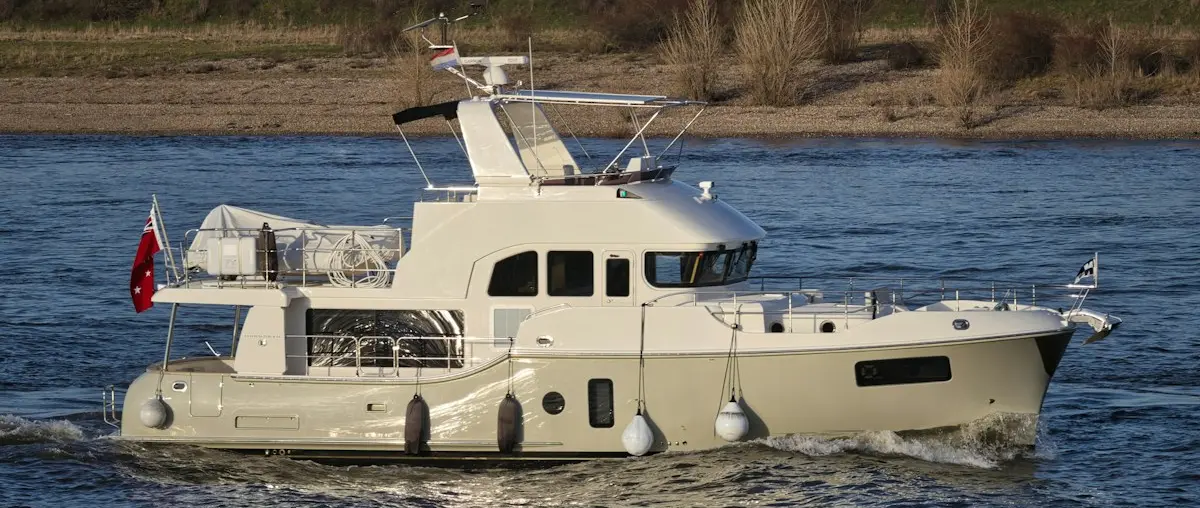
Lead image: Licensed illustrative motor yacht photo, not a Bekkers Carib 64HT. Photograph by Wolfgang Vrede, via Unsplash, used under the Unsplash License.