Besenzoni prepares a mid-size yacht equipment preview for Amsterdam
Besenzoni is taking a revised three-range product structure to METSTRADE 2026 in Amsterdam, with a hydraulic self-levelling multifunction ladder and a new family of table bases among the equipment of direct interest to owners and builders of mid-size luxury yachts. The show runs from 17 to 19 November. The Italian company is separating custom projects under Unica, its established Besenzoni products and a more standardised Selection line. The distinction is not merely a marketing label: it gives builders and owners a clearer starting point when choosing how far a component needs to be adapted to a particular boat.
The most relevant announcement for a 12-to-24-metre owner is not the largest tender-handling equipment on the stand. It is the way smaller pieces of access and furniture hardware can serve several duties without consuming unnecessary deck space. For an owner-operated cruiser or a family yacht with outboard engines, boarding arrangements affect how confidently people move between the cockpit, pontoon and water. Table mechanisms affect how flexibly the same social area can be used at anchor, underway and during meals. Those practical details deserve as much attention as headline speed or cabin numbers.
One access system is intended to do several jobs
The centrepiece of the mid-size story is a hydraulic, self-levelling multipurpose ladder developed for boats with outboard engines. Besenzoni describes an arrangement that can function as a bathing ladder, a gangway for boarding and a platform for resting close to the water. Its compact form is intended for transom installation, where outboard engines and their steering and tilt envelopes already compete for room. The company says the steel structure is built around a central beam, with an articulated hydraulic movement that keeps steps level as the assembly changes angle.
That level-step claim is significant because the relationship between a yacht and the water is constantly changing. A boarding device may need to accommodate a different pontoon height in each marina and a very different geometry when lowered into the sea. The announced design tries to address both situations in one mechanism. It does not eliminate the need for safe handholds, load-limit information or instruction, and the release does not provide a tested capacity or installed weight. Those remain questions for the manufacturer and a qualified installer before anyone makes a purchase decision.
Why outboard-equipped luxury yachts create a distinct challenge
An outboard-powered cruiser may gain service access, interior space and propulsion flexibility compared with some inboard layouts, but its stern cannot simply be treated as an uninterrupted bathing platform. Engines need clearance for steering, tilting and maintenance, while boarding gear must remain convenient for people in wet conditions. A mechanism intended to sit at the transom therefore has to be assessed as part of the complete boat rather than as an isolated accessory. The hydraulic ladder announced for Amsterdam is an example of equipment designed around that constraint.
Owners should distinguish a product's advertised multifunctionality from confirmation that it fits their specific yacht. An apparently small variation in outboard mounting, cockpit height, transom reinforcement or deck drainage can change the installation. On an existing boat, the survey should include a clear measurement of engine movement and the structure carrying the new equipment. On a new build, early discussion between the builder, equipment maker and propulsion installer can avoid late alterations. Besenzoni's release presents the concept, but it does not publish a compatibility list for individual yacht models.
From gangway to bathing platform
Besenzoni explains that a hydraulic movement can rotate part of the ladder structure into a platform intended for relaxation at the waterline. A bubble-emission option is described for a whirlpool-like effect. That is a different use from making a short crossing between quay and cockpit, and it illustrates why the working geometry and load conditions matter. The material choices announced include polished or powder-coated stainless steel, with walking surfaces in natural teak or the company's Teknos synthetic alternative. Those finishes have implications for grip, maintenance, appearance and replacement over the life of the yacht.
The announcement does not establish how quickly the structure operates, what it consumes electrically or hydraulically, whether manual emergency recovery is fitted, or the extent of standard safety interlocks. These are not omissions an editor can fill with assumptions. For an owner comparing systems, the right questions include what happens after loss of power, how the assembly is secured underway, and whether the bathing configuration is designed for the number of people likely to use it. Product demonstration at METSTRADE should help establish the physical arrangement, but full technical documentation remains essential.
Table bases move into the Selection range
A second announcement covers a new family of stainless-steel table bases in the Selection range, aimed at boats from nine metres upwards. Besenzoni says the bases have round or square profiles and versions with single or double extensions. Actuation can involve an electric system, gas springs or a combination. These are catalogue products rather than wholly bespoke superyacht components. Their immediate appeal for a mid-size luxury yacht is that furniture height and configuration may change without requiring a completely different cockpit or saloon table.
That flexibility needs to be judged against the actual living pattern aboard. A dining surface that converts to a lower coffee table, for example, can make a limited area feel more useful, but a moving base must also withstand the movement of the vessel and remain secure during passage. Owners should ask about locking positions, service access, maximum supported load and replacement parts. The company has not released prices or a definitive installation list in the announcement, so a comparison based on assumed cost or delivery time would be premature.
Three ranges with different degrees of customisation
The restructuring is intended to clarify the distance between a fully individual engineering project and a standardised component. Unica is Besenzoni's custom programme for larger yachts and complex integration with a yard's design. The core Besenzoni range builds on catalogue hardware that can be adapted. Selection is described as a more focused catalogue offering for smaller vessels, intended to preserve manufacturing quality while rationalising design and production. This matters to the mid-size sector because a boat in this category may need some personalisation without bearing the engineering burden of a completely one-off system.
Standardisation has potential advantages, but those advantages should not be assumed to include immediate availability or a particular saving. Repeatable components can make specification and future replacement more straightforward when supported by clear drawings and service documentation. Custom hardware, meanwhile, can be appropriate when the yacht's architecture leaves no standard fit. The real comparison is total installation and ownership cost, including structural changes, wiring or hydraulics, servicing, downtime and eventual replacement. Besenzoni has outlined its commercial categories; individual project quotations will still determine the outcome.
The helm seat and door systems remain part of the picture
The established Besenzoni range at Amsterdam will include an electric sliding door with one fixed panel and two moving leaves, a pantograph door and the P458 Start pilot chair. The chair uses a fixed backrest and a folding seat so that the helm can be used while seated or standing. For a mid-size cruising yacht, these details have practical implications. A good helm position needs sightlines, support, accessible controls and safe movement between indoor and outdoor spaces. Door design also affects weather protection and the ability to move through a busy cabin.
The announcement does not specify which current yacht models use these products, nor does it claim that one configuration suits every helm. Buyers should review the installed height and reach of a seat against the wheel, displays and throttle arrangement. They should also consider whether a door remains operable after an electrical fault and whether its movement creates pinch points. These are routine questions for any significant onboard component, not criticisms of the newly displayed products. They turn a product demonstration into a useful technical discussion.
What visitors can inspect at METSTRADE
Besenzoni's programme is split between two locations at RAI Amsterdam. Its Unica custom range will be in the Superyacht Pavilion at stand 07.102. The Besenzoni and Selection ranges, including the multifunction ladder and the new table bases, will be in the Italian Pavilion at stand 12.113. The three-day exhibition begins on 17 November and ends on 19 November 2026. That provides a clear opportunity for yards, installers and potential owners to see the equipment and ask questions directly, although attendance does not constitute a sea trial or a completed installation.
An effective visit is easier with measurements and a brief already prepared. A refit owner might bring transom photographs, an engine model, the height of the swim platform and the approximate space available for hydraulic equipment. A builder might focus on mounting drawings, service clearances, electrical architecture and procurement lead times. Questions about warranty coverage and technical support in the yacht's cruising region are also important. The show preview confirms displayed products and stand locations, but those installation details require direct manufacturer confirmation.
MacGregor collaboration is a separate announcement
Besenzoni also plans to announce a collaboration with MacGregor, the Gothenburg-headquartered supplier of cargo and offshore handling systems. The event report describes the relationship as part of Besenzoni's effort to broaden its competence through strategic partnerships. It does not provide the commercial scope, product schedule or financial terms of the agreement. For owners of smaller luxury yachts, the partnership is best understood as a company-development item until a specific recreational-marine product or service results from it.
The same care applies to claims about what the collaboration could deliver. Industrial handling expertise may eventually have applications in leisure marine equipment, but there is no basis yet to report a new yacht crane, lift or other model as a completed outcome. A fuller account should follow an official joint announcement with verifiable detail. For now, the directly inspectable developments remain the access ladder, table bases, helm chair and doors shown for Amsterdam. Keeping the two announcements separate prevents a broad corporate relationship from being mistaken for a product specification.
A practical ownership story beneath the exhibition headlines
Deck access and furniture systems are often less visible than engines, navigation displays or interior styling, yet they affect ordinary days aboard. Guests may use a bathing ladder several times in an afternoon, and crew or owners may board with luggage or provisions at an awkward pontoon height. A table base may be adjusted repeatedly between social uses. Equipment that works smoothly and can be maintained locally can contribute more to daily satisfaction than a feature used only occasionally. This is why an accessory preview belongs in coverage of luxury yachts, provided its intended boat sizes are clear.
Besenzoni's November announcement gives concrete examples of a market moving toward flexible functions in constrained spaces. It is not proof of a wider sales trend, a quantified safety improvement or a particular reduction in installation cost. Those claims would require testing and market evidence that are not supplied. For readers considering a new yacht or refit, the useful next step is to turn the manufacturer's display into a checklist of fit, operating limits, maintenance and service support. METSTRADE offers a venue for that comparison, not a substitute for it.
What remains to be confirmed after Amsterdam
Several figures owners would reasonably expect are not yet included in the public preview: installed mass, lifting or platform load limits, movement time, hydraulic or electrical requirements, emergency procedures, exact dimensions and retail pricing. The table bases likewise need detailed load and mounting data before a meaningful fit decision. It would be misleading to infer those figures from photographs or from other Besenzoni models. After the exhibition, product sheets and installer guidance should supply the next level of evidence for a serious buying discussion.
Until those details are available, the strongest news is the introduction of the two relevant product families and their intended functions. Besenzoni has a long-established history in yacht access and deck equipment, and its new grouping makes it easier to understand which products are standard, adaptable or fully custom. The LYG audience, with boats primarily between 12 and 23.99 metres, should watch the multifunction access system and Selection furniture closely. They address questions of usable space, water access and practical comfort that arise on many owner-operated cruising yachts.
Source and editorial scope
This report draws on the 9 November 2026 PressMare account of Besenzoni's METSTRADE programme, the company's official product information and the exhibition's exhibitor listing. It distinguishes announced specifications from questions still awaiting a technical data sheet. The larger Unica equipment is included only to explain the manufacturer's three-range structure; this is not an article about a yacht above the Luxury Yacht Guide size threshold. Images of earlier Besenzoni exhibition equipment, where used, must be labelled archival rather than presented as the new ladder or table bases.
The news is relevant to builders, designers, refit specialists and owners considering practical access and adaptable deck layouts in the mid-size market. No independent performance test has yet been cited, and no particular boat installation is claimed. METSTRADE 2026 takes place in Amsterdam from 17 to 19 November, where visitors can seek the product documentation and compare possible applications with their own yacht requirements. Follow-up coverage should be based on verified demonstrations, published specifications and actual installation evidence rather than promotional assumptions.
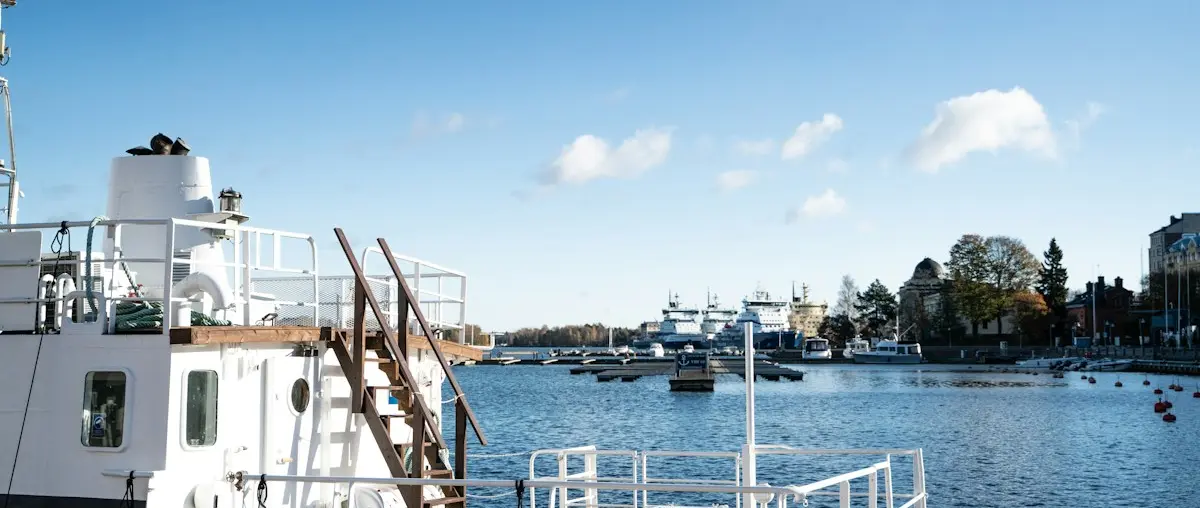
Lead image: Licensed illustrative boarding ladder photo, not a Besenzoni product. Photograph by Zack Yeo, via Unsplash, used under the Unsplash License.