Moving beyond a traditional speed paddlewheel
AIRMAR's TriSonic Smart Multisensor, announced in August 2026 and presented to the IBEX marine audience, measures speed through the water using ultrasonic technology rather than a rotating paddlewheel. Marine growth can impede a conventional paddlewheel and require regular cleaning, so the manufacturer's decision to remove that moving part addresses an everyday maintenance problem for cruising yachts.
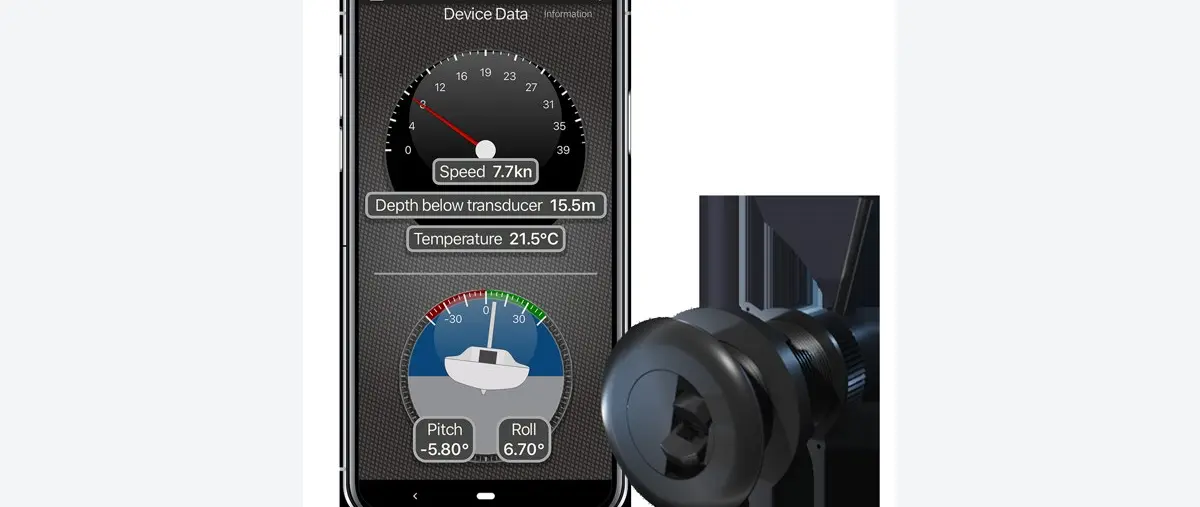
The instrument also sends depth, water temperature, heel and trim information onto a compatible NMEA 2000 network. It is intended for a broad range of leisure craft, including the 12–23.99-metre vessels covered by Luxury Yacht Guide. A new sensor, however, is not evidence that a particular yacht's existing display or instrument installation supports every transmitted value.
Calibration can be handled by smartphone
AIRMAR says the TriSonic connects through Bluetooth to its CAST application, enabling calibration and speed offset adjustment without a separate dedicated computer. The app can display current readings numerically and graphically, while its advanced calibration approach takes heel angle into account. That could make it easier to obtain more useful speed data after a vessel's loading or running attitude changes.
Owners should distinguish speed through water from speed over ground reported by GNSS. Currents can make those figures diverge markedly even when both instruments are working correctly. Calibrated water speed can support performance comparisons and passage planning, but a GPS reading is still necessary to understand movement relative to the earth.
Fewer moving parts do not mean zero maintenance
Ultrasonic measurement removes one vulnerable mechanical component, yet the sensor face, mounting and cable connections still need inspection. Biofouling, water conditions and hull turbulence can affect measurements, and the manufacturer's claims about reduced paddlewheel maintenance do not mean the installation can be ignored indefinitely.
Professional installation should confirm the selected hull position, clearance, depth capability and any existing through-hull opening. Replacing a sensor in a sailing yacht can involve constraints absent from a flat-bottomed small craft. Owners should discuss lift-out requirements and watertight integrity with the yard before ordering a replacement unit.
A practical instrument rather than an autonomous navigator
The TriSonic's adaptive signal processing is intended to adjust for changes in speed, depth and water clarity. These are valuable engineering features, but the published announcement does not provide evidence that readings will remain equally precise in all disturbed water or extreme operating conditions. Testing aboard the intended vessel remains important.
The 2026 launch shows how improved sensing can simplify one modest but useful part of yacht management. Accurate information helps an owner understand the boat, while responsible navigation still depends on several instruments, observation and sound seamanship. AIRMAR's release provides the product claims and intended connectivity. The manufacturer also lists retrofit compatibility with many existing two-inch AIRMAR housings. That may reduce installation work in some boats, but owners must confirm the exact fitting and service requirements before lifting or opening a through-hull.