A collaboration remembered for its regional focus
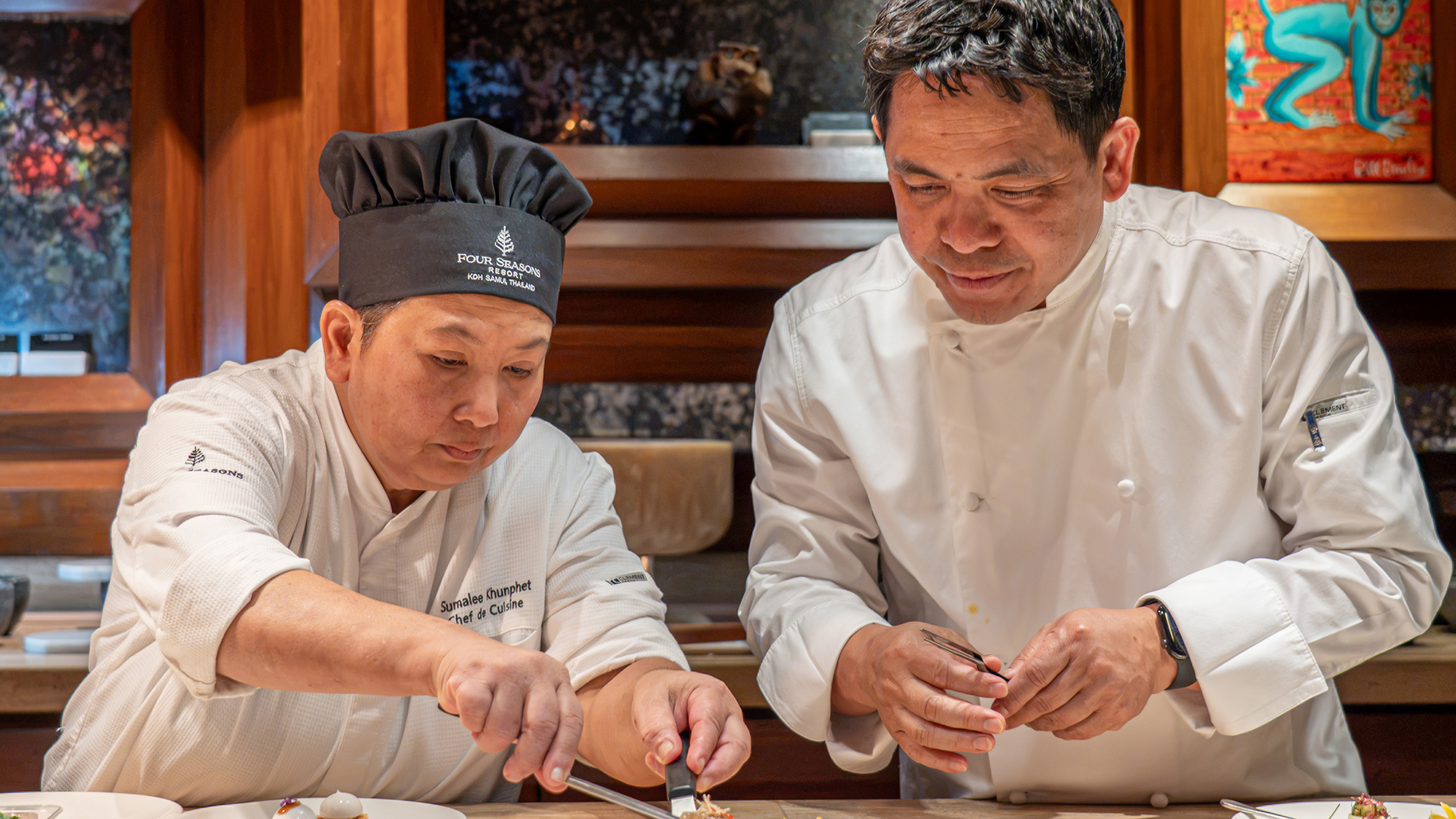
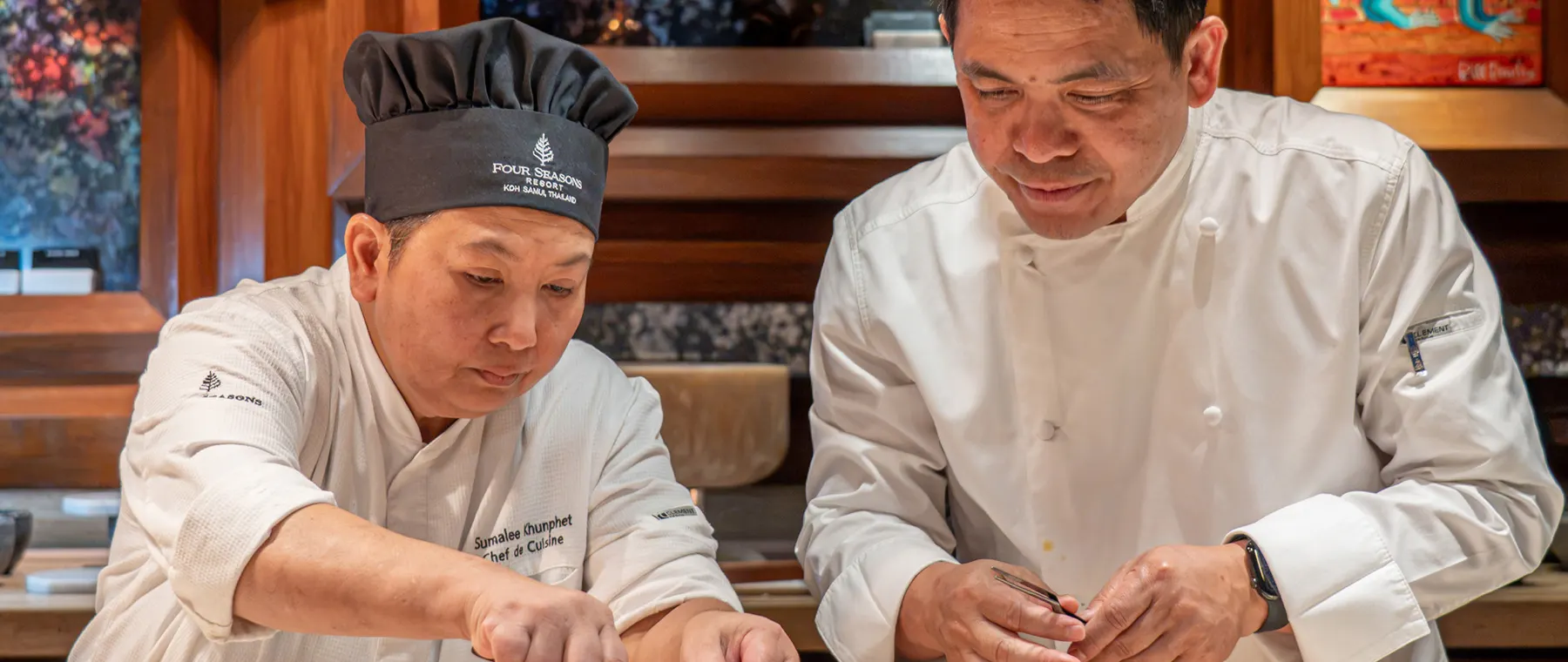
KOH Thai Kitchen & Bar at Four Seasons Resort Koh Samui hosted a three-night collaboration in August 2026 bringing together Chef Chumpol Jangprai of Bangkok's two-Michelin-starred R-HAAN and the resort's Chef de Cuisine Sumalee Khunpet, known as Chef Jeab. The official account records the dinners from 21 to 23 August, so this is a look back at a completed culinary event rather than an invitation to reserve a table for it now. Its wider relevance is the way the two chefs approached Thai cuisine through the ingredients and cooking traditions of different regions. Luxury yacht travellers often encounter food as part of an itinerary, but a special meal can reveal more about a destination than a succession of familiar international dishes. The Koh Samui event offers a useful example of hospitality built around local knowledge, technical skill and a willingness to explain why an ingredient belongs on the plate.
Two different culinary perspectives
Chef Chumpol's work at R-HAAN is associated with Thai culinary heritage and the development of precise, contemporary presentations of traditional recipes. Chef Jeab brings a different connection to the island: the resort says she grew up in Nakhon Si Thammarat, has lived on Koh Samui for more than 25 years and joined the Four Seasons organisation in 2008. These details help explain why the collaboration was more than a visiting celebrity chef preparing an unfamiliar menu. One cook brought extensive experience interpreting Thailand's wider cuisine; the other knew Southern Thai ingredients and preferences through personal and professional life. A thoughtful collaboration does not require the two to erase their differences. The most interesting meals often allow distinct approaches to stand alongside each other, leaving guests to recognise what they share and where their interpretation diverges. The resort's release presents the dinner in precisely that spirit.
An opening sequence with several textures
The event began with small courses that explored familiar Thai flavour combinations in different forms. The official menu included crisp vermicelli with pomelo and chilli, a sago-based miang kham preparation, a fish dish with herbs and pepper, and a seafood croquette drawing on tom yum flavours. Each illustrates a different way that acidity, heat, freshness and texture can open a meal. A delicate dish can prepare the palate without being bland, while a more intensely seasoned bite can bring a sense of the region's lively cooking. For travellers unaccustomed to Thai food beyond a few internationally known favourites, such a sequence may offer an approachable introduction. The point is not to count the ingredients or consume as much variety as possible. It is to notice how a chef uses contrast and pacing to create appetite. Those techniques are just as relevant to a sophisticated meal served aboard a yacht.
Seafood as a natural island language
Koh Samui's location makes seafood a meaningful subject, though responsible sourcing still matters. The dinner's official description included Phuket lobster with palm heart and a sauce inspired by the familiar spicy, tangy accompaniments used with seafood in Thailand. Another course brought fresh grouper together with coconut, turmeric and lime leaf. These combinations show how natural sweetness and firm textures can be complemented without losing the identity of the fish. An owner travelling by yacht might be tempted to regard freshly caught seafood as automatically sustainable or superior, but species, source and handling are important. Restaurants should be able to describe their purchasing practices, and guests can ask respectful questions. The chefs' menu offers inspiration for using local produce thoughtfully, not a blanket endorsement of harvesting any available marine species. Good island dining begins with attention to provenance as well as flavour.
From palace cuisine to island ingredients
The official release describes a course inspired by Chef Chumpol's experience with palace-style Thai cooking, using elements including a delicate fish preparation, scallop, coconut and fruit. It is an example of contemporary presentation drawing on a particular strand of culinary history. Such dishes require care in explanation because words like royal or traditional can be used superficially. Diners gain more when the chef describes the technique or cultural reference behind a dish and shows how it relates to the ingredients on the plate. A cuisine's heritage does not freeze it in one moment. Skilled cooks can revisit older practices while adjusting balance, texture and service to a modern dining room. Luxury travellers may encounter many formal tasting menus, but the most memorable are those whose references can be understood without needing an elaborate performance around each course.
A sorbet carrying a botanical memory
A torch-ginger flower sorbet appeared during the meal, drawing attention to a flowering plant used in parts of Southern Thai cooking. The botanical connection created a pause between more substantial courses and highlighted an ingredient that might be unfamiliar to international visitors. A palate cleanser is sometimes treated as a neutral interval, but it can also contribute a sense of place. Aromatic flowers, herbs and fruit can connect a meal to the surrounding landscape when they are used thoughtfully. At the same time, the existence of a local ingredient does not mean that every traveller should forage or attempt to reproduce a recipe without suitable knowledge. Some plants require careful identification and preparation. A chef's experience allows a flavour to appear effortless even when considerable expertise lies behind it. That is part of what makes a destination restaurant worth visiting.
A main course rooted in Southern Thailand
For the principal meat course, the chefs selected beef associated with Sichon in Nakhon Si Thammarat and paired it with turmeric, flower salt and an older-style curry preparation. The accompanying rice element reinforced the relationship between the dish and the region. Its meaning lay not only in expensive ingredients but in the use of techniques and flavours tied to a particular place. A chef could have presented steak with an internationally familiar sauce and satisfied many guests. Choosing a regional curry instead encouraged the diner to understand the cut of meat in a different culinary context. That approach can be relevant to private yacht chefs planning menus during a cruise. The best destination-inspired food does not need to imitate an entire restaurant; it may involve one carefully sourced ingredient or a technique learned from an experienced local cook.
Desserts can tell stories too
The event concluded with a dessert inspired by a Southern Thai expression describing the rhythm of sunshine and rain across the year. The official account connects its design to the region's seasons and to a range of Thai ingredients. It is a reminder that a dessert need not simply provide a sweet final note. It can use form, texture and flavour to make a cultural reference, provided the concept remains enjoyable to eat. The petit fours also highlighted ingredients from different parts of Thailand, including cacao and vanilla associated with named growing regions. Diners may not remember every component months later, but they may retain the story that brought them together. For an audience interested in craftsmanship, that connection between technique and memory is a strong reason to explore a destination's food beyond the most familiar restaurant recommendations.
Culinary exchange rather than a temporary spectacle
Guest-chef events are common in luxury hospitality, but their enduring value depends on what the teams share. A visiting cook may bring particular methods, while the resident chef provides local knowledge, established suppliers and familiarity with diners. The resort's description emphasises the exchange between the R-HAAN and KOH teams as well as the experience delivered to guests. The practical legacy of a three-night event cannot be measured solely by how many reservations were sold. It may involve ideas carried forward into later menus, better understanding of ingredients or professional relationships among cooks. Those outcomes should not be invented as if the resort had published a formal impact report. The available evidence establishes that the collaboration happened and that its menu reflected two culinary perspectives. The longer-term significance remains a question for the chefs and venue.
How to use this example when planning a yacht cruise
A yacht owner visiting Thailand might take inspiration from the event without expecting the special menu to be available today. A sensible plan is to explore current restaurant offerings, ask about regional dishes and check whether a chef-led experience is being offered during the dates of travel. The resort's release is not a guarantee of future guest appearances by Chef Chumpol or of permanent availability for the dinner's individual dishes. Travellers should also consider how they reach a shore restaurant, whether from a nearby marina or an arranged land transfer, rather than assuming every resort maintains yacht-specific access. A meaningful culinary itinerary leaves time for quieter meals as well as formal dining. A simple preparation of local produce may be as memorable as a lengthy tasting menu when enjoyed in the right setting.
What a yacht chef can learn from the menu
Private yacht chefs often work within tight storage and provisioning constraints, but the principles seen at Koh Samui remain useful. Contrasting textures, balancing acid and sweetness and highlighting regional aromatics do not require an enormous kitchen. More importantly, a chef can let local knowledge inform a menu without claiming mastery of a tradition after a brief visit. Working with reputable suppliers and local culinary professionals can help avoid superficial interpretations. Ingredients must be handled safely and in line with the vessel's equipment and guests' dietary needs. A single adapted dish may be more successful than an ambitious attempt to recreate several complex restaurant courses aboard. The lesson is one of respect for technique and provenance rather than display. The collaboration shows how attention to the people behind recipes can enrich the result.
A completed event with an ongoing message
The Koh Samui dinners were held from 21 to 23 August 2026 and should be remembered as a specific collaboration, not advertised as an ongoing booking opportunity. Their story remains relevant because they brought together two accomplished chefs, regional ingredients and a carefully structured interpretation of Thai culinary heritage. For travellers aboard luxury yachts between 12 and 23.99 metres, the example suggests a more rewarding way of approaching food during an island voyage. Instead of seeking only the most famous restaurant, consider the people, growers and traditions that give a meal its identity. The strongest memories may come from the moments when a familiar ingredient takes on a different meaning, or when a chef explains the connection between a dish and the landscape outside.
Sources and image credits
Reporting based on Four Seasons Resort Koh Samui original 25 August 2026 press account of 21–23 August R-HAAN and KOH Thai Kitchen guest-chef dinners.
Lead photograph: Koh Samui Chefs Revisit Southern Thai Heritage at KOH Thai Kitchen — official Four Seasons press photograph. © Four Seasons Hotels and Resorts / Four Seasons Resort Koh Samui Original official image source.