A new way to stay beside the Aegean
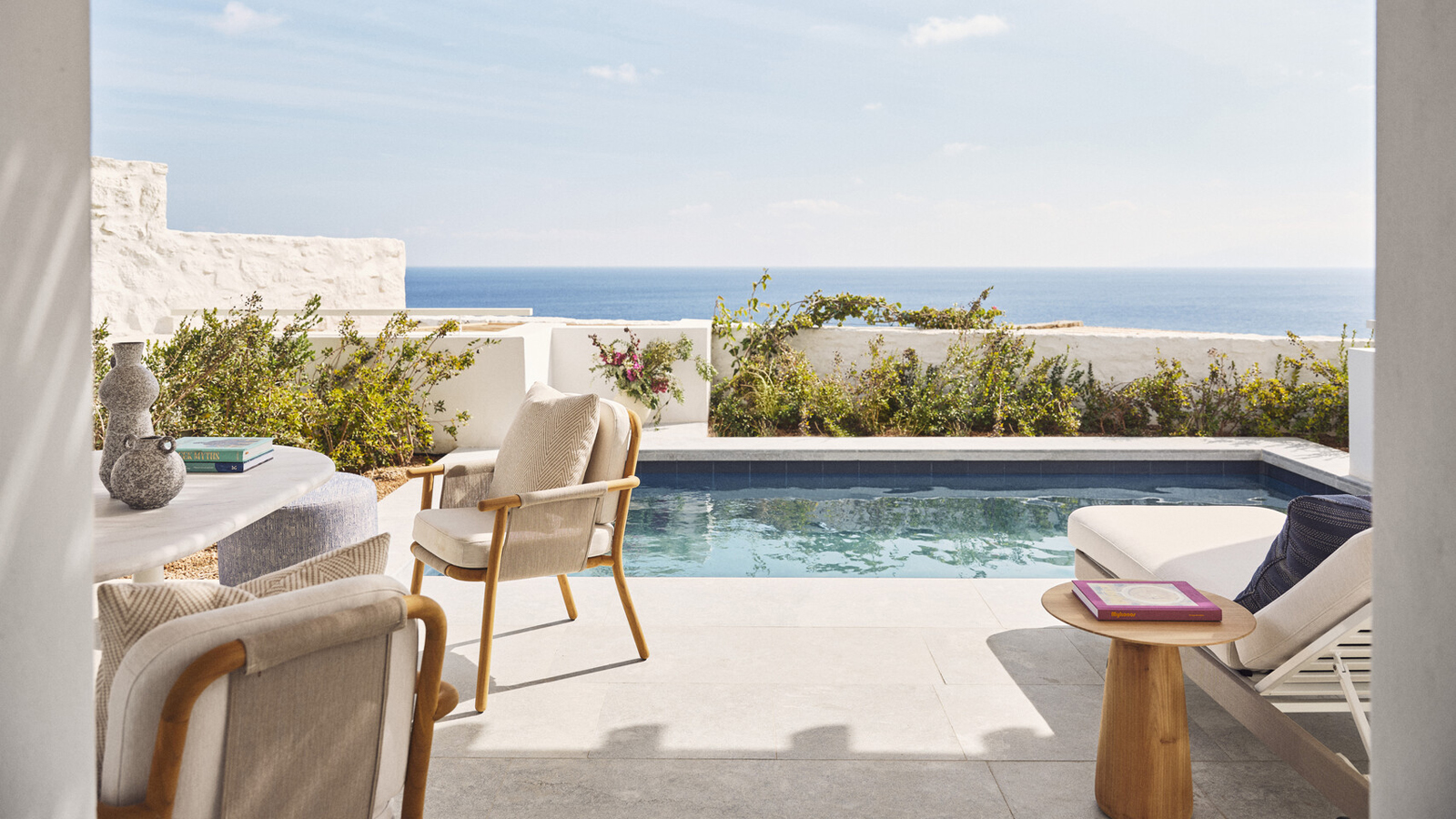
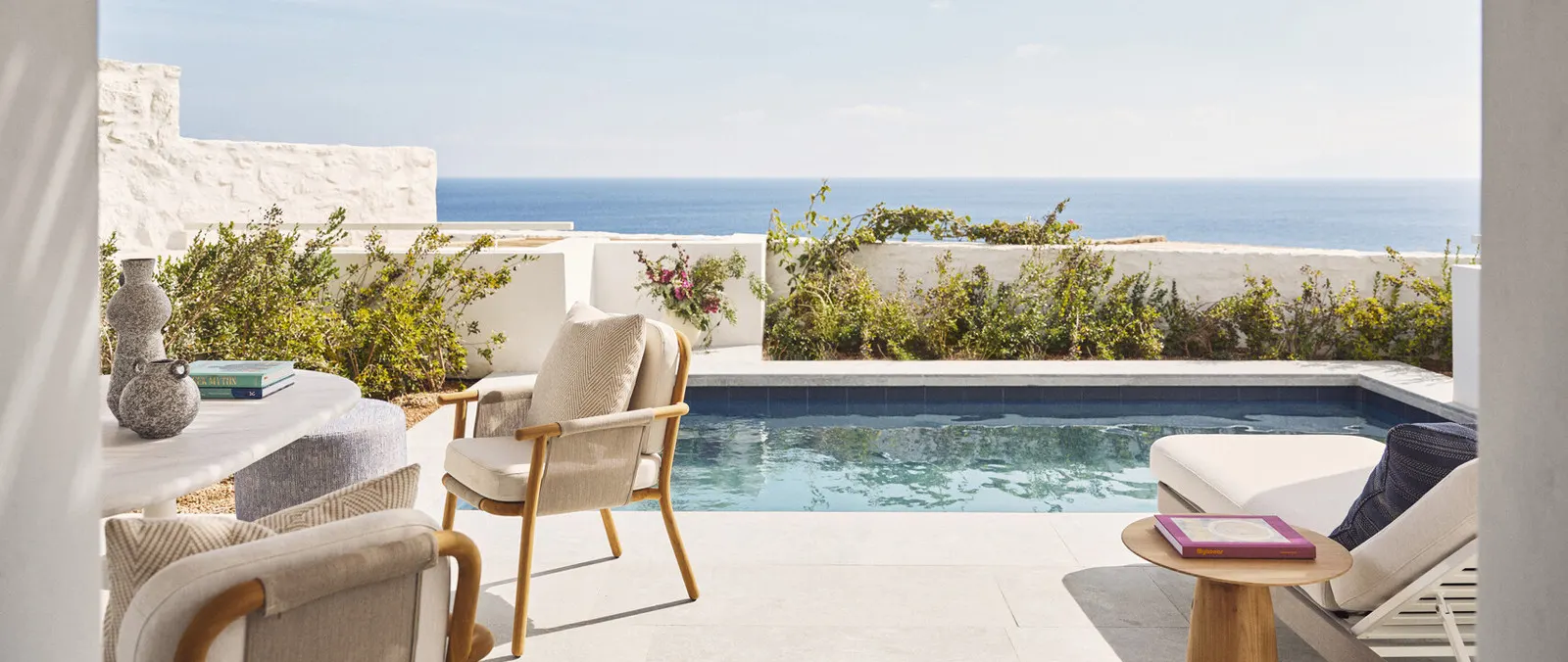
Four Seasons Hotel Mykonos opened reservations for its first summer season in 2026, introducing a cliffside retreat at Kalo Livadi Bay on the southern side of the island. The hotel's official May announcement describes a property arranged across landscaped terraces that descend towards a private stretch of beach, with architecture informed by the whitewashed forms of the Cyclades. For luxury yacht owners travelling through the Greek islands, the development offers an interesting shore-based complement to time aboard. Mykonos is known for its lively summer identity, but it also contains quieter coastal places and a long connection with maritime travel. The hotel proposes a setting in which guests can enjoy more privacy while remaining within reach of the island's restaurants, beaches and cultural heritage. A hotel room cannot replicate an itinerary between islands, yet a carefully chosen stay ashore may give travellers a more sustained experience of one place.
The setting at Kalo Livadi Bay
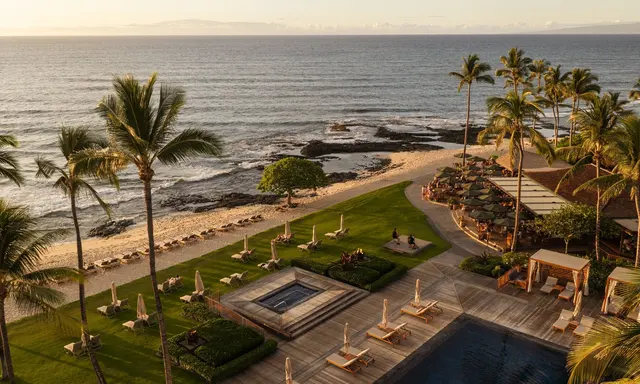
The original press release places the hotel on the western side of Kalo Livadi Bay, with grounds arranged across approximately six hectares, or fifteen acres. That configuration is important because it creates a sequence of levels and outdoor spaces between accommodation and the sea. A hillside resort may offer attractive views, but it can also require guests to negotiate changes in elevation. Travellers with mobility considerations should confirm the accessibility of their particular room and the routes to restaurants, beach facilities and other amenities. The setting is designed to convey the scale of a small village rather than a conventional tower hotel. This can make outdoor circulation feel part of the holiday, especially in favourable weather. Yet the practical experience still depends on orientation, shade and the distances between facilities. Photographs of terraces and stairways should be interpreted as illustrations of the property, not a guarantee that every room has the same access or outlook.
Architecture that takes cues from the island
Greek architect Nicos Valsamakis is credited in the official announcement with a design grounded in the visual language of the Cyclades. Whitewashed walls, stone, terraced spaces and a compact village-like arrangement are familiar forms in island architecture, though contemporary hospitality must also meet modern expectations for comfort and service. The strongest design succeeds when it feels connected to its setting without simply reproducing decorative clichés. Visitors may appreciate the way sunlight creates shadows across narrow passages and how outdoor seating allows views of the surrounding bay. It is important, however, not to assume that the entire property is a preserved traditional settlement. The hotel is a new project using regional architectural references. That distinction is part of an informed appreciation of design: respecting history does not require pretending that modern buildings are centuries old.
The accommodation programme
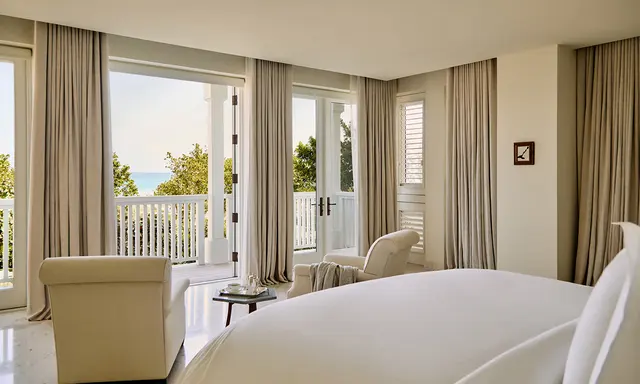
The property was announced with 94 guest accommodations, providing a range of choices rather than one standard view or layout. Couples, families and groups may have different needs, particularly when arriving from a yacht where cabin arrangements have already required compromises. A shore stay can provide additional room for belongings, quiet working time or a more elaborate family gathering. But a room count does not tell guests which category has the most privacy or convenient access to the sea. Reservations should therefore be made for the exact accommodation needed, taking into account bedroom configuration, access, outdoor space and service arrangements. Travellers with several generations in one party may want rooms close together without losing privacy. Owners accustomed to managing guests aboard a yacht may find that these practical questions are remarkably familiar, even when the physical setting is quite different.
The hotel and private yacht exploration
One distinctive element of the original announcement is the hotel's own jetty, described as a starting point for private yacht excursions to quieter beaches, watersports locations and nearby islands. This is directly relevant to luxury yacht travellers, but it should not be interpreted as a guaranteed berth for privately owned yachts of every length. The jetty's operating conditions, vessel restrictions, local permits and availability need to be confirmed directly. A visitor may choose an organised excursion from the hotel rather than move a private yacht, depending on the route and weather. The practical attraction is flexibility: guests staying ashore can still spend part of a day on the water without giving up the comfort of a fixed base. A captain planning access to the hotel from an independent vessel should contact the appropriate local authority or operator rather than assume that an advertised jetty provides unrestricted use.
Mykonos beyond its nightlife
The hotel's statement of intent includes helping guests connect with Greek culture beyond familiar beach clubs and nightlife. That distinction matters because the island's international reputation can overshadow its everyday life, architecture and traditions. A traveller might explore Chora's streets, visit an art gallery or discover smaller places to eat rather than fill every evening with a major event. The experience becomes richer when guests approach the island as a lived environment rather than a set of photographed destinations. Local knowledge can help identify places that suit a group's interests and the season of travel. The hotel's concierge may offer recommendations, but an owner need not delegate every choice to a luxury provider. Independent curiosity and respectful interaction with residents can be equally rewarding. The most successful itinerary often combines a few well-organised experiences with time to walk and observe without a fixed schedule.
Delos as a cultural counterpoint
The press release mentions Delos, the nearby archaeological island associated with ancient Greek myth and history, as a potential excursion. For travellers spending much of their holiday at sea, such a visit can provide a valuable change of perspective. Delos is not merely another scenic island: its archaeological remains and cultural significance require appropriate respect and adherence to site regulations. Opening times, boat access and guided tour options should be verified for the exact travel date, because they can vary with conditions and official schedules. It may be worth visiting with a knowledgeable guide who can explain the layers of history without turning the experience into a rushed photograph stop. The contrast between the modern resort and the ancient site can make the journey memorable. One represents contemporary hospitality; the other illustrates how maritime routes helped shape the region long before leisure yachting existed.
Building a manageable beach itinerary
Mykonos has beaches with different characters, from busy areas associated with entertainment to quieter shores where the atmosphere is more relaxed. A hotel based at Kalo Livadi provides a starting point for exploring some of that variety, but each excursion involves travel and local conditions. A yacht offers additional ways to approach the coast, though anchoring, tender access and access to protected areas must follow the relevant rules. Guests should not assume that every beach is suitable for landing from a private vessel. It is often more comfortable to choose a small number of experiences rather than attempt to visit all of the island's well-known locations in one day. A relaxed lunch and a swim may be more satisfying than a sequence of crowded transfers. The hotel setting can help travellers slow down enough to notice the differences between places.
Dining as part of a longer stay
A new luxury hotel will naturally draw attention for its restaurants and service, but the original reservations announcement should not be treated as a definitive guide to every current dining menu. Guests interested in the local food culture should explore both the hotel's offerings and suitable independent venues. Greek island dining can be at its most memorable when ingredients, preparation and setting align without unnecessary complexity. A meal overlooking the Aegean may be special for its view, while a simpler restaurant elsewhere might offer a closer connection to a particular family or cooking tradition. A yacht's private chef may also want to learn about regional ingredients for later meals aboard. The goal need not be to reproduce a hotel tasting menu on a compact galley. It can be enough to discover one ingredient or technique that gives a subsequent dinner a sense of place.
Making the transition between yacht and hotel
Owners combining a Mykonos cruise with a hotel stay should coordinate the details before arrival. Private yacht berthing, tender transfers and shore transport are distinct services and cannot be assumed to follow automatically from a room booking. The hotel itself notes convenient access to the airport and Chora, but any quoted travel time depends on traffic, season and the particular route. Guests should allow flexibility for weather and the operational requirements of the yacht. A short stay ashore may be particularly useful if the crew needs time for maintenance, provisioning or a change of guests. Alternatively, the yacht may remain the primary accommodation while visitors use selected hotel facilities subject to availability. Both choices can work well when everyone understands the arrangements. The complexity is manageable, but it should be addressed before guests arrive with luggage at the wrong quay.
Privacy in a popular destination
Mykonos can be busy during the height of summer, creating a strong demand for locations that feel separate from the busiest entertainment areas. A landscaped hillside hotel with multiple terraces may offer a different sense of privacy, but travellers should still ask about proximity to other rooms, public areas and beach activity. A secluded cove is not necessarily free from other vessels or visitors. The character of the property may change considerably between quieter mornings and popular evenings. A couple wanting a peaceful retreat may prefer a room away from central circulation, while a group of friends might value proximity to dining and social areas. The best choice reflects personal expectations rather than a generic description of exclusivity. Luxury hospitality should help guests understand those trade-offs clearly.
A Greek island experience with two rhythms
The new Four Seasons Mykonos highlights a familiar tension in luxury travel: the appeal of a destination's energy and the wish to escape it at times. Its village-inspired terraces, access to the bay and proximity to Chora and Delos offer several possible approaches to the island. For a yacht owner, the choice need not be between staying entirely aboard or entirely ashore. Time in a fixed retreat can give depth to a visit, while a day on the water preserves the excitement of exploration. The May 2026 announcement establishes the project's setting, design and initial reservations programme; actual room availability and facilities should be confirmed for the planned dates. Its significance is the creation of another base for travellers who want to engage with Mykonos on their own terms, mixing beach time, cultural curiosity and the luxury of an unhurried day.
Sources and image credits
Lead photograph: Four Seasons Mykonos Brings Cliffside Hospitality to the Greek Islands — official Four Seasons first-party press photograph. © Four Seasons Hotels and Resorts, original property press photograph Original official image source.