Why an overwater stay still matters
Bora Bora has become shorthand for the most luxurious form of island escape, yet the experience of staying above a lagoon is not as uniform as the familiar photographs suggest. Four Seasons Resort Bora Bora is highlighting 27 specialty overwater bungalow suites with private plunge pools, a collection designed for travellers who want a greater degree of privacy and space than an ordinary hotel room can provide. The resort's official July 2026 release describes one- and two-bedroom arrangements, outdoor terraces and access to the water below. For the owner or guest of a 12-to-23.99-metre luxury yacht, the announcement offers an interesting comparison between life aboard and a private shore-based sanctuary. Both promise proximity to the sea, but they distribute space, services and personal freedom differently. A few nights in a bungalow need not replace a cruise; they can be a complementary way to experience a Pacific island at a slower pace.
Twenty-seven suites, rather than a standard room category
The official announcement identifies 27 specialty overwater bungalow suites with plunge pools. The one- and two-bedroom layouts range from approximately 104 to 207 square metres, or 1,120 to 2,228 square feet, and the resort says they can accommodate groups of up to six depending on the chosen configuration. This matters to families and friends who may normally travel together aboard a privately operated yacht. Accommodation size affects how easily guests can share meals, spend time together and still withdraw for quiet moments. It is important not to treat the entire range as one identical product: the arrangement, views and guest capacity vary among the named suite types. The resort lists Otemanu, Herenui, Poerava, Mountain View and Lagoon options. A booking decision should identify the exact category rather than assume that a photograph of one plunge pool represents every available unit.
The plunge pool changes the way a terrace is used
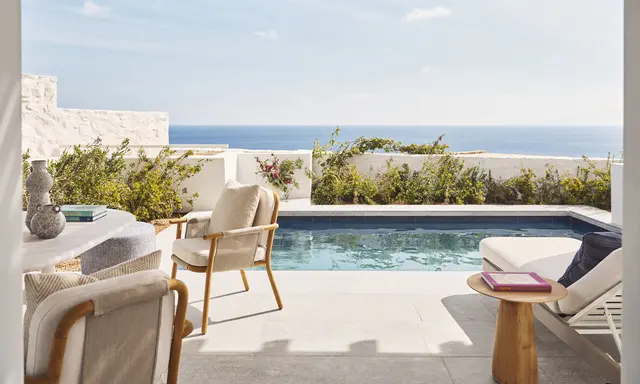
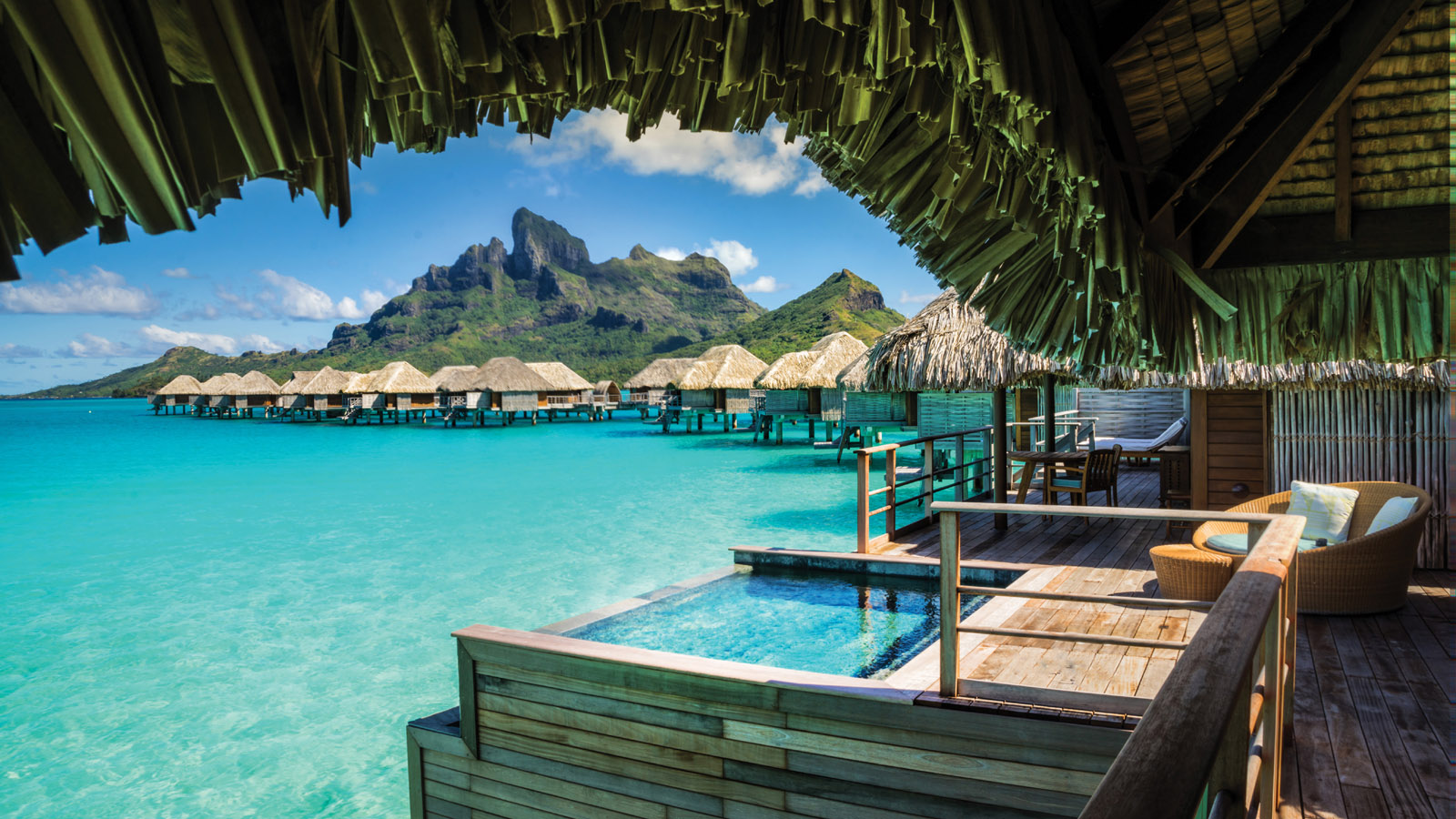
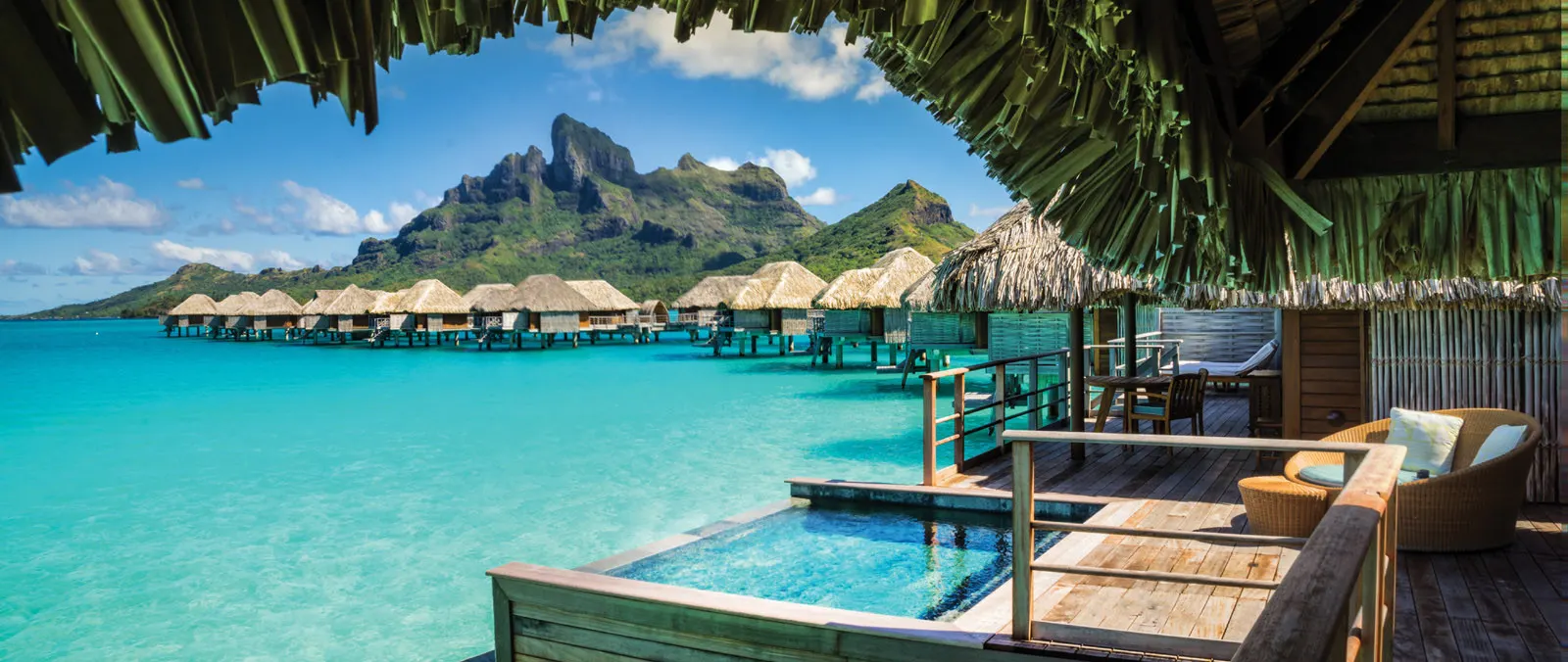
The signature feature is a private freshwater plunge pool measuring approximately 3.4 by 2.4 metres, which the resort describes as temperature-controlled and designed with an infinity-edge effect. Unlike an open-water swim, a plunge pool allows guests to cool off or relax without immediately entering the lagoon. It creates an intermediate space between the bedroom, terrace and sea. That can be useful when one traveller wants a quiet afternoon and another is ready for a more energetic water activity. The pool's value is principally in convenience and privacy rather than in its size for swimming laps. Guests should confirm any supervision requirements and use it sensibly, especially when children are present. As on a yacht's aft deck, water and smooth surfaces create slipping hazards. The appeal comes from thoughtful use of the space, not from assuming a private pool eliminates ordinary precautions.
Outdoor rooms built around shade and views
According to the release, the bungalow decks provide approximately 23 to 37 square metres of outdoor space, with furnished lounges and shaded thatched-roof areas made using pandanus leaves. Some configurations also include lower terraces with outdoor rinse showers and ladders leading directly into the lagoon. These details suggest a deliberate sequence between indoor accommodation, protected outdoor seating and the water. The ability to move among those areas without passing through a public hotel corridor can make the stay feel more residential than conventional hospitality. At the same time, guests should remember that sunlight, wind and tides influence how outdoor spaces feel across the day. The most attractive terrace at sunrise may offer a different experience in afternoon heat. Asking about shade orientation and the position of the plunge pool can be as useful as requesting the largest room in the category.
Mount Otemanu as a constant backdrop
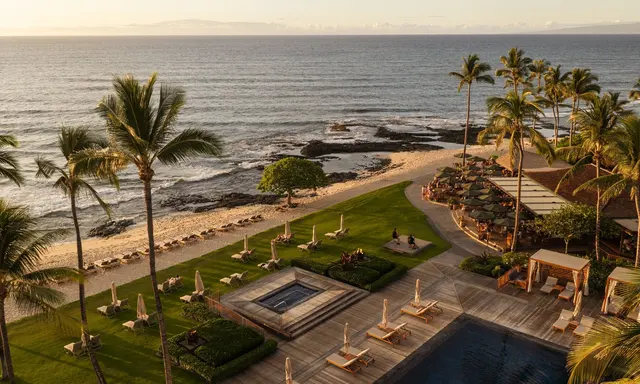
The resort's setting is defined by the lagoon and the distinctive form of Mount Otemanu, which the press release presents as a central element of the private-pool experience. A wide view across water is part of the emotional attraction of an overwater stay, but its character changes with light and weather. Early morning may reveal soft colours, while an approaching shower can make the mountain appear dramatic and distant. Owners accustomed to navigating a yacht may appreciate the rare opportunity to remain in one place and watch those changes without planning the next anchorage. It is worthwhile confirming the orientation of the actual suite, because categories described as lagoon-facing and mountain-facing are not interchangeable. A reservation should also consider privacy from nearby walkways or adjacent accommodation. A photograph may accurately show the landscape while revealing little about the sightlines from neighbouring terraces.
Personal experiences without leaving the bungalow
Four Seasons describes special in-bungalow experiences intended to make the private setting part of the journey rather than merely a place to sleep. One is a sleep-under-the-stars arrangement, where the signature bed becomes part of an outdoor evening framed by the lagoon and night sky. Another involves champagne and caviar at sundown, with service presented in a floating-tray setting. Such experiences are examples of the resort's hospitality concepts, not activities automatically included with every booking. Availability, suitability in changing weather and additional charges should be checked directly. The more interesting luxury question is whether a traveller values a programmed experience or prefers to enjoy the terrace without interruption. Privacy can be lost when an itinerary is filled with repeated service visits. Planning one or two special moments may be more satisfying than trying to book every offering during a short stay.
How this compares with time aboard a yacht
A private yacht offers mobility, a changing horizon and the ability to choose anchorages within the limits of navigation and local regulations. An overwater bungalow offers a fixed location with a resort's kitchen, housekeeping and service infrastructure close at hand. Neither is automatically superior. Guests who have spent a week aboard may welcome a larger bedroom and separate living areas, while travellers beginning a Pacific holiday might use a resort stay to adjust to the local climate before embarking on a vessel. The presence of direct lagoon access may provide an appealing reminder of swimming from a yacht, but it is subject to local conditions and resort guidance. A yacht-based itinerary must be planned around permits, travel distances, available berths and weather. The press release does not establish any dedicated yacht mooring or transfer arrangement, so those logistics should not be inferred.
Choosing between one and two bedrooms
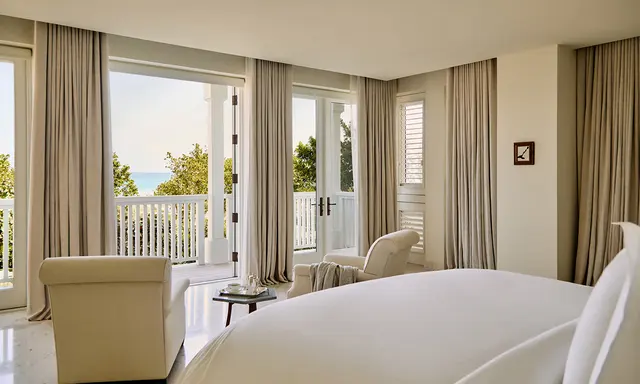
The distinction matters especially for family groups and mixed-age parties. Two bedrooms may allow children, relatives or friends to share a private setting without occupying the same sleeping space. A one-bedroom bungalow can be more intimate for a couple who wants a quiet escape. But maximum stated occupancy is not the same as an assurance that every configuration suits six adults comfortably. Guests should check the actual beds, bathroom arrangements, privacy between sleeping areas and any restrictions on additional guests. A private pool creates a focal point for shared time, yet there is also a need for places where people can read, work or rest separately. On a yacht, cabins are often highly efficient but constrained by the hull's shape. Shore-based accommodation can offer a different balance of space and togetherness, which may be precisely why the combination appeals.
Food as part of the island experience
The resort's champagne-and-caviar sundown concept demonstrates how dining service can be tailored to the setting. Yet a memorable island meal need not rely on the most elaborate presentation. Travellers may want to discover Polynesian ingredients, fresh fruit and seafood prepared in ways that reflect the destination. The official bungalow release is primarily about accommodation and does not document the menus or pricing of all resort restaurants. It would therefore be inappropriate to promise particular dishes as part of the suite rate. Guests who want special dietary arrangements or a meal on the terrace should discuss those requirements before arrival. Food service can be especially important when the accommodation is physically separated from the main resort facilities. A thoughtful plan allows guests to enjoy the privacy of the bungalow without feeling obliged to stay there for every meal.
Privacy needs to be evaluated in practice
An overwater suite is private in the sense that it has designated living areas, but it is not necessarily isolated from every neighbouring building, walkway or passing watercraft. The resort's design offers a strong visual separation from ordinary hotel circulation, although guests should not assume complete invisibility. Asking about specific sightlines, terrace configuration and proximity to public paths is sensible for travellers who place a high value on seclusion. Owners used to anchoring away from busy marinas may have different privacy expectations from guests accustomed to luxury hotels. The presence of resort staff can be a benefit when assistance is needed, but service timing should be arranged around the occupants' wishes. Good hospitality respects the distinction between attention and intrusion. The private plunge pool is part of that promise, but the overall experience is shaped by layout and service.
Practical preparation for a remote island stay
Reaching Bora Bora usually requires more planning than visiting a resort in a major European city. International travel, local connections and the weather may affect arrival and departure times. Travellers should confirm transfers through their accommodation provider and allow realistic margins between flights. The resort's press material does not establish transport arrangements for every yacht or private aircraft, and no fixed journey time should be invented. Packing should reflect a tropical marine environment, including sun protection, suitable footwear and garments that cope with humid conditions. Those planning direct lagoon access should seek the resort's current guidance regarding water conditions and permitted activities. A yacht owner may also need to coordinate luggage, crew travel and the storage of equipment aboard or ashore. The most comfortable holiday often results from getting these small logistics right before arrival.
A thoughtful alternative to moving every day
The deeper attraction of an overwater plunge-pool suite lies in allowing the island to become the destination rather than one more stop on a crowded itinerary. A traveller can watch the same mountain at dawn, afternoon and sunset and discover how the landscape changes without ever departing. The one- and two-bedroom arrangements, shaded decks and private pool make that rhythm practical for couples and families who want room to unwind. The official release provides useful facts about the 27 suites, their approximate size and their approach to outdoor living. It does not guarantee identical views or services for every category. For the 12-to-23.99-metre yacht audience, this is a shore-based luxury experience that can complement a cruise while offering a contrasting sense of permanence. The best choice will depend on the people travelling, the degree of privacy desired and the wish to stay close to the lagoon without having to navigate it.
Sources and image credits
Reporting based on Four Seasons Resort Bora Bora official 2 July 2026 overwater bungalow suites with plunge pools announcement.
Lead photograph: Bora Bora Overwater Plunge-Pool Suites Reframe Private Lagoon Living — official Four Seasons press photograph. © Four Seasons Hotels and Resorts / Four Seasons Resort Bora Bora Original official image source.