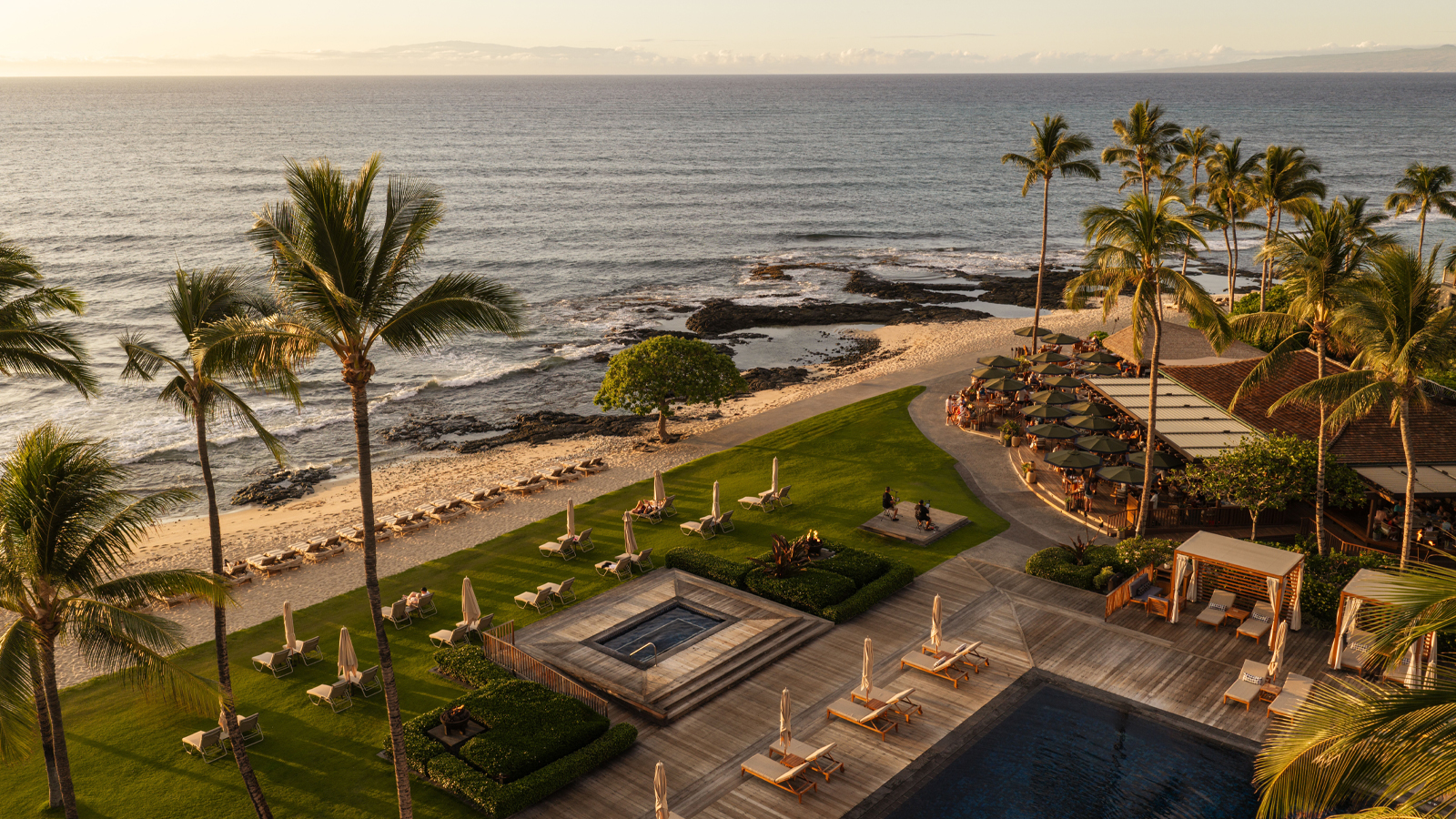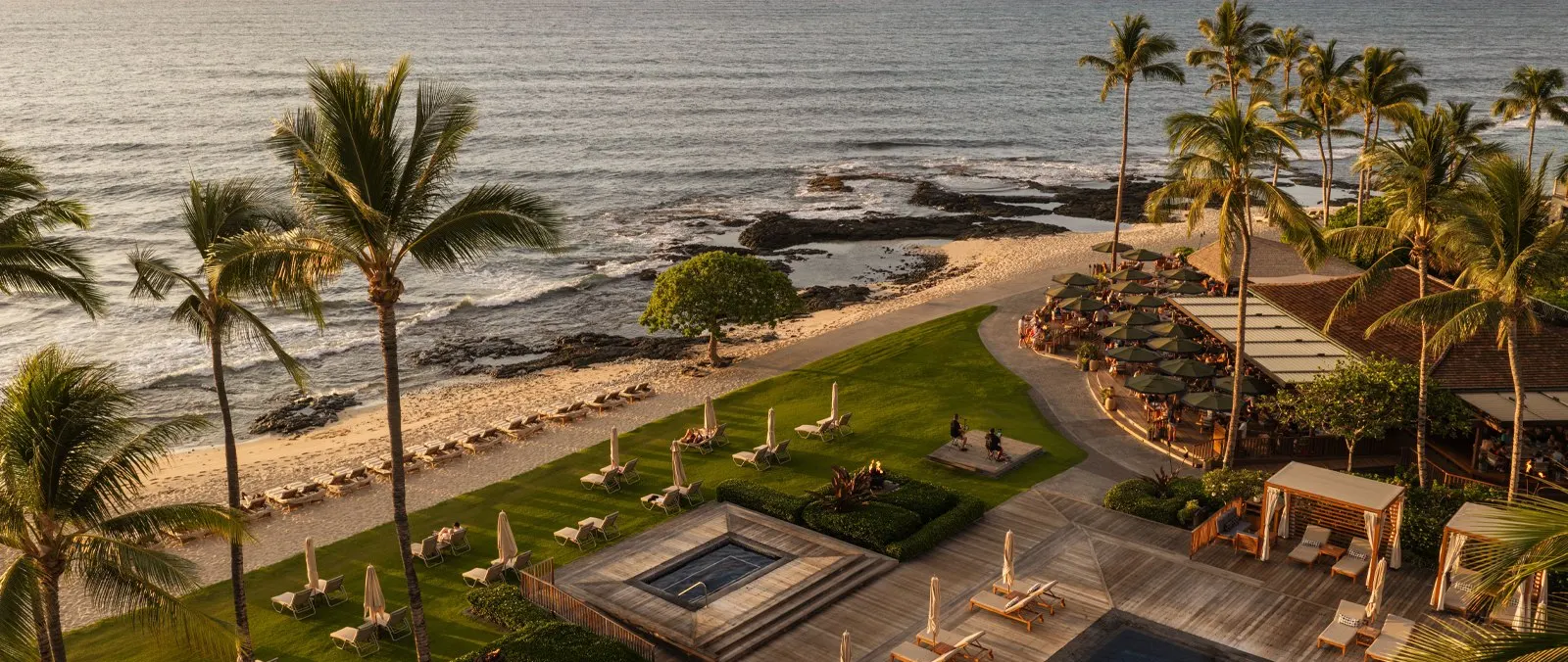
Four Seasons Resort Hualalai on Hawaii Island has appointed Ryan Grande as General Manager following the resort's thirtieth-anniversary year. The appointment, announced on 16 November 2026, brings a leader with more than fifteen years of experience across the Four Seasons portfolio to one of the company's long-established Hawaiian destinations. Grande recently served as General Manager of Four Seasons Hotel Mykonos, helping prepare the Greek property for its opening earlier in the year. His career has also included assignments in Jackson Hole, Seattle, Costa Rica and Vancouver. The news is a leadership development rather than the launch of a new hotel or an announced redesign. For luxury lifestyle travellers, its significance lies in how a destination resort seeks to preserve a recognisable sense of place while adapting its service and experiences for a new decade.
A property looking beyond thirty years
Hualalai marked thirty years in 2026, giving the incoming General Manager an unusual starting point. A relatively young hotel can establish its identity from scratch, while a long-standing destination must consider the expectations of repeat guests and the people who have worked there for years. Four Seasons describes Hualalai as a property with a loyal following and a distinctive Hawaiian character. The challenge for a new leader is to respect that history without allowing the resort to become static. The announcement does not identify a specific rebuilding programme, new room count or major capital project, so such changes should not be inferred from the appointment.
Ryan Grande arrives from Mykonos
Grande previously led Four Seasons Hotel Mykonos from the preparatory stages through the property's summer 2026 debut, according to the operator. Opening a new hotel requires coordinating a wide range of tasks: recruitment, training, maintenance systems, guest services and the practical relationship between spaces and daily operations. Taking over an established resort requires many of the same disciplines but with a different emphasis. Existing teams and guests already have expectations, and there may be long-established ways of working worth preserving. The transition from a new Aegean hotel to a Hawaiian property illustrates two sides of hospitality leadership without establishing that the same ideas will be transferred unchanged between them.
Hawaii and Greece have different identities
The two destinations are internationally recognised for coastal beauty, but their histories, communities, climates and cultural practices are distinct. It would be simplistic to assume that expertise in Mykonos automatically provides knowledge of Hawaii Island. A good General Manager needs to learn from local employees, cultural practitioners and the people who live in the area. Four Seasons emphasises Grande's intention to celebrate Hualalai's own character. That is an appropriate starting point rather than proof that every future programme will reflect it successfully. A resort's relationship with its location should be visible in decisions over time, not only in the language of a welcome announcement.
A career began in entry-level service
Grande grew up in Toronto and started his hospitality career as a bellman, according to his official biography. He subsequently held different front- and back-of-house roles before taking senior responsibilities. This history is relevant because management can benefit from understanding tasks performed far from executive offices. Bell staff, housekeeping, engineering and food-service teams influence the guest experience in practical ways. Experience in those positions does not automatically make someone a good leader, but it can provide a foundation for appreciating their complexity. The announcement presents Grande as someone whose career developed through varied operational responsibilities rather than through one specialised department alone.
Housekeeping was an important step
Four Seasons identifies a role as Director of Housekeeping at its Jackson Hole resort as a milestone in Grande's career. Housekeeping is sometimes overlooked in luxury publicity, yet it requires coordination, quality standards, timing and attention to privacy. A guest may remember a spectacular dining room but still judge a stay through the reliability of everyday room services. Managing that function offers experience of the relationship between people, procedures and the physical condition of a property. Grande later returned to Jackson Hole in a General Manager role, according to the announcement. That progression illustrates a career path through operational detail towards broader leadership.
Leadership across several destinations
The hotel lists experience at Four Seasons Resort and Residences Jackson Hole, Four Seasons Hotel Seattle, Four Seasons Resort Peninsula Papagayo in Costa Rica and the former Four Seasons Hotel Vancouver, among other assignments. Each setting brings different guest expectations and operating needs. A mountain resort faces seasonal questions different from those of a coastal property, while an urban hotel may have more business-travel patterns. The relevance of international experience is not that all places operate identically, but that a manager can learn how to adapt systems. The official release does not assign dates and detailed achievements to every position, so the career should not be embellished with unsupported claims.
Education complements practical work
Grande holds a hospitality-management diploma from Niagara College in Ontario and a master's certificate in essentials of hospitality management from Cornell University, as identified by Four Seasons. Formal study can provide frameworks for finance, operations and management, while experience shows how those ideas work in a live hotel. Neither qualification should be represented as proof of expertise in every discipline or as a guarantee of a resort's future performance. Their relevance lies in the combination with years of operational roles. Hospitality leadership requires continual learning, particularly when guest expectations and the needs of employees change.
A sense of place is more than a slogan
Hualalai's identity is linked to the landscape and culture of Hawaii Island. Four Seasons uses the word aloha in describing the welcome it hopes to sustain. The term has a broader cultural significance than a standard tourism greeting and should be treated with respect. A hotel cannot claim to define Hawaiian culture simply because it operates in the islands. Its relationship with local communities, employees and cultural practitioners matters. The incoming General Manager's comments acknowledge the strength of the destination's existing identity. Whether the resort's choices deepen that relationship will depend on actions and long-term engagement rather than a single appointment statement.
The Big Island's landscape demands attention
Hawaii Island is known for varied volcanic terrain, coastline and contrasting environments. These features can form part of the appeal of a resort stay, but they also require responsible travel practices. Visitors should follow local guidance around protected areas, marine life and volcanic landscapes. A hotel may provide information about excursions, yet the source release does not announce new guided activities or guarantee access to particular sites. The island is a living community with its own challenges and traditions, not merely a scenic setting. Luxury travellers can enjoy a comfortable property while making space to learn about the people and ecology beyond the resort.
Continuity matters to returning guests
A resort with an established reputation may welcome people who return over many years. Those guests may value familiar staff, service routines or particular facilities. A new General Manager must consider how to maintain trust while preparing for future needs. Four Seasons describes Hualalai's loyal guests as a significant part of its legacy. However, continuity should not mean that a resort never evolves or that all guests want identical experiences. Different generations may place different emphasis on privacy, wellness, food or technology. Thoughtful management seeks to understand those needs without discarding the qualities that made the property distinctive.
Employees carry much of the institutional knowledge
When a leader arrives at an established destination, experienced staff members often understand details that cannot be captured fully in policy manuals. They may know how weather affects outdoor service, which local partnerships are valuable and what returning guests appreciate. Listening to those people is essential to any credible claim of respect for a property's identity. The press announcement emphasises Grande's management experience, but it does not provide a detailed staff-development plan. An editorial interpretation can recognise the importance of employees without pretending that specific initiatives have already begun. Future progress should be evaluated through evidence, including how the team is supported.
The operational work behind luxury
A premium resort is sustained through maintenance, purchasing, safety, staffing and the coordination of many services. Guests may encounter the results without seeing the process. An executive appointment is therefore newsworthy partly because managerial decisions can affect the everyday reliability of the property. Grande's career across front-of-house, housekeeping and senior leadership roles makes that operational perspective relevant. The company's release expresses confidence in his approach but does not publish audited performance targets. It is better to report his remit and background than to promise improvements that have not yet been made or measured.
Guest experiences can evolve carefully
Four Seasons describes future opportunities to develop curated experiences at Hualalai. That phrase suggests the potential for work across dining, recreation and hospitality, but the source does not list confirmed new restaurants, spa facilities or programmes. A responsible preview should not fill the gap with invented projects. Guests interested in a particular activity should consult the resort's current offerings. The appointment may shape future decisions, yet any actual changes deserve separate reporting once announced. Luxury travellers benefit from clear distinctions between a company's ambition and products or services that can be booked today.
Environmental considerations belong in resort planning
Coastal resorts operate within sensitive environments, and Hawaii Island's landscape gives environmental management particular importance. Water use, waste, building maintenance and the effect of visitor activity are practical concerns for any large property. The November appointment release does not contain a comprehensive sustainability plan or quantified commitments, so it would be inappropriate to attribute new targets to Grande. The broader point is that long-term hospitality must consider how the property's operations relate to its surroundings. A meaningful sense of place includes responsibility for the landscape and communities that make a destination attractive in the first place.
Management announcements are not independent reviews
The appointment was made and reported by Four Seasons, and the accompanying assessments of Grande's experience and leadership are company statements. They supply useful biographical information but are not independent proof of how he will perform in his new position. A guest's experience depends on many factors beyond the General Manager, including the work of employees and the condition of facilities. Recognising that does not diminish the significance of the appointment. It simply places it in the correct category: a documented organisational change whose consequences will become visible over time.
The relevance for luxury yacht travellers
Owners and guests of 12–24-metre yachts may be interested in Hawaii Island as a coastal and cultural destination. A long-established resort provides a place to spend time ashore, but the appointment release does not announce berthing, yacht charters or vessel-specific packages. Its relevance to a luxury yacht lifestyle publication is the broader interest in personal hospitality, coastal environments and carefully managed private experiences. A hotel and a yacht have different operational requirements, yet both depend on teams whose work becomes most apparent when something needs attention. Leadership and continuity matter in each setting without implying a direct commercial relationship.
A new chapter following the 2026 anniversary
Four Seasons announced Ryan Grande's appointment as General Manager of Hualalai on 16 November 2026, following the resort's thirtieth-anniversary milestone. His background includes more than fifteen years with the company and experience in Mykonos, Jackson Hole, Seattle, Costa Rica and Vancouver. The official release sets out a commitment to preserving the resort's character while preparing for the future, but it does not describe completed changes to the property. For luxury lifestyle readers, the development is a reminder that destinations are maintained through people and long-term decisions as much as through architecture and scenery. The next chapter should be judged on how well those decisions serve guests, employees and the Hawaiian setting.
Sources and image credits: Four Seasons Resort Hualalai, official 16 November 2026 release, Four Seasons Resort Hualalai Welcomes Ryan Grande as General Manager, with original official resort press photography. Career details and management statements attributed to Four Seasons; independent hospitality analysis by Luxury Yacht Guide.
Sources and image credits
Reporting based on Four Seasons Resort Hualalai 16 November 2026 official general manager appointment.
Lead photograph: Hawaii's Hualalai Resort Welcomes Ryan Grande as General Manager — credited first-party original official press photograph. Image: Four Seasons Hotels and Resorts, original official press photograph of Four Seasons Resort Hualalai in Hawaii. Original official image source.