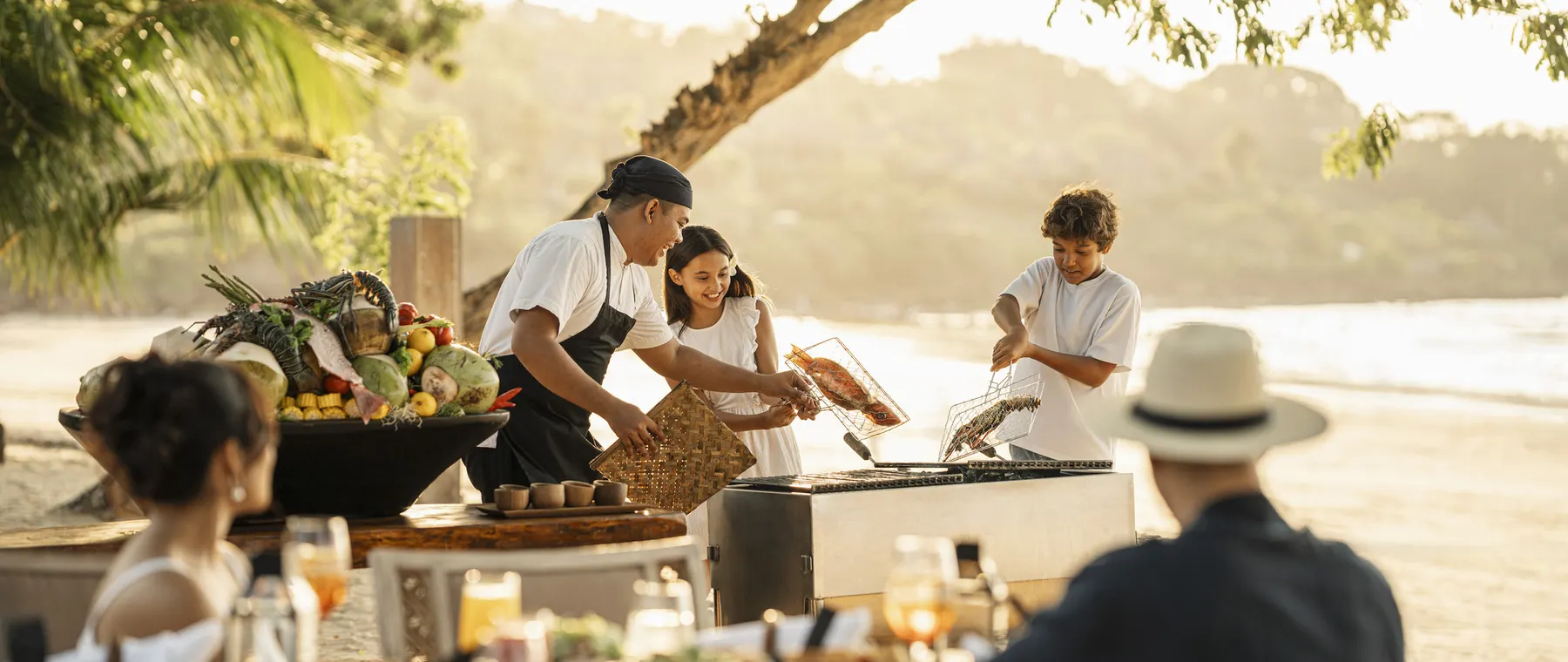
A beachside dinner with a local starting point
Four Seasons Resort Bali at Jimbaran Bay introduced a Friday Sunset BBQ at Coconut Grove for the 2026 season, drawing on the coastal area's long association with fishing and seafood cooked over fire. The original resort announcement described the programme running from 29 May to 30 October 2026, with grilled catches, local accompaniments and evening entertainment. Those dates have passed, so the story is a retrospective look at the food culture behind the event rather than an invitation to book the same Friday programme today. For owners and guests of luxury yachts between 12 and 23.99 metres, the experience has a familiar appeal. Food served close to the beach can bring together views of the water, a sense of place and the freshness associated with a fishing community. The most interesting part is not simply the luxury setting, but the relationship between a cooking technique, locally sourced produce and the traditions of the bay.
Why Jimbaran is associated with seafood
Jimbaran's shoreline has become widely associated with meals cooked beside the sea, and the resort's event deliberately drew on that identity. A visitor sitting at a table in the sand may be enjoying a carefully produced hospitality experience, but the concept refers to a more everyday relationship between coastal communities and the fish available in local waters. This context should not be romanticised into an assumption that every item on a menu is sustainably caught or that a commercial resort reproduces village dining without modification. The responsible question is how seafood is sourced, handled and prepared. The official release says local fishermen supplied the catches for the event. Guests who are interested in provenance can ask the kitchen about species, seasons and purchasing practices. A memorable meal may begin with excellent ingredients, but the story behind them can make it feel specific to the destination.
Coconut husks and the flavour of flame
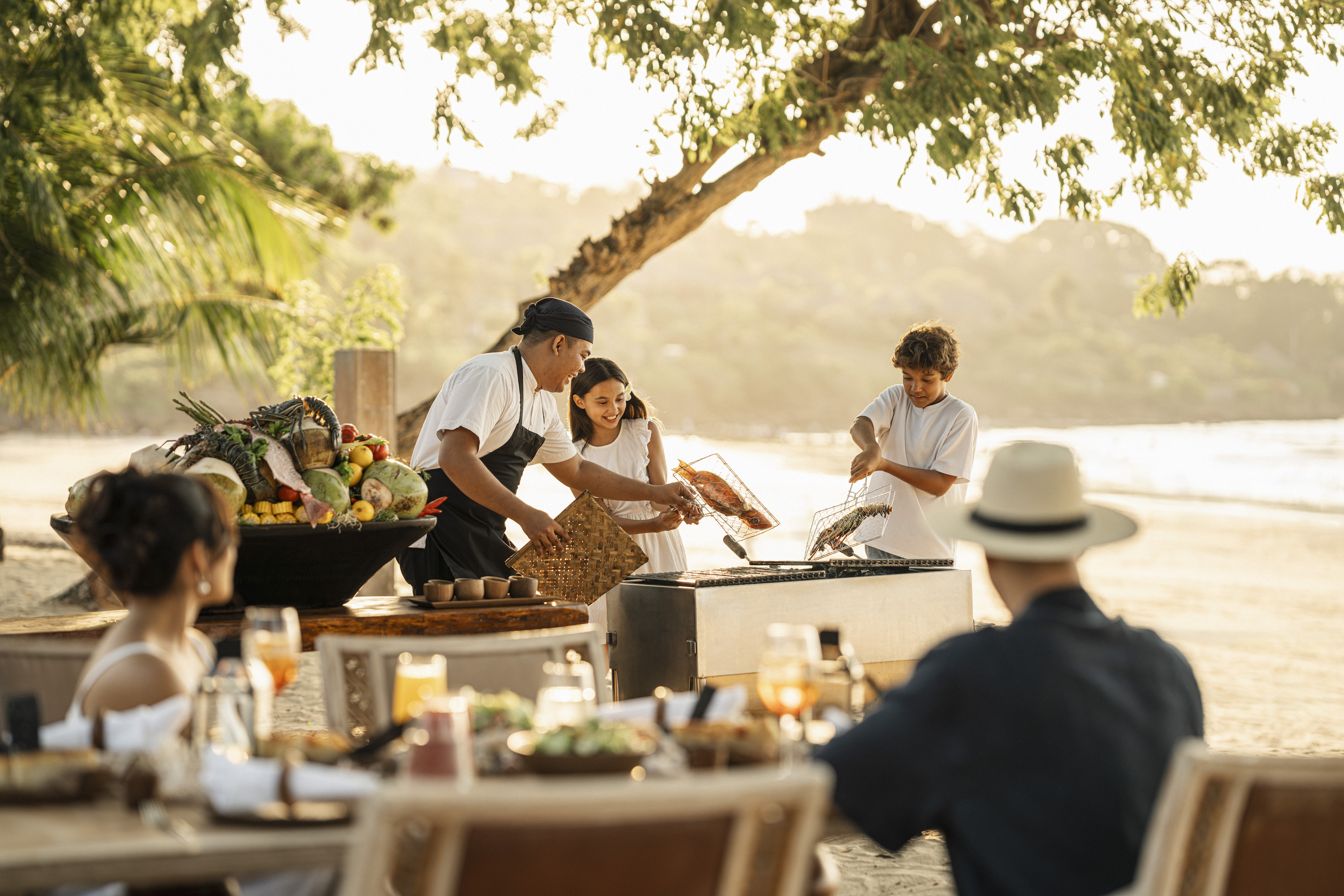
A defining feature of the programme was its use of coconut husks in the grilling process. Fire-cooked seafood can develop distinctive aromas and textures, especially when the cook controls the heat carefully rather than exposing everything to an uncontrolled flame. The resort's announcement uses the imagery of coconut-husk grilling to connect the dinner to Balinese coastal ingredients. Guests should not assume that a particular fuel automatically makes food safer or more environmentally beneficial. Smoke, airflow and the handling of food remain important, and professional kitchens need suitable equipment and hygiene practices. The culinary interest lies in how the chef manages the flame and preserves the character of the fish. A delicate catch may require a very different approach from a robust piece of meat. Mastery can be seen in restraint as much as in spectacle.
A menu built around several catches
The source described a range of seafood options including lobster, snapper, barramundi, squid, octopus and oysters, with additional dishes for guests who preferred other ingredients. The breadth was intended to make the evening accessible to different tastes rather than impose a single tasting sequence. The resort also highlighted fresh lime, sambal and local spices as accompaniments to the grill. These can provide heat, acidity and aroma without obscuring the seafood itself. However, a historical menu is not a guarantee that every species remained available each Friday or will appear in future seasons. Supply can be affected by fishing conditions, seasonality and the kitchen's purchasing policy. A sensible guest accepts that the best coastal cooking may change according to what is available and responsibly obtained. The experience should be judged by preparation and provenance, not by whether one expensive fish appears on a printed list.
Sambal as an expression of variety
The word sambal covers many preparations rather than one universal chilli sauce. Across Indonesia, versions can differ in heat, acidity, texture and the use of additional ingredients. A beachside grill may use several accompaniments to match different catches, allowing diners to adjust the balance. That flexibility matters because not every guest enjoys the same level of spice. A thoughtful service team can explain the options and help visitors choose without turning the meal into a test of tolerance. For yacht owners whose guests come from different countries, the same principle applies aboard: regional food can be shared confidently when preferences are respected. The resort's announcement places sambal alongside grilled seafood as a natural part of the concept. It does not provide full recipes, and an editorial account should avoid inventing exact proportions or claiming that one preparation represents all Balinese cooking.
Seaweed and the link with coastal ingredients
The Sunset BBQ included Rujak Bulung, a dish incorporating seaweed and other components associated with local flavours. Seaweed is an interesting ingredient because it brings the marine environment directly to the plate, though its species, collection and preparation require knowledge. The resort's description mentions coconut, chilli and broth components alongside the seaweed. This kind of dish can offer a useful change from a menu composed only of grilled protein. It introduces contrast in texture and an opportunity to discuss ingredients that visitors may not routinely use in their home kitchens. Yet the fact that seaweed grows in water does not mean any material collected from a beach is suitable to eat. Responsible preparation depends on food-grade sourcing. Guests interested in trying the dish should trust a knowledgeable kitchen rather than forage casually during a day ashore.
Rice and noodles give the meal another rhythm
Alongside the grill, the event's original menu referred to Indonesian favourites such as nasi goreng and mie goreng. These dishes offer more substantial options and are familiar to many travellers, but their value is not simply that they fill a plate. Rice and noodle preparations can carry the seasoning and textures that define everyday cooking in the region. A resort may present them in a polished format while retaining recognisable flavours. The challenge is balancing authenticity, guest preferences and the realities of luxury service. The most memorable menus often allow a sophisticated seafood dish to sit comfortably beside a simple preparation of rice or vegetables. For a private yacht chef visiting Bali, that approach can provide useful inspiration. Good destination dining need not mean every course is elaborate; it can also celebrate ingredients treated with confidence and restraint.
The attraction of dinner at golden hour
The Sunset BBQ was held at Coconut Grove overlooking Jimbaran Bay, with the resort describing tables in the sand, music and a fire-dance performance. A sunset setting creates an atmosphere that cannot be reproduced precisely indoors because light, temperature and the sound of the sea change across the evening. At the same time, weather may alter the experience substantially. Guests should be cautious about assuming that every coastal dinner will enjoy a clear sky or perfect sea conditions. A well-run venue needs alternative plans when wind or rain becomes uncomfortable. A yacht owner may recognise this from planning an open-deck dinner: the view is a wonderful part of the occasion, but service and safety should not depend on uncontrollable conditions. The best outdoor hospitality makes room for nature without ignoring its practical demands.
Fire dance and cultural presentation
The source described evening fire-dance entertainment as part of the Friday programme. Performance can add energy to a special night, but its cultural significance should be explained carefully. Not every fire performance is an unchanged traditional ritual, and commercial entertainment can draw on several styles and influences. Visitors can appreciate the skill and artistry while asking respectful questions about the performers and the nature of the presentation. Safety is also important when flame is used near guests, tables or the shoreline. A professional venue must plan the performance area and protect its audience. For luxury travellers, an event can be memorable because it creates an occasion for shared experience, not simply because it looks dramatic in a photograph. Understanding who performs and why can add depth to the evening beyond the visual spectacle.
Cocktails with a tropical accent
The resort's 2026 description included drinks that referred to coconut, passionfruit and other tropical flavours, along with non-alcoholic choices. These were designed to complement the atmosphere and the food, but a guest should not assume that a fruity cocktail is weak or free of allergens. A well-balanced drink should suit the meal, the climate and the individual's preferences. A zero-proof alternative can be equally enjoyable when prepared with care. For yacht parties returning by tender after dark, responsible alcohol consumption and a safe transport plan are essential. It is sensible to arrange the journey before dinner rather than improvise when guests are tired. The resort announcement does not establish any yacht-specific shuttle or guaranteed mooring access to Coconut Grove. Coastal luxury is best enjoyed when the practical return journey is considered part of the evening's planning.
The value of a seasonal experience
By running from late May to October 2026, the BBQ had a defined seasonal character. That makes it an event with a beginning and end, not an ongoing daily restaurant offer that should be advertised without verification. The fixed Friday schedule may have helped create a sense of occasion, allowing guests to look forward to a particular evening. However, a later visitor should ask the resort about current dining plans rather than assume the same format has been continued. The useful editorial story lies in what the programme represented: an international luxury hotel drawing on local seafood traditions to build a distinctive outdoor dining event. Seasonal programmes can also encourage restaurants to refresh ideas and work with changing supplies. Their success depends on the experience delivered, not solely on how extensively they are promoted.
Lessons for dining aboard a yacht
A yacht chef may not have an open beach or large fire grill, but several ideas from the Jimbaran concept can translate to onboard hospitality. Fresh ingredients, a few appropriate sauces and a relaxed service style can make an outdoor dinner feel specific to the destination. The chef should avoid unsafe imitation of open-flame equipment on deck and follow the yacht's approved cooking arrangements. Fire risks, ventilation and movement at sea require careful control. A meal prepared within the galley can still be served outdoors if the weather permits, with the crew creating atmosphere through lighting and well-chosen music. The most important lesson is to understand the coastal food culture rather than copy a staged event literally. One thoughtfully selected dish may be more successful than an elaborate menu that overwhelms a small crew.
Returning to the place rather than the programme
A traveller who did not attend the 2026 Friday BBQ can still discover the wider dining culture of Jimbaran. A visit to the bay may offer other restaurants and local experiences, although their availability, quality and suitability should be checked independently. It is worth leaving time to walk, observe and speak with people whose daily lives are connected to the coast. A luxury hotel event can be a useful introduction, but it is not the only way to appreciate a destination. For guests who have travelled by yacht, the experience of moving ashore and seeing the water from a different perspective can be rewarding in itself. The resort's barbecue shows how food can connect those two viewpoints: the sea as a place to travel and the sea as a source of ingredients, livelihoods and cultural memory.
A 2026 culinary idea with lasting relevance
The Sunset BBQ at Four Seasons Resort Bali at Jimbaran Bay ran from 29 May to 30 October 2026, according to the official release. Its ingredients, coconut-husk grilling, traditional accompaniments and beachside entertainment were part of a programme rooted in the fishing identity of Jimbaran. Those are the documented facts; the event should not be presented as currently bookable without new confirmation. For the 12-to-23.99-metre luxury-yacht audience, the story offers an example of the kind of shore experience that can enrich a voyage. The most satisfying coastal dinner often depends less on formality than on a close relationship with the place. The grill, the tide, the people preparing the food and the conversations across the table can turn a simple evening into a memory that lasts beyond the end of the season.
Sources and image credits
Reporting based on Four Seasons Resort Bali at Jimbaran Bay, June 2 2026 original Sunset BBQ programme and fishing heritage press release.
Lead photograph: Bali Sunset Barbecue Celebrates Jimbaran Fishing Traditions and Open-Fire Cooking — official Four Seasons resort press photograph. © Four Seasons Hotels and Resorts / Four Seasons Resort Bali at Jimbaran Bay Original official image source.