Choosing a season with more information
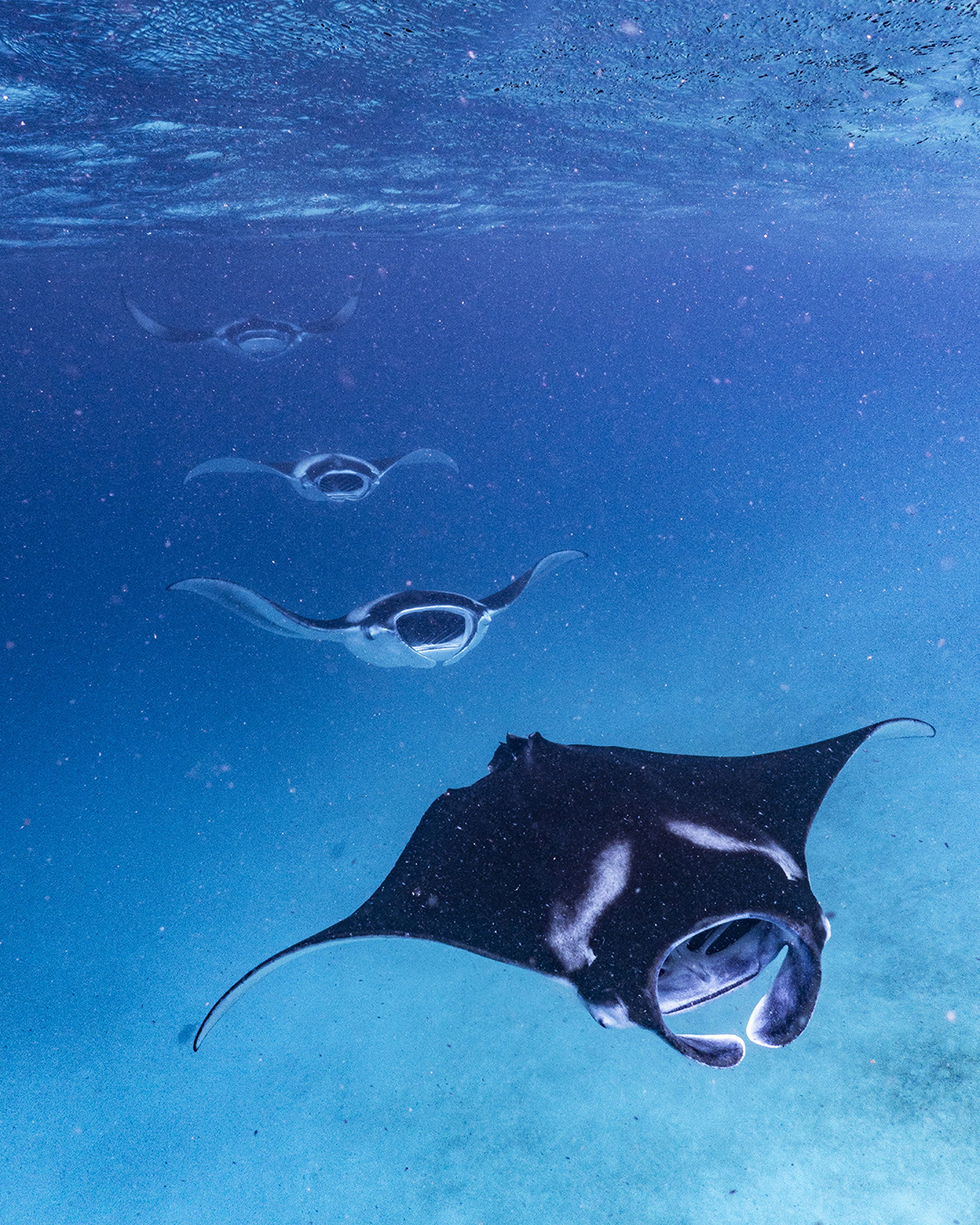
Four Seasons Resort Maldives at Landaa Giraavaru and its resident Manta Trust team issued a 2026–27 guide to periods when visitors may have a better chance of encountering manta rays in the surrounding waters. Their January 2026 announcement describes using long-term monitoring and environmental information to identify likely periods of aggregation, rather than encouraging guests to assume that wildlife appears on command. The resort lies within the Baa Atoll UNESCO Biosphere Reserve, a region widely associated with manta research and seasonal marine activity. For owners and guests of 12-to-23.99-metre luxury yachts, the programme provides a different approach to itinerary planning. It encourages travellers to consider the natural rhythms of a destination before selecting their preferred dates, while recognising that a prediction is never a guarantee. The strongest attraction is the opportunity to learn how scientists understand the animals, not simply to collect a photograph during a short swim.
What the prediction is built on
The resort explains that the Manta Trust has analysed decades of records on manta movements and environmental conditions to identify periods when concentrations are more likely. Such work depends on repeated observation rather than one remarkable encounter. Even a strong historical pattern may change from year to year, as weather, food availability and other conditions influence the animals. The published dates should therefore be understood as a guide to probability, not appointments with wildlife. Yacht travellers who must coordinate charter schedules, crew movements and international flights may find that uncertainty challenging. One sensible response is to allow several days in a wider region rather than relying on one excursion. The Manta Trust's information can improve planning, but local operators should still be consulted close to the proposed visit. A responsible programme accepts that animals remain free to behave according to their own needs.
The significance of Baa Atoll
Baa Atoll's protected status reflects its environmental importance, including marine habitats used by manta rays and other species. The designation does not mean every part of the area is open to unrestricted visiting, nor that any yacht can anchor wherever it wishes. Owners should verify permissions, navigation limits and the rules that apply near sensitive habitats. Travelling through a biosphere reserve places an additional responsibility on captains and guests to respect local management. The appeal lies partly in seeing the relationship between shallow waters, seasonal conditions and the animals that use them. A reef or channel can appear tranquil from a yacht's deck while supporting complex ecological activity below. Conservation-oriented excursions can help visitors appreciate those connections, provided the chosen operators follow current local requirements. A protected label is the starting point for responsible behaviour, not an assurance that all impacts have been eliminated.
The Manta On Call concept
Four Seasons describes a Manta On Call experience that can notify participating guests when rays have been sighted, allowing an organised excursion to be arranged. The idea responds to a practical challenge: wildlife observation is most successful when travellers remain flexible rather than insisting on a fixed hour. However, the service is offered through the resort and should not be assumed to operate as a general alert system for every private yacht in the atoll. Participation, transport and any additional charges need to be confirmed directly. A guest might be enjoying breakfast when a sighting is reported, but a rapid departure should still follow safety and environmental procedures. The success of a trip is not measured by how quickly a speedboat reaches the animals. The boat must approach responsibly, and swimmers need a proper briefing. Convenience should support conservation, not place pressure on guides to hurry or disregard conditions.
Research during the previous season
The official January release gives useful context from the 2025 season, including a reported estimate of 4,265 reef manta rays sighted, alongside observations of other large marine species. It also mentions 1,282 manta surveys over 143 research days. These figures illustrate the scale of the monitoring effort but need careful interpretation. A count of sightings is not automatically the same as the number of unique animals in a whole population. Identification methods, repeat encounters and survey coverage matter. Visitors should therefore avoid interpreting the figures as a simple census of every ray living in the region. The important point is that the programme draws on substantial recorded observations rather than a few promotional excursions. Consistent scientific work can provide a better understanding of seasonal patterns, while uncertainty remains part of studying wildlife in an open ocean environment.
Learning to recognise a manta
Manta rays have distinctive body shapes and markings, and researchers can use appropriate photographs to help identify individual animals. A guided encounter may introduce visitors to these techniques without requiring them to act as scientists. The value is in understanding how careful observation contributes to knowledge over time. Yet guests should not approach or touch an animal merely to obtain a better image. Photographing from a respectful distance can be both more responsible and more satisfying. Guides can explain why particular photographs or observations are useful and what actions should be avoided. A yacht guest with underwater camera equipment should follow the operator's instructions and local restrictions. No image is valuable enough to justify disrupting the animal's movement. A conservation encounter is most successful when its participants leave with appreciation for the species and minimal impact on its behaviour.
The role of young researchers and local education
The resort's official account also refers to interns, apprentices and educational activities supported by the conservation programme. These are important because long-term protection depends on people who understand the habitats around them, including young residents and future marine professionals. Guest experiences can bring attention and financial support, but they should not be presented as the entire purpose of a scientific programme. Local learning and ongoing fieldwork may be more consequential over time than any single visitor excursion. Yacht owners interested in supporting conservation can ask how tourism activity contributes to training, community programmes and research. Such questions make the connection between luxury travel and the destination more meaningful. The strongest initiatives create benefits that remain in the region, rather than treating its wildlife solely as an international attraction.
Understanding the rules for swimming
Swimming with large marine animals requires guidance on entry, distance, movement and the number of people in the water. Those rules may be set by authorities and can change according to environmental conditions, so an editorial account should not invent a universal distance or procedure. Guests must receive a current briefing from an authorised operator and be comfortable in the water before participating. A manta ray's apparent gentleness does not eliminate the risks of currents, boat movement or limited visibility. A visitor who is not a confident swimmer may prefer observing from a suitable vessel or joining a different educational activity. Responsible hospitality does not pressure every guest to enter the sea. The purpose is to observe wild animals on terms that minimise disturbance, while preserving the safety and choice of the people taking part.
What yacht owners should plan independently
A privately operated yacht in the Maldives may require specific cruising permits, authorised routing and local services depending on the vessel and itinerary. The Manta On Call programme described by the resort does not establish a general right to access its excursions from any yacht or a berth at Landaa Giraavaru. Captains should coordinate permissions, weather planning and transfers through appropriate local providers. It may be possible to arrange an experience while staying at the resort, but the precise requirements must be confirmed. Owners should also consider whether their guests want several days devoted to wildlife or a wider mix of activities. An itinerary centred entirely on one species can become frustrating if conditions are unsuitable. Leaving time for other experiences helps preserve the sense of discovery that makes island travel appealing.
Tourism and the limits of conservation claims
A responsible wildlife programme should be judged by the quality of its practices and evidence, not only by the enthusiasm of its marketing. The Manta Trust's research history gives the resort's announcement a stronger context than an isolated promotional sighting. However, this does not mean every tourist encounter is harmless or that a stay automatically makes a measurable conservation contribution. Transport, boating activity and the wider environmental footprint of tourism remain relevant. Owners can choose appropriate local operators, comply with protected-area regulations and consider supporting credible research directly. The published research figures are a reason to ask informed questions, not a licence to claim every manta population is secure. Protecting wildlife involves continued monitoring, habitat management and cooperation among many stakeholders.
A sense of wonder without a guaranteed outcome
There is a particular appeal in waiting for a wild animal that may or may not appear. Travellers used to carefully scheduled luxury experiences may find that the uncertainty changes their relationship with the trip. The Manta Trust's predictions help narrow the likely windows, but the ocean remains outside the control of a hotel or guide. A visitor may spend a wonderful day learning about manta biology without entering the water, while another may be fortunate enough to observe several animals together. Both experiences can have value if expectations are set accurately. The resort's January release is most useful when treated as planning information supported by research. The promise should be a responsible opportunity to learn and observe, not the delivery of a fixed number of encounters. Respecting that difference is part of being a thoughtful visitor.
Travel memories linked to real scientific work
The 2026–27 manta guidance from Four Seasons Landaa Giraavaru offers an example of luxury hospitality working alongside a long-standing research programme. Its published records and the Manta On Call concept can help interested travellers plan a more informed island visit, though neither provides an assured sighting. For guests arriving aboard luxury yachts between 12 and 23.99 metres, the chance to observe mantas may be a highlight of a wider voyage through the Maldives. The most meaningful outcome can also be an understanding of the patience, data and local cooperation required to study those animals. A successful holiday need not measure wildlife in numbers. It may be enough to witness an encounter responsibly, understand why it matters and return to the yacht with a deeper respect for the sea.
Sources and image credits
Reporting based on Four Seasons Hotels and Resorts official first-party 2026 press release: Secrets of the Sea: Four Seasons Resort Maldives at Landaa Giraavaru Reveals Manta “Hot Dates” for 2026-27.
Lead photograph: Maldives Manta Hot Dates Offer a Conservation-Led Island Escape — official Four Seasons first-party press photograph. © Four Seasons Hotels and Resorts, original property press photograph Original official image source.