The idea: a Roman seaside villa on the Californian coast
For a traveller who moves easily between yachts, private houses and contemporary hotels, the Getty Villa offers an entirely different kind of coastal luxury. Its appeal lies not in exclusive access, but in the setting it creates for considering how ancient Mediterranean people lived with art, architecture and the sea. The museum occupies a site along Pacific Coast Highway in Pacific Palisades, north of central Los Angeles. Its re-created Roman country-house environment, quiet courtyards and collection of Greek and Roman antiquities make it an unusually thoughtful destination for a day away from a Southern California cruising itinerary.
The Getty Villa is a distinct institution and address from the Getty Center on the hills above Los Angeles. Confusing the two is an easy way to turn an elegant plan into a difficult journey. The Villa concentrates on antiquity, particularly the art and material culture of Greece, Rome and Etruria; the Center covers later periods and operates with its own visitor schedule. A guest may be interested in both, but choosing the Villa for its coastal location and classical subject matter gives the day a clear identity. The rest can be saved for another visit.
A yacht is only the beginning of the logistics. Captains and local agents must decide where the vessel may berth or anchor, how guests reach shore and how ground transport will be handled. The Villa is an inland museum accessed from Pacific Coast Highway, not a marina facility or a place to arrive by tender. A car collection from a confirmed landing point should be planned against actual road conditions, security needs and the party's pace. Avoid advertising a fixed journey time from a marina, since traffic and transfer arrangements may change the answer significantly.
What ancient objects reveal about modern ideas of luxury
The Villa's displays offer a compelling reminder that art collecting, fine materials and architecture were not invented by today's luxury market. Roman elites used sculpture, gardens, domestic rooms and spectacular settings to express cultural identity as well as wealth. A visitor looking closely at an object may recognise recurring preoccupations: proportion, precious craftsmanship, personal remembrance and the desire to surround daily life with images. Those comparisons make the visit especially rewarding for designers, collectors and owners who think seriously about the character of places rather than their price tags.
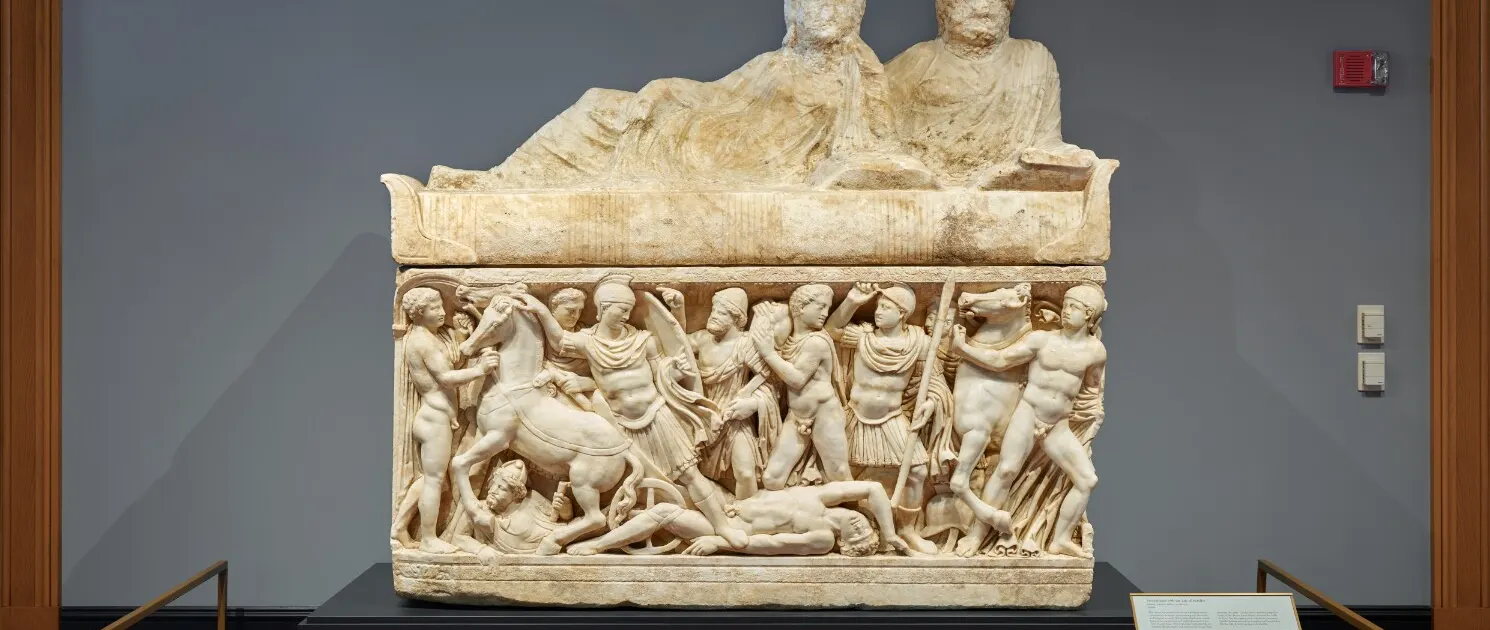
Getty's collection includes a Roman marble sarcophagus decorated with scenes from the life of Achilles, made in Athens around the turn of the third century. The relief presents stories drawn from ancient heroic tradition, while a reclining couple on the lid makes clear the object's memorial purpose. It is an extraordinary demonstration of narrative carved into stone. The official Getty collection photograph accompanying this article is a public-domain image released through the institution's Open Content programme. As with any individual museum object, current gallery display should be confirmed before promising guests an encounter with the original.
The sarcophagus is also a useful antidote to treating antiquities as anonymous decoration. Ancient sculptors conveyed action, loss and status through the arrangement of bodies and the handling of material. Some surfaces were intended for a viewer moving around the object rather than looking from a single fixed angle. That matters to anyone who commissions three-dimensional work for a residence or yacht. The distinction between an object made to be lived with and an object now preserved in a museum is a natural beginning for an informed conversation.
The Villa's galleries extend far beyond monumental sculpture. Jewellery, glass, painted objects, small figures and other forms of decorative art reveal the scale of ordinary rituals and private ambitions. They help visitors understand the ancient world without relying solely on emperors, gods and battles. A carefully chosen itinerary might pair a few imposing works with small pieces that require close attention. This approach is better than rushing to photograph every room, and it works especially well when guests have different levels of familiarity with ancient history.
A villa designed for a slower way of looking
The museum experience is inseparable from the re-created Roman villa setting. Colonnades, courtyards, water, planting and open-air passages turn movement between displays into part of the day. Visitors are not simply passing through conventional white-walled galleries; they are walking through an architectural interpretation of the culture that produced the objects. Its setting offers a memorable counterpoint to the efficient, technical spaces of a modern vessel. There is a pleasure in moving from the controlled climate of a gallery into sunlight and then back to a different period of art.
Gardens are not a secondary attraction here. They help to explain the classical relationship between designed landscape, architecture and leisure, although today's grounds are a modern interpretation rather than surviving Roman planting. A guest interested in horticulture or the history of outdoor rooms may spend as much time studying the way a garden is framed as looking at a statue. The connection to yacht design is subtle but real: both a villa and a well-considered vessel depend on transitions between private enclosure, social gathering and the open horizon.
Photography should be treated as a privilege governed by current museum rules, not an unlimited production opportunity. Some exhibitions or objects may carry restrictions, and commercial equipment can require separate permission. Those limitations are easy to accommodate when the aim is to enjoy the day rather than create a marketing campaign. A lightweight camera or personal phone is often enough to record textures, composition and moments in the gardens, subject to the museum's posted guidance. Private collections, privacy-sensitive guests and large parties deserve added care.
Admission, hours and the shore-day sequence
The Getty's current visitor information says admission to the Villa is free but requires a timed-entry reservation. That booking is an essential first step even for guests accustomed to arranging high-end experiences at short notice. Standard hours are 10am to 5pm on opening days, with Tuesdays closed, and holiday variations must be checked. Parking is a separate charge. Whether a party arrives by chauffeured car or uses museum parking, the exact approved access route and drop-off details should be reconfirmed as the travel date approaches.
A practical itinerary allows time for a measured introduction, one gallery sequence and a short pause before returning to the collection or gardens. Getty publishes art-and-site tours on some days, but participation and departure times should be verified directly because staffing and availability may change. Guests seeking a private specialist-led experience should ask the museum about what is possible instead of assuming normal general admission includes an exclusive guide. The quality of the visit depends more on curiosity and preparation than on how many spaces the party manages to cover.
For a larger group, it helps to distinguish the history enthusiasts from those more interested in the setting. Both can enjoy the same visit, but they may need different amounts of gallery time. Agree on a meeting place and an end time, then let the more interested guests explore in greater depth. Comfortable footwear, modest expectations about restaurant service and attention to accessible routes make a noticeable difference. Return transport to the vessel should include an allowance for variable traffic and the captain's preferred passenger-transfer window.
The Getty Villa's particular relevance in 2027 and beyond
The Getty has announced a substantial modernization programme at the separate Getty Center, including a temporary closure of that hilltop site from 15 March 2027 until a planned spring 2028 reopening. The Villa, by contrast, is expected to remain open with exhibitions and public programming during that period. For travellers arranging future California visits, this distinction is essential: a general reference to visiting 'the Getty' will be too imprecise. Planning should begin with the specific museum location, published opening status and currently available galleries.
The Villa is especially well placed to remind a contemporary luxury audience that refinement can be understood through history rather than spectacle. Its antiquities are evidence of people who also used art to shape identity, ritual and their relationship with the landscape. A visit can prompt fresh thinking about commissioning, preserving and enjoying beautiful objects. As with the best shore days, nothing requires the schedule to be crowded. The luxury is the freedom to spend time with something that rewards a second look.
Before departure, check the official Getty Villa visit page for timed-entry reservations, any holiday closure and the museum's latest access instructions. Browse its antiquities pages to identify topics that genuinely interest the party, and verify whether any particular object is currently on view. The marble Achilles sarcophagus shown in Getty's public-domain collection image is an authentic work from its collection, not a generic photograph or an assurance of exhibition. With that degree of care, the Villa becomes a cultural encounter worthy of the time set aside for it.