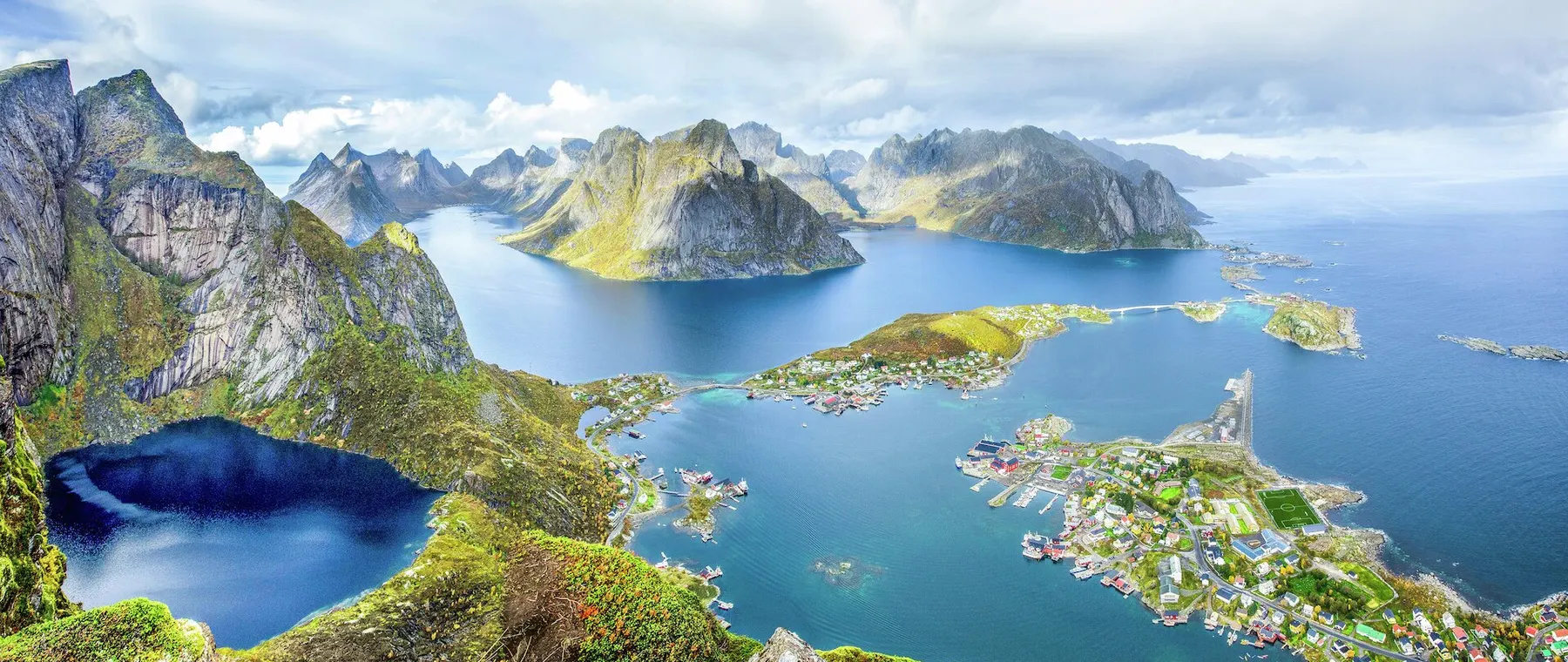
An Arctic coast built around the sea
Lofoten is one of Europe's most compelling alternatives to the conventional luxury-yacht circuit. Mountains rise directly from salt water, fishing cabins stand beside working quays and island settlements retain a relationship with the sea that is older and deeper than modern tourism. A yacht gives owners the freedom to experience this landscape in stages, but the archipelago is best approached as a living Norwegian coast rather than as a collection of pretty anchorages.
The islands sit above the Arctic Circle between the Norwegian Sea and Vestfjord, with an intricate pattern of channels, peninsulas and small harbours. Official Norwegian tourism guidance highlights the unexpectedly mild maritime climate, shaped by warm ocean currents, alongside the very real possibility of strong wind and rapidly changing conditions. It is a region where a glorious morning can invite ambitious plans and a difficult afternoon can demand the opposite.
For a large private yacht, the quality of the experience depends on thoughtful navigation, respectful shore access and a realistic itinerary. Reine, Henningsvær and Svolvær offer different interpretations of island life, while narrow Trollfjord provides dramatic scenery that must be evaluated by the captain as a navigational environment. Guests should expect a voyage whose finest moments are often quiet rather than theatrical.
Svolvær: a practical cultural gateway
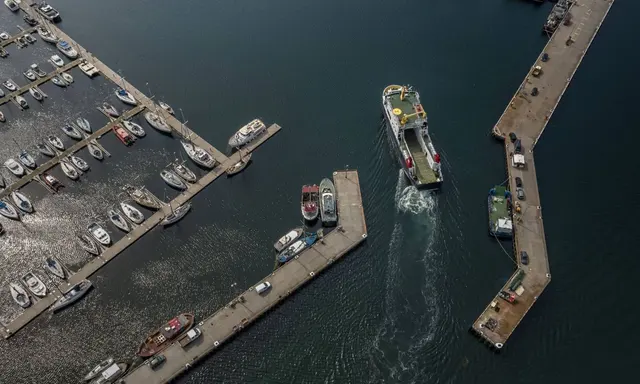
Svolvær is Lofoten's largest town and an attractive place to organise the first part of a cruise. The regional destination organisation describes a lively harbour settlement with restaurants, galleries, hotels, shops and opportunities to explore the surrounding mountains. Its maritime traffic includes local fishing boats, ferries and excursion craft, so visiting captains should treat it as a working port before considering it as a comfortable backdrop for guest transfers.
A day ashore can combine galleries, a carefully selected restaurant and a walk with views back across the waterfront. The town offers the greatest concentration of everyday services in the island group, although a larger yacht must arrange suitable harbour access through the relevant local operator. The presence of excursion boats and commercial traffic is no guarantee of a superyacht berth, shore power or depth at a particular quay.
From Svolvær, local guides run kayaking and boat excursions, including trips toward Trollfjord. That creates a useful alternative to taking the main yacht into every narrow inlet, particularly when the vessel's dimensions and handling characteristics make a large-ship approach inappropriate. A professionally guided local excursion can feel highly personal while giving guests access to the expertise of people who work these waters regularly.
Trollfjord: a spectacular view with no room for assumptions
Trollfjord is one of the best-known fjords associated with the Lofoten cruising experience. Visit Lofoten describes the entrance as about 100 metres wide, with mountains rising sharply on either side and no road following the inner waterway. The combination of scale, shadow and narrow water makes it visually unforgettable, but a 100-metre entrance does not establish that any given private yacht can enter and turn safely.
Large vessel operations require more than a comparison between beam and the published entrance width. Depth, current, visibility, traffic, turning room, wind funnel effects and the vessel's ability to manoeuvre or retreat matter just as much. The captain must assess current charts, notices and local conditions independently, and there is no obligation to enter simply because a well-known coastal passenger vessel sometimes does.
For many guest groups, the elegant solution is to enjoy the broader scenery from a safe position and engage a licensed local operator for the narrower section. This may also improve wildlife interpretation and reduce the disturbance created by trying to manoeuvre a large yacht where smaller boats already operate. The result is still a genuine encounter with Trollfjord, with the right tool chosen for the task.
Henningsvær: island art beside a working harbour
Henningsvær is a cluster of connected islands where fisheries, creative studios, restaurants and small shops share the streets. Visit Lofoten describes its long fishing history and the presence of galleries and crafts, making it particularly appealing to owners who appreciate places with a clear identity. A careful visit should leave enough time for wandering rather than turning a working settlement into a brief photography stop.
The fishing quays and narrow passages are central to the village's charm, but they also underscore the importance of keeping tenders and visiting boats out of the way of local operations. Guest landings should be arranged at appropriate authorised places, with attention to other harbour users and residents. A private excursion can be discreet and rewarding without claiming priority over the people who live and work there.
Culture is often best experienced through a small number of well-chosen encounters. An exhibition, a conversation with a local maker and a seafood lunch can provide a more lasting impression than a rushed programme of landmarks. The distinctive contrast between red fishing cabins, dark mountains and the sea then becomes a backdrop to genuine island life rather than the entire point of the visit.
Reine and the western islands
Reine occupies a chain of islands linked by bridges, with Vestfjord to one side and Reinefjord beneath high peaks to the other. The official regional tourism website rightly treats its setting as among the most striking in the islands, but also asks visitors to respect local property, working fishing activity and narrow streets. It is a place to approach with curiosity and good manners, not a location where a private arrival can take over the waterfront.
The panorama from Reinebringen has become internationally recognisable, but the view is earned through a steep hiking route that is not appropriate for every visitor or season. A luxury itinerary can instead favour calmer walks, a guided shore programme or a boat excursion in the surrounding scenery according to the group's abilities. It is wiser to enjoy a modest experience fully than to promise a strenuous climb regardless of weather.
Farther west, the islands of Værøy and Røst offer an even stronger impression of isolation and fishing heritage. Official Visit Norway guidance identifies Værøy's dramatic landscape and Røst's unusual island-and-reef geography, both appealing to guests who enjoy a genuine expedition. Their remoteness also makes them destinations that should be considered only when weather, navigation and local support are suitable for the vessel.
Food, heritage and the meaning of luxury here
Lofoten's culinary identity is inseparable from seasonal fishing, particularly the traditional Northeast Atlantic cod known as skrei. Fish dried on wooden racks is part of the area's visual landscape as well as its economy, and authentic stockfish dishes provide a direct connection between landscape, work and dining. A yacht chef can draw inspiration from these traditions, but a shore meal prepared by local people offers an experience that cannot be reproduced simply by importing ingredients.
The archipelago's history also reaches back to the Viking Age, reflected in regional museums and storytelling about trade and coastal livelihoods. A guest programme that brings together maritime history, local craft and the natural landscape can be more intellectually satisfying than a sequence of standard luxury activities. This is a coast with stories that extend well beyond the modern visitor industry.
Accommodation and hospitality on shore need not compete with the comfort aboard a private yacht. A traditional rorbu, a beautifully situated restaurant or a carefully chosen wellness experience can provide a change of atmosphere for a few hours. The value lies in contrast: returning to the yacht after seeing how island life developed around fish, boats, winter weather and long summer light.
The seasons change the entire voyage
Late spring and summer offer long daylight hours, with the midnight sun shaping outdoor life and the possibilities for evening photography. Visit Norway's planning guidance broadly places the midnight-sun period in Lofoten between late May and mid-July, though exact visibility depends on location and date. For owners who enjoy extended walks and atmospheric dinners, this can make a summer visit feel strikingly different from almost any other European cruising ground.
Autumn and winter introduce a darker, more dramatic palette and the possibility of northern lights, but they also demand a different operational approach. Short days, cold conditions, unsettled weather and reduced availability of seasonal services can make an independent luxury-yacht visit more challenging. The aurora cannot be guaranteed, and the captain's passage plan must not depend on a forecast of clear skies several days ahead.
No season removes the need for warm, waterproof clothing, good tender procedures and conservative decisions about exposed coastlines. The local sea can be cold even when summer photographs show bright blue water and sandy beaches. Luxury here means preparing guests properly so that the scenery can be enjoyed without a scramble for equipment when conditions change.
Environmental care and professional navigation
Visit Lofoten publishes a clear code of conduct encouraging guests to stay on established paths, dispose of litter correctly, avoid damaging natural sites and respect the privacy of residents. These principles apply to yacht parties as directly as they do to walkers and road travellers. An owner who arrives in a large private vessel has a particularly visible opportunity to support good local practice.
The Norwegian Coastal Administration coordinates navigational warnings and makes clear that website summaries do not replace operational warnings distributed through official maritime channels. A captain must therefore use current charts and the applicable warning services, especially when considering an unfamiliar inlet, an exposed landfall or a destination with frequent local traffic. A visually inviting gap between islands is never adequate pilotage information.
Careful tender handling, unobtrusive wildlife observation and suitable shore arrangements can markedly reduce the footprint of a visit. Local guides bring practical knowledge while supporting the economy of the places that make the voyage interesting. The quality of a private-yacht expedition is measured as much by what the crew chooses not to disturb as by the places the guests manage to see.
A four-day framework to adapt to the forecast
A first day around Svolvær gives the crew time to settle harbour arrangements and guests time to understand the setting. Choose a local gallery, an island-inspired meal and a short walk rather than a late, hurried departure. The boat can then be ready for the next leg without sacrificing the pleasure of an unstructured evening.
On the second day, consider a guided excursion toward Trollfjord and time to observe the mountain scenery from appropriate waters. The third day can focus on Henningsvær and its galleries and fishing heritage, provided shore access and the conditions suit. These are invitations to explore, not a recommendation that a superyacht should follow a particular passage through restricted or shallow water.
Reserve a fourth day for Reine, the western islands or simply another interval in a favourite sheltered location, depending on the vessel and forecast. A flexible plan leaves room for a local skipper's recommendations, a change in sea state and the spontaneous moments that make travel feel personal. In Lofoten, the reward is the relationship between the yacht and a beautiful working coastline, not the number of names ticked off a map.