Orkney rewards owners who make time for place
Orkney is one of northern Europe's most characterful destinations for a private-yacht voyage. Its sheltered sounds and working harbours sit between Atlantic weather, extraordinary archaeological landscapes and island communities shaped by centuries of seafaring. A large yacht can provide comfort and independence, but the real pleasure is found ashore among stone villages, historic monuments, local food and the deep sense of continuity between Orkney's past and present.
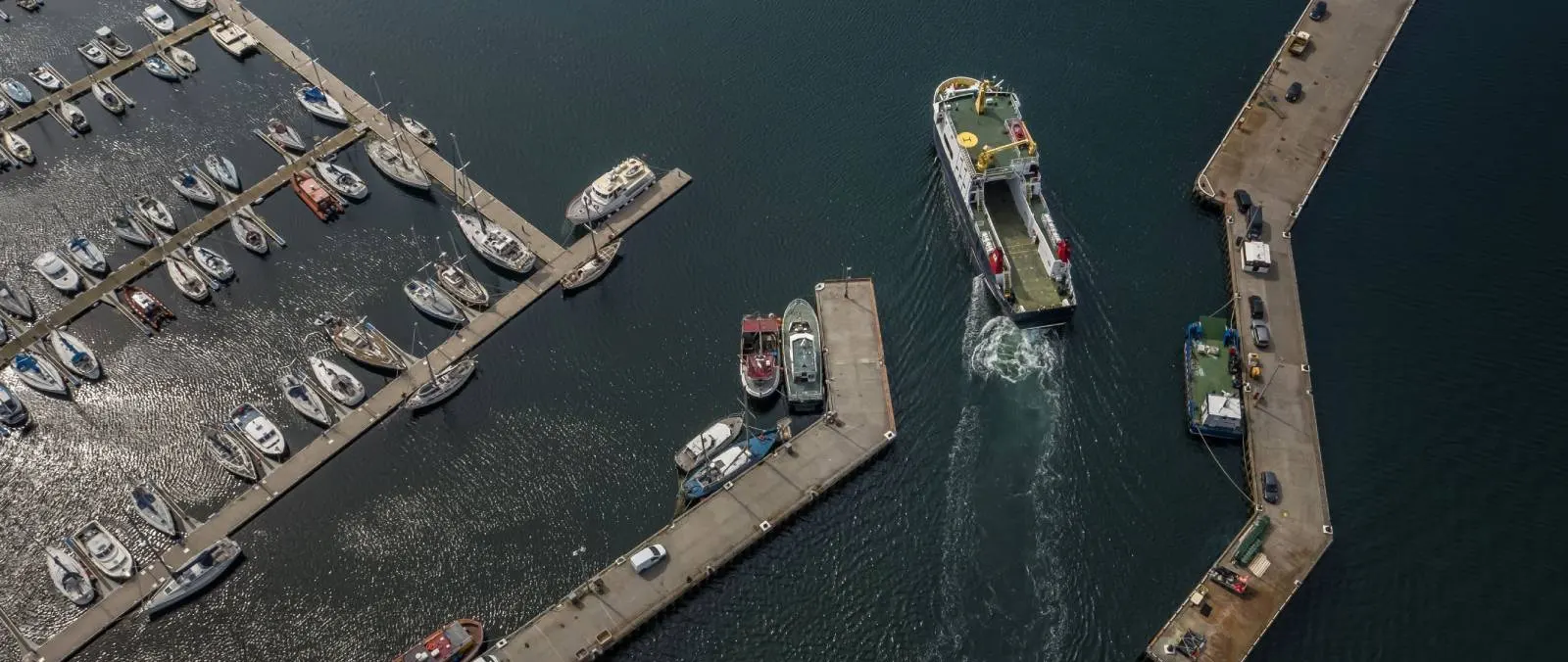
The islands are reached across waters where tides, wind and current deserve the full attention of the bridge team. Unlike a purpose-built Mediterranean superyacht marina, the principal visitor facilities were designed for much smaller boats, and a luxury-yacht itinerary needs early communication with harbour authorities. The distinction matters because visiting for a day is not the same as having a suitable overnight berth for a 30-metre motor yacht.
Orkney is also a destination that changes dramatically with the weather. A quiet morning can be perfect for a harbour walk, while an approaching gale can close even established visitor attractions. A successful programme therefore combines a sound marine plan with generous alternatives, allowing the history and scenery to take centre stage when conditions permit.
Kirkwall: a historic capital and a practical first conversation
Kirkwall is Orkney's capital and an appealing focus for a first shore excursion. St Magnus Cathedral, built from distinctive sandstone, anchors a town of independent shops, food producers, galleries and small streets that reward exploring on foot. The harbour lies close to the historic centre, so guests who have an appropriate authorised landing can enjoy an immediate sense of place without a complicated road transfer.
The marina's official facilities list is essential reading for the captain. Kirkwall Marina publishes a maximum boat length of 20 metres, visitor berths within its 95-berth facility and a depth range of approximately one to 2.7 metres. It provides water, diesel, electricity and showers for suitable craft, but those services and berth figures do not constitute permission for a much larger yacht to berth there.
Large-vessel arrangements must be resolved separately with the harbour authority, including any appropriate commercial harbour position, tender operations and weather contingencies. A captain should not infer access from the fact that ferries or larger ships use nearby port infrastructure. Guests can enjoy Kirkwall very comfortably once the practical arrival is settled, but the vessel's safe operating position is always the first decision.
Stromness: sandstone streets and an intimate harbour
Stromness offers a quieter counterpoint to Kirkwall. The town's narrow waterfront streets, historic buildings and close relationship with coastal shipping make it a particularly rewarding place for owners interested in living maritime communities. A few unhurried hours among its shops, galleries and harbour views can give more character to a voyage than an ambitious day of transfers to several distant sites.
Stromness Marina's own information confirms 72 berths, including visitor spaces, with a 20-metre maximum boat length and a minimum depth at lowest astronomical tide of two metres. Some deeper berths are available by arrangement, but that qualification does not change the published maximum length for ordinary marina use. For a larger private yacht, the correct course is direct discussion with local harbour contacts.
Even an independent shore programme benefits from a guide who understands local history. Stromness was shaped by fishing, trade and long-distance voyages, and its streets preserve clues to those maritime connections. Choose time for a relaxed lunch or museum visit, and let the atmosphere of the town do the work rather than treating the harbour merely as a place to refuel.
Skara Brae: five thousand years of island life
Orkney's greatest cultural surprise lies at Skara Brae, the remarkably preserved Neolithic settlement overlooking the west coast of Mainland. Historic Environment Scotland explains that the prehistoric village contains stone-built houses and furniture, offering a tangible encounter with domestic life thousands of years before many familiar European monuments. The site forms part of the Heart of Neolithic Orkney World Heritage Site.
Visits require planning, and the official operator's guidance makes clear that weather can override normal opening arrangements. At the time of writing, it announced closure from midday on 24 October and throughout Sunday 25 October 2026 because of high winds, with uncertainty about access to the visitor centre and exhibition. That live example is a useful reminder that even carefully maintained heritage sites can be unavailable during an otherwise attractive private voyage.
Guests should confirm current opening conditions and reserve admission when appropriate, then allow enough time to appreciate the reconstructed house and the original remains without rushing. Walking routes and accessibility vary, so the shore team should check the requirements of the guest party before arranging transport. The appeal of Skara Brae is the ability to see early human ingenuity in a setting still dominated by sea and weather.
The Ring of Brodgar and the heritage landscape
The Ring of Brodgar is another essential stop for guests who enjoy archaeology, landscape and the mystery of early societies. Historic Environment Scotland describes a great stone circle and henge on a peninsula between lochs, part of the same World Heritage landscape as Skara Brae. The site rewards a patient visit because its importance comes from the relationship among stone, sky, water and surrounding ancient monuments.
A private guide can connect Brodgar with the nearby Stones of Stenness and other prehistoric remains, creating a coherent story rather than a collection of isolated photographs. The appeal is not luxury in a conventional material sense but privileged time with a landscape that speaks across millennia. Owners often remember that kind of access more vividly than another afternoon in a formal resort.
The managing authority may restrict sections of paths to protect vulnerable ground, and exposed sites can feel very different in strong wind or rain. Guests should follow the marked route, leave monuments untouched and plan for suitable footwear. A respectful visit allows the next person to experience the archaeology on the same terms.
Local food, craft and the value of small encounters
Kirkwall's compact streets and Stromness's waterfront provide opportunities to meet local makers, sample seafood and discover Orkney's long tradition of craft. Distilleries, restaurants and small producers form part of a wider island economy whose appeal lies in provenance rather than spectacle. A well-planned shore visit can combine a gallery, a thoughtful meal and time with a craftsperson who can explain the work behind the finished object.
Returning to the yacht afterward creates a satisfying contrast with the island environment. A quiet dining room aboard a private vessel is one pleasure; a local restaurant where the menus and conversations reflect the surrounding fisheries and farms is another. The most memorable itinerary gives guests both, without presenting island businesses merely as scenery for a luxury photoshoot.
The crew can help by booking genuinely suitable experiences, providing clear transport and asking about photography or private visits rather than assuming access is automatic. Island communities are small, and privacy and courtesy carry weight. Spending time and money respectfully ashore is a practical way for visiting owners to contribute to the places that make the cruise distinctive.
Westray and the outer islands: expedition decisions
Owners with more time may be drawn toward smaller islands such as Westray, where quieter villages and remote shores extend the sense of exploration. Orkney Marinas lists Westray's visitor facility as a seasonal marina with a 20-metre boat-length limit and a modest number of berths. That reinforces the need for vessel-specific decisions on any outer-island voyage, particularly when the main yacht is larger than the ordinary visiting fleet.
The pleasure of the outer islands comes with greater exposure to the consequences of weather, limited services and timing. A tender landing that works during a settled interval may be impractical a few hours later, and a scheduled inter-island connection may not be a reliable substitute for a planned yacht recovery. Professional seamanship matters more here than the desire to fulfil an ambitious itinerary.
An attractive alternative is to enjoy the coastline from properly selected waters while arranging a local excursion using a suitable operator. The main yacht remains a comfortable base without becoming an obstacle to the ordinary working life of a small harbour. A well-briefed guest party can experience islands at their natural scale instead of attempting to recreate the facilities of a large resort port.
What the captain should verify before arrival
Start with the intended landfall, the maximum dimensions of the yacht and the harbour authority's latest advice. The published marina limits for Kirkwall, Stromness and Westray are not superyacht berth offers, and larger ships require independent arrangements. Confirm any local notices, tidal considerations, depths, berthing permissions and tender pick-up procedures using current official marine information.
Seasonal staffing and facility availability should also shape expectations. The marina operator publishes different attendant arrangements through the year, and the guest programme should be built around the actual services offered on the intended dates. Weather limits can affect not only the cruise but the cultural itinerary, as the temporary Skara Brae closure illustrates.
A flexible shore programme with a reliable transport contact, advance heritage bookings where possible and an agreed return plan is far more useful than an overloaded schedule. Owners may enjoy a cathedral visit, local whisky or arts, archaeology and a coastal walk in the same general region, but there is no need to achieve them all on a single afternoon. The itinerary should serve the people aboard.
A thoughtful three-day Orcadian itinerary
On the first suitable day, make Kirkwall the cultural introduction. Arrange an authorised transfer, explore St Magnus Cathedral and the old streets, and allow time for local food and galleries. The captain can use the same interval to confirm changing marine conditions while guests experience the town at leisure.
Choose the next fair-weather day for the Heart of Neolithic Orkney, allowing a proper visit to Skara Brae when it is open and to the Ring of Brodgar under appropriate conditions. Both are extraordinary in their own right, and neither should be treated as an automatic visit when high winds or site restrictions intervene. The day may become a different cultural programme if the operator has announced a closure.
For a final day, select Stromness or one of the outer islands according to the main yacht's operating plan and the weather. A quiet harbour stroll or guided island outing may prove more rewarding than a rushed journey through uncomfortable conditions. Orkney's distinctive luxury is an encounter with history and a working northern seascape, made possible by careful logistics rather than guaranteed by a marina booking.