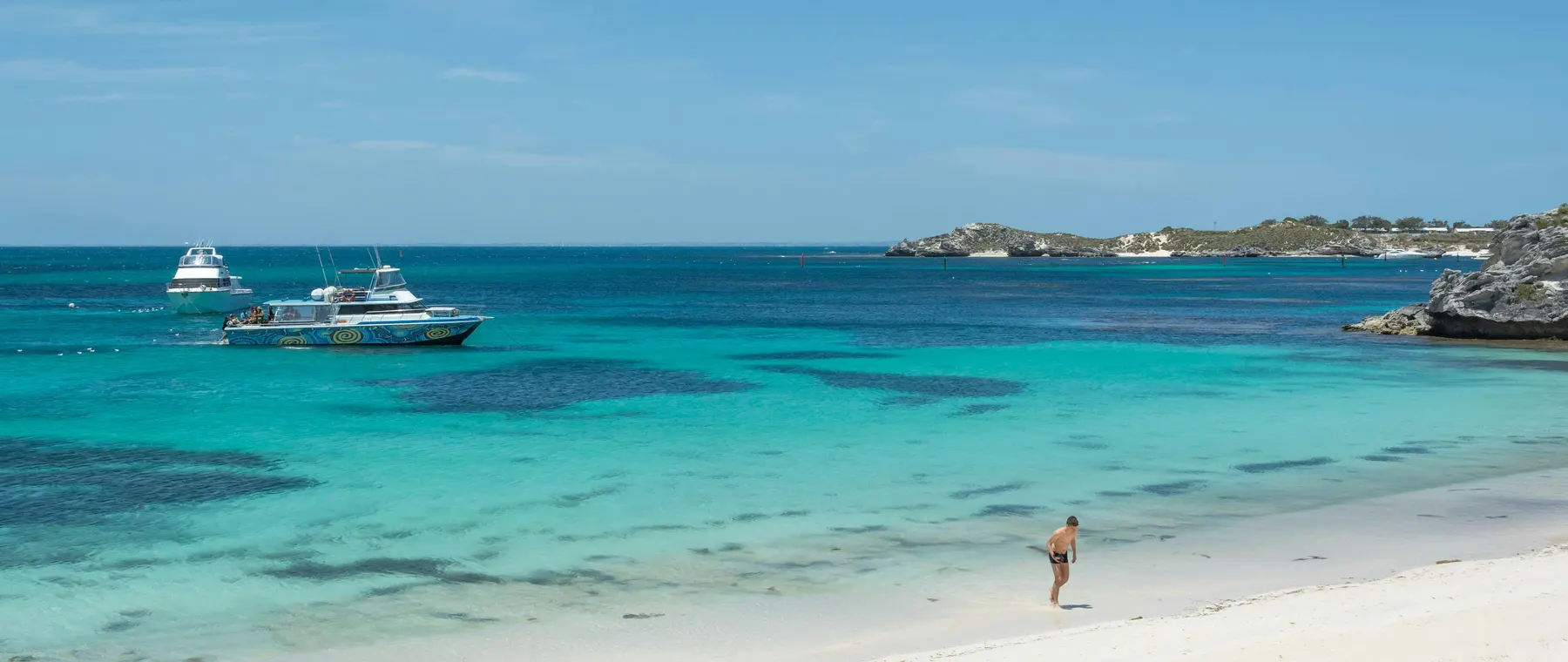
A private-yacht arrival with real rules attached
Wadjemup, commonly called Rottnest Island, offers one of Western Australia's most appealing short yacht passages, with pale-sand bays, clear Indian Ocean water and a very different atmosphere from the mainland. The island lies close enough to Perth and Fremantle for a deliberate long weekend, yet its protected marine environment demands advance choices about moorings, fees and safe access.
For guests, the promise is an elegant change of pace: a morning anchorage selected for conditions, snorkelling where authorised and an afternoon exploring without a car. For the captain, the first decision is less romantic but more important—confirm which waters, facilities and approaches are legal and suitable for this particular vessel on the chosen date.
The Rottnest Island Authority's official private-boating guidance makes clear that admission, anchor use and mooring permission are different matters. A yacht with paid island admission is not thereby entitled to pick up an arbitrary private mooring, and every itinerary should be built around the most current marine charts and notices.
Moorings, admission and sensible booking
Private-boat visitors are required to pay island admission fees, with individual or annual vessel-based options described on the official website. The authority explains that boaters entering the marine reserve should arrange payment as soon as possible, and its annual scheme runs from September through August rather than following the calendar year.
The island provides rental moorings as well as private moorings, identified differently and governed by separate conditions. According to the official visitor guidance, rental bookings can be made up to 100 days ahead, making it sensible to secure appropriate facilities before reserving restaurants or a shore itinerary.
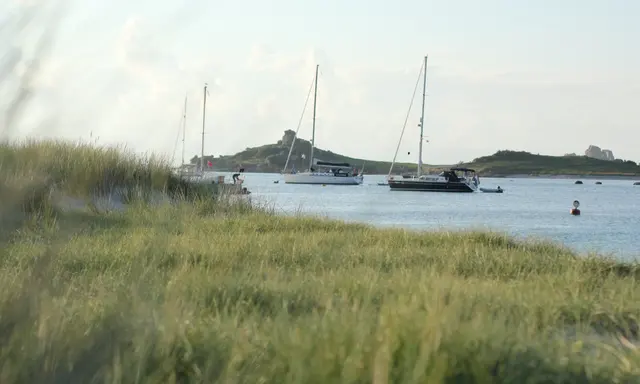
Anchoring remains an option in suitable locations, but the authority prohibits dropping an anchor on seagrass or reef and sets separation rules around moorings and signed areas. A skipper should therefore confirm the bottom and boundaries, not simply choose the most photogenic expanse of turquoise water on an online map.
The official page identifies Thomson Bay south of the Army Groyne, Longreach Bay, Parker Point and Stark Bay as popular anchorage areas, with local restrictions and conditions still applying. None should be represented as guaranteed all-weather shelter; wind, swell, draft and traffic can make even a familiar bay inappropriate for a particular yacht.
Parakeet Bay, Geordie Bay and the northern coast
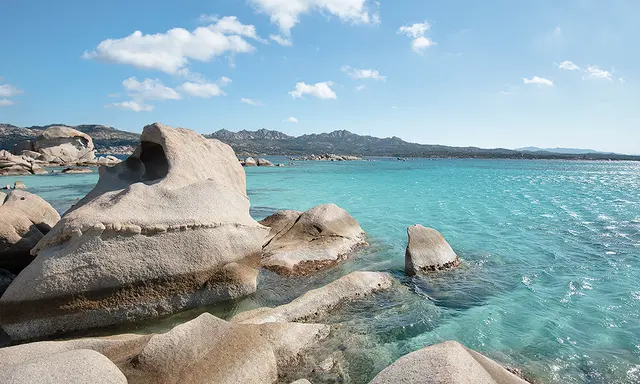
Parakeet Bay illustrates Rottnest at its calmest: clear pale-blue water, low coastal vegetation and a sandy setting that encourages a long view from deck. However, a beautiful bay is not a navigational clearance, and the bridge team must check current reef hazards, any restricted waters and the actual options for mooring or anchoring.
Geordie Bay provides a more settled shore base, with accommodation, café options and a general store within reach of the water. The island authority specifically recommends booking moorings there in advance because the bay can be busy, and shore facilities should be confirmed for the dates and guest requirements.
Thomson Bay is the practical centre of many visits, placing guests close to the island's main settlement and services. A yacht itinerary that balances one quiet anchorage with a formal town visit often delivers more pleasure than repeated short moves between crowded bays.
Five sanctuary zones demand attention
Rottnest Island's marine reserve includes five sanctuary zones created to protect aquatic habitats and life. The authority warns that fishing and taking marine plants or animals are restricted in those zones, and boat operators should use the current official boundaries rather than rely on memory or a chart screenshot.
These protected waters can offer rewarding observation and snorkelling for visitors who are content to leave everything untouched. The presence of fish or seagrass is part of the experience, not a prompt to collect souvenirs or launch an unplanned fishing session from the tender.
Official guidance also identifies various bays and swimming areas where vessel access or movement is managed for visitor safety and fauna protection. Captains should check the island's boating maps and any live closed-water notices, while tender drivers are briefed before passengers leave the mothership.
Shore time, quokkas and island history
Ashore, Rottnest is designed for a slower rhythm, with cycling, walking, beaches and the main settlement offering alternatives to a long restaurant itinerary. Private-yacht guests may be particularly well placed to enjoy a gentle morning on the water followed by an unhurried guided afternoon before returning on board.
The island's quokkas are wildlife, not a photo prop. The authority advises visitors to observe them from a respectful distance, never touch or feed them and remain on designated paths so that food scraps, camera encounters and bicycles do not harm vulnerable animals.
Wadjemup is also of profound significance to Whadjuk Noongar people, whose continuing relationship with the island should be recognised in any serious destination guide. The island's history includes the unjust incarceration of Aboriginal men and boys, so a respectful visit can include official historical interpretation rather than reducing the place to an appealing holiday photograph.
Guests seeking local context should allow time for the island's interpretive material or an appropriate guided experience, avoiding assumptions that every cultural site is open for unsupervised access. Thoughtful interpretation is part of luxury travel when it leads to better informed and more respectful decisions.
Fuel, water and operational comfort
Official island guidance describes an electronically operated fuel jetty at Thomson Bay, with diesel and unleaded petrol services, and notes that potable water is available from designated facilities including Geordie Bay Jetty. However, the authority also advises boat operators to fill water tanks on the mainland first because desalinated island supplies are limited and restrictions may apply.
For a luxury yacht, these facilities are contingency options to investigate rather than a justification for arriving under-provisioned. Capacity, berth configuration, fuel compatibility and any operating changes should be confirmed in advance with the island authority or responsible supplier.
The captain should also factor the return passage into the day's weather decision rather than assume the same comfortable conditions will persist through evening. The island's offshore position, reefs and busy approaches mean a late schedule change deserves the same caution as the initial arrival.
A three-day voyage that leaves room to breathe
On the first day, depart from an appropriate mainland port after verifying weather, the marine reserve charts, island admission and the selected mooring. An afternoon settling in around Thomson Bay can provide a simple start, with dinner ashore or on board depending on guest preferences and the day's anchorage conditions.
Use the second day for a carefully chosen bay on the island's northern or western side, provided current restrictions and weather permit it. A responsible snorkelling session, photography from permitted viewpoints and a quiet lunch can fill the day without the crew chasing every cove around the coastline.
Reserve the final morning for an authorised shore visit, a cycle or a guided wildlife and history experience, then leave sufficient time for the return passage to the mainland. Rottnest's attraction is that it can feel wonderfully unhurried when the voyage is planned around the island's rules and the sea's temperament.
The official Rottnest Island private-boating page, marine maps, mooring booking guidance and island safety notices are essential planning sources, while its wildlife and Aboriginal-history pages provide equally important context ashore. A skipper's current charts and operating judgement remain decisive for the voyage itself, especially if conditions change after the itinerary is agreed.