A new presentation built around the human hand
Design Miami's 2026 Special Projects programme includes Doloni: Objects of Presence, a presentation organised by the Strong & Precious Art Foundation that brings contemporary Ukrainian jewellery, ceramics, furniture and textiles into the same setting. The official fair programme describes a project concerned with touch, material and memory, and the foundation says it will make its Design Miami debut in December. The fair is scheduled for 1 to 6 December 2026, so the presentation remains a preview, not a review of a completed installation. Its name is especially important: Doloni refers to palms or hands in Ukrainian, suggesting not only a physical part of the body but the gestures through which objects are made, protected, offered and remembered. That is a more nuanced point of departure than the familiar language of national design showcases.
The significance of a hand
Hands are central to nearly every branch of material craft. A jeweller sets a stone, a ceramic artist shapes clay, a textile maker handles fibre and a furniture designer tests an edge or joint. The skills involved differ, but each depends on an intimate relationship between material and judgement. Doloni uses that shared quality to give a varied collection a coherent theme. The foundation's official description connects the title with touch, care, protection and memory; those associations can be explored without assuming that every selected work illustrates the same story. A successful exhibition could make differences between crafts more visible by placing them near one another. The task is to preserve the individuality of the makers while recognising the relationships that their materials allow visitors to discover.
The foundation's contemporary role
Strong & Precious was established as a platform to bring greater international attention to Ukrainian jewellery designers and their technical and artistic work. The foundation's publications and projects have extended that mission through exhibitions, competitions and partnerships. Its Design Miami presentation widens the conversation beyond jewellery alone. By including furniture, ceramics and textiles, Doloni challenges a simple split between objects to wear, objects to use and objects to contemplate. That is meaningful because museums, galleries and collectors have often assigned different kinds of prestige to these practices. A carefully constructed programme can ask whether a cabinet, a brooch and a ceramic vessel might express equally sophisticated ideas, even when their functions and methods are quite different.
The people behind the announcement
The foundation identifies Olga Oleksenko as a key figure in its work, and its official project description links the 2026 presentation to collector Liudmyla Pyshna. The participant list includes Inesa Kovalova, NOMIS, Iryna Karpova, Oberig, Zemna, Nina Murashkina and Volodymyr Manzhos, known as Waone. These names represent varied practices rather than a single collective workshop. Their inclusion should be reported accurately, without assigning an unverified object, material or price to a particular participant before the final presentation is documented. The value of naming makers is precisely to resist the tendency to treat a national cultural programme as anonymous craft. Authorship deserves a visible place beside the institution that organised the opportunity.
Jewellery can be an argument about identity
Jewellery is often described through precious materials, prices and rarity. Yet an object worn near the body can carry memories of family, place, language and personal history. Contemporary Ukrainian designers may work with inherited symbols while also challenging expectations about national style. That relationship is not an obligation for every artist to make a statement about heritage. Some makers may prefer abstract experimentation, unfamiliar combinations of materials or technical invention. The exhibition's title creates room for both intimate identity and formal innovation. For collectors, an informative encounter begins with asking why an object has its shape and how the artist understands it, rather than assuming that a national origin provides the entire explanation.
Ceramics bring a different experience of time
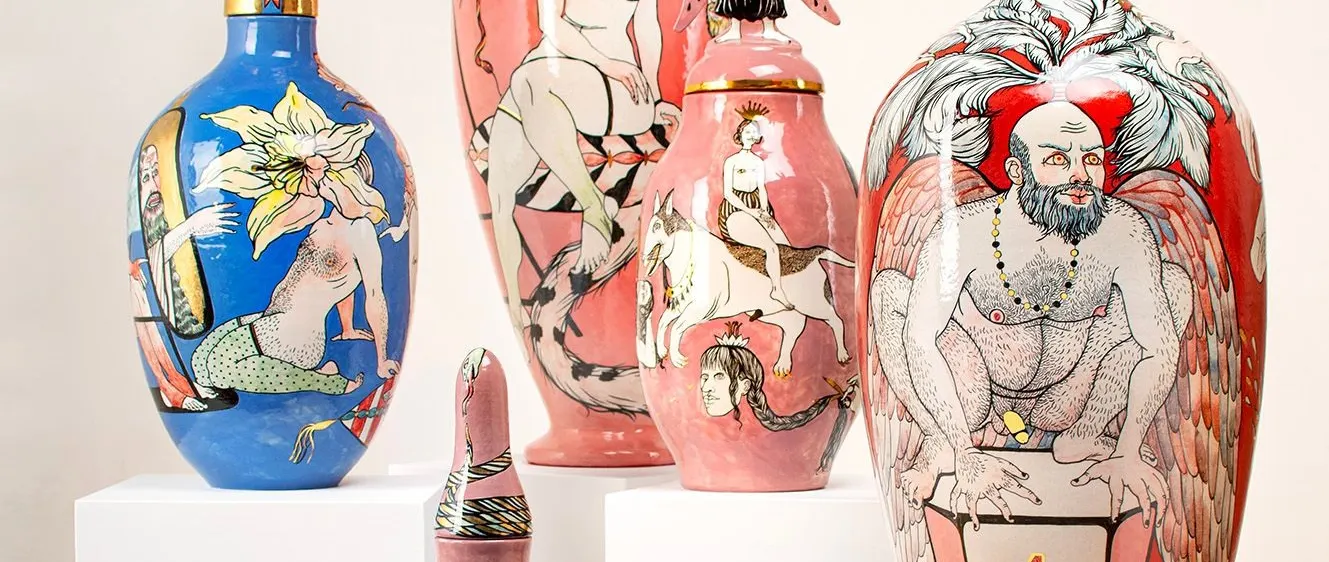
Clay can record the marks of its shaping, but firing fundamentally alters its properties. A ceramic object carries decisions about thickness, surface, glaze and intended use that are often invisible in a polished photograph. In Doloni, ceramics sit alongside jewellery and furniture, opening a discussion about the different rhythms of production. The rapid gesture of a maker's hand may coexist with long drying or firing processes; a final surface can preserve subtle traces of work or conceal them beneath a glaze. These are general principles of ceramic craft, not a technical specification for individual pieces that have yet to be catalogued here. They are useful ways for a visitor to approach the category with curiosity about making rather than only visual harmony.
Furniture moves the idea into shared space
Furniture is experienced through bodily contact and everyday movement. A chair must respond to support and balance; a table determines how people meet; a cabinet creates relationships between what is exposed and what is concealed. A distinctive piece can be both functional and expressive, but those qualities do not always align effortlessly. By showing furniture near jewellery and textiles, the foundation invites attention to differences of scale. A motif worn on the hand may be recognised very differently when developed as a full-size interior object. The best collectible design does not rely on rarity alone. It uses proportion, fabrication and a persuasive design idea to explain why an object deserves attention beyond its immediate utility.
Textiles are records of labour
Textile works can be especially intimate because threads, fibres and repeated gestures build a surface over time. In both historical and contemporary practice, fabric carries practical and social meanings: clothing, shelter, decoration and the preservation of patterns. Displaying textiles in a collectible-design context can reveal the skill involved in making a flexible surface and challenge assumptions that soft materials are merely supplementary. It also introduces preservation questions. Light, humidity, insects, handling and mounting choices may affect delicate fibres differently from metal or fired ceramic. These distinctions matter to galleries and owners, particularly when a collector hopes to display diverse materials together. A visually successful installation still has to respect the physical limits of the objects.
A presentation from Ukraine at this moment
The foundation's own framing places contemporary Ukrainian art and craft within a wider effort to sustain cultural identity and international recognition. That context has particular significance amid the continuing consequences of Russia's full-scale invasion of Ukraine. It should not, however, reduce the participants to symbols of conflict alone. They are artists and designers with their own techniques, ambitions and professional histories. A respectful report can acknowledge the difficult conditions in which cultural work takes place while still taking the work seriously on its own aesthetic and technical terms. Doloni's emphasis on hands, memory and protection allows those questions to coexist without requiring every object to illustrate a single political narrative.
Collecting with credible provenance
A collector considering work from a small international maker should ask about authorship, materials, production date, edition details and the route by which the piece is being offered. Foundation support can help make designers visible, but it does not replace due diligence on an individual object. Contemporary jewellery may have specific hallmarks or gemstone documents; furniture may require structural information; textile and ceramic works may have distinct conservation requirements. Publicity about a forthcoming fair does not establish a price list, sales outcome or secondary-market value. The most useful approach is to treat the exhibition as an introduction to creative practice and to seek full information from the artist or authorised representative before an acquisition.
Why this matters to yacht interiors
Yacht interiors often combine hard surfaces, upholstered objects, custom furniture and carefully selected decorative pieces within limited space. Doloni's cross-disciplinary approach is therefore relevant to owners and designers who want an interior to feel assembled through meaningful choices rather than a generic selection of fashionable finishes. A hand-made textile, ceramic or sculptural object can add narrative, yet its suitability for a marine environment must be separately assessed. Movement, humidity, shock, securing methods and housekeeping routines can affect objects that were created for stationary galleries or homes. The fair's announcement contains no blanket marine certification for the works. A commissioning decision should preserve the designer's intent while involving qualified marine and conservation advice when necessary.
The difference between visibility and understanding
International fairs can rapidly introduce makers to audiences they would not otherwise encounter. That access is valuable, but visibility can become shallow if coverage focuses only on an attractive image or a short national label. To understand an object requires time with its materials, knowledge of who made it and some appreciation of the local traditions or contemporary questions it addresses. Doloni's cross-disciplinary format offers an opportunity for that slower engagement. The organisers' stated focus on presence and touch suggests an experience that goes beyond listing names, though the completed presentation must be assessed after opening. Advance coverage should be careful not to attribute visitor reactions, sales figures or final spatial arrangements that have not yet been verified.
The fair's wider curatorial setting
Design Miami's 2026 theme is Unveiling, framed around revealing the ideas, making and stories within collectible objects. Doloni fits that approach through the relationship between hands, materials and memory, but it should also be understood as a specific Ukrainian cultural project rather than a generic example of fair branding. Its interest comes from the particular makers and forms brought into dialogue. Visitors can look for how fine jewellery relates to furniture at a different scale, how ceramic and textile surfaces preserve traces of touch, and how the foundation connects contemporary practice to cultural continuity. These are questions to pursue when the event opens, not factual claims about a display that has not yet been inspected.
What should be verified in December
The currently available official information supports the title Doloni: Objects of Presence, the participation of Strong & Precious Art Foundation, the inclusion of Ukrainian jewellery, ceramics, furniture and textiles, and the planned timing of Design Miami from 1 to 6 December 2026. A later report should document the actual displayed objects, each maker's contribution, materials, photo credits and any confirmed acquisition information. It should also make clear when images are advance publicity rather than on-site photographs. The primary evidence is the foundation's own Design Miami project page together with the official Design Miami Special Projects programme. For collectors, the proposal is compelling because it reminds us that the value of craft often begins with the knowledge held in hands long before an object reaches a showroom.