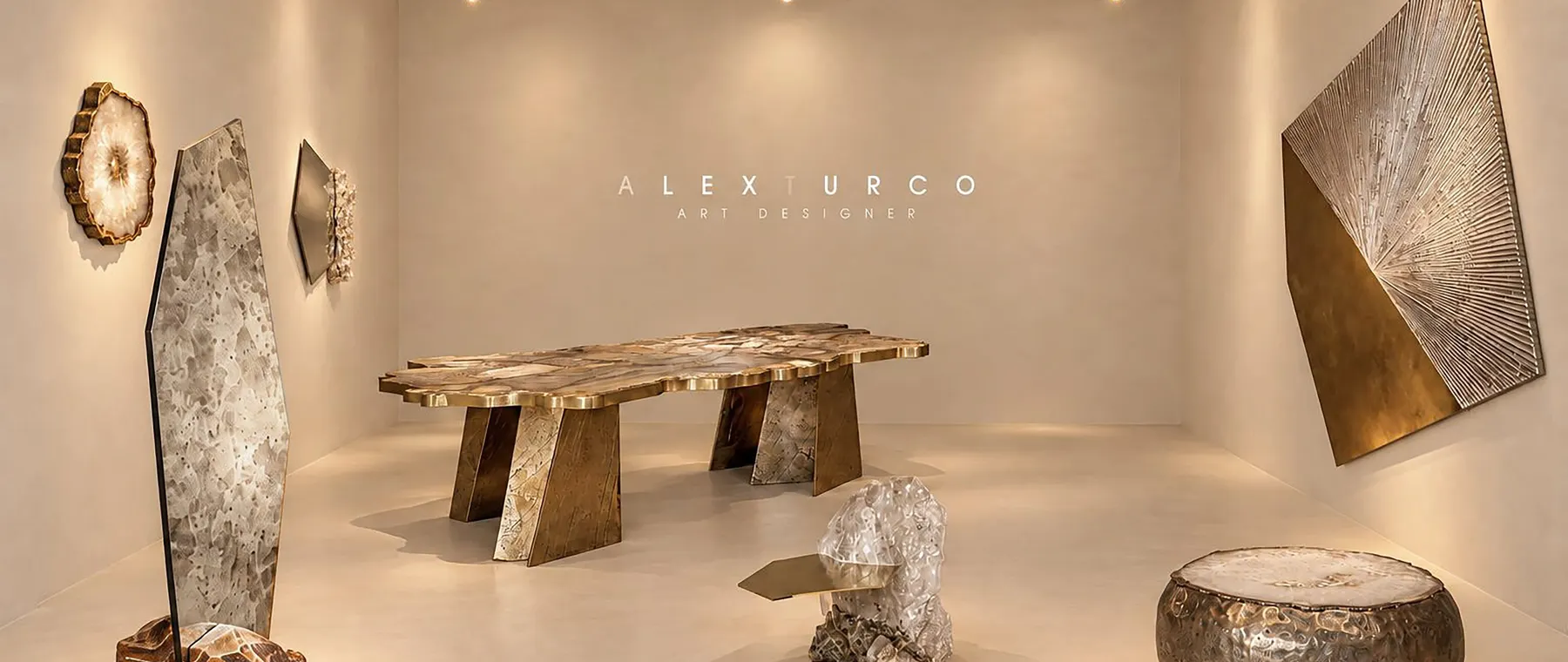
A cabinet of curiosities made from the natural world
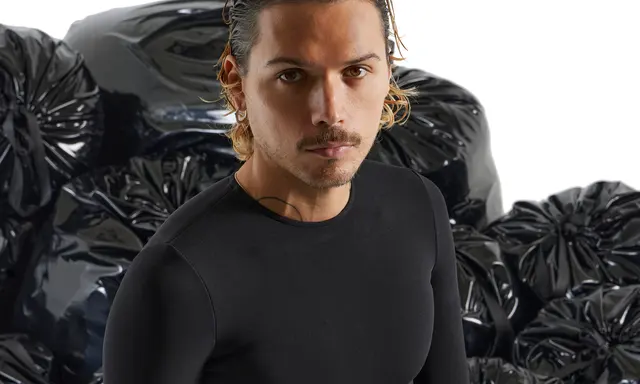
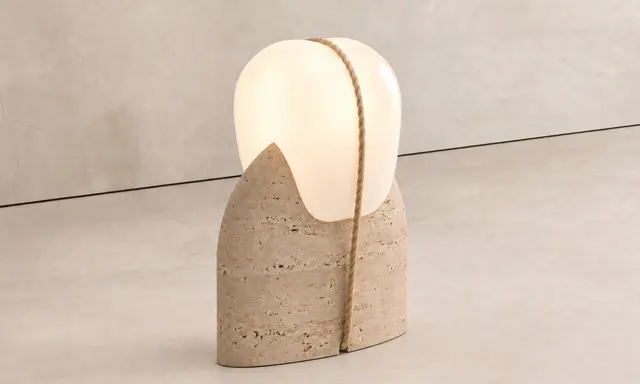
Italian artist and designer Alex Turco is included in Design Miami's 2026 Curio programme with sculptural work that begins in the landscape rather than at the drawing board alone. The organiser describes artworks incorporating salt, volcanic stone, sea sponges, charred wood and crystals gathered from places with personal meaning, then transformed through handcrafted epoxy-resin techniques. Design Miami is scheduled for 1 to 6 December, so its Curio listing is an advance account of the project rather than a review of a finished installation. The materials offer an unusually direct connection to water, geology and natural transformation. They also create questions about the relationship between found matter and artistic intervention: when a maker preserves part of the world in an object, what is being protected, what is being changed, and how should a collector understand the result?
The natural materials are not decoration alone
A fragment of volcanic stone or charred wood can carry visible evidence of processes that unfolded before it entered an artist's studio. Salt may recall evaporation and changing water conditions, while sea sponges possess forms created by living organisms rather than a designer's drawing. It would be simplistic to read those materials only as exotic textures. The artist's decision to gather, combine and preserve them gives the work a second history alongside the material's origin. A collector encountering the result might be looking at a geological surface, a personal memory and a constructed composition at the same time. This layered character is the more interesting prospect behind the Curio entry, which describes a practice blurring art, sculpture and collectible design.
Turco's career crosses several categories
Turco's own Only One project describes his move toward singular works of art and collectible design, developed from a longstanding practice involving crafted surfaces. The artist founded his Miami-based company in 2009, and his work has moved between commissions for interiors and objects intended to stand on their own. The maker's official account connects his practice with an interest in nature and the expressive qualities of epoxy resin, while documenting a collectible-design collection that made its debut at Art Basel Paris in 2025. Those details establish a trajectory without implying that the Miami fair will present all of his earlier projects. It is the continuity of experimentation across different formats that helps explain why his current material choices may interest both design collectors and architects.
Epoxy resin as a means of transformation
Epoxy resin can be used to bind, encase or create a durable surface around chosen materials, depending on a work's construction. Its behaviour differs from that of the substances Turco gathers: stone can be porous or dense, wood may contain irregular voids, and salt can respond to moisture. The artist's method therefore involves technical decisions about preparation and presentation as well as visual composition. The organiser identifies handcrafted resin work as central to the forthcoming display, but does not publish a detailed manufacturing specification for every object. It would be wrong to assume that all raw material is left untreated or that each finished work has identical conservation requirements. What matters for interpretation is the deliberate joining of forms produced by nature with a structure made through studio practice.
The presence of salt
Salt is a particularly evocative material for a maritime audience because its movement through water, land and atmosphere is so familiar. It can crystallise into striking structures yet also be vulnerable to changing environmental conditions. Inside an artwork, it may serve as a visual reminder of coastlines, evaporation or the passage of time. These associations do not justify inventing a geographical origin for Turco's individual pieces. The fair specifies meaningful places around the world without publishing a source map for every fragment. Collectors interested in provenance should ask the maker what can be documented. The resulting narrative is strongest when it remains connected to verified material history rather than a romantic claim that every crystal comes from an extraordinary location.
Sea sponges bridge ecology and sculpture
Sea sponges are living marine organisms with structures that differ markedly from manufactured foam. Their physical forms can be intricate, with channels and irregular surfaces shaped by biological processes. When such material enters a work of art, a collector may be drawn to its geometry without immediately knowing how it developed. That is one reason the visual language of nature remains productive for artists and designers. At the same time, a responsible account should not assume that all marine material is harvested sustainably or that every specimen is of a particular protected or unprotected species. The fair announcement does not provide complete sourcing records. Those facts would need verification before making environmental claims. An engaging artistic idea is not a substitute for traceability.
Volcanic stone and the memory of force
Volcanic material has a different history: it emerges from processes involving heat, pressure and cooling, often retaining irregular surfaces or cavities. In the studio it can offer a striking contrast to a smooth resin finish. The tension between rough natural material and a controlled constructed edge is familiar in collectible design, yet the combination can still feel powerful when it is handled with restraint. The artist is not making a scientific exhibit about volcanology, and an individual work should not be assigned a specific eruption or site without documentation. The strength of the concept lies in allowing geological character to be visible while making an object that belongs in a contemporary design conversation. Form and material provenance can reinforce one another without becoming interchangeable.
Charred wood and the visible passage of time
Charred wood can suggest transformation through fire, damage or deliberate treatment, but its meaning depends on how and why it was chosen. A blackened surface may absorb light, emphasise texture or contrast with translucent and reflective materials. It can also act as a reminder that materials move through states rather than remaining fixed forever. Turco's inclusion of charred wood fits the fair's description of an approach concerned with what happens to objects over time. That does not tell us the exact cause of the charring in any given work, and reporting should avoid inventing it. More useful questions concern the artist's selection, how the fragment is stabilised and what its final position contributes to the balance of the sculpture.
Why Curio is a suitable setting
Design Miami describes its Curio programme as a platform for focused installations and unusual presentations, where a single object or concentrated body of work can tell a story beyond an ordinary gallery display. Turco's practice fits because the materials themselves already carry a range of associations. A carefully constructed presentation could encourage close observation of surfaces and transitions rather than simply offering a line of polished furniture for sale. Visitors should still distinguish the programme's descriptive ambition from the actual experience, which can only be assessed once the fair opens. The official image is an advance organiser-provided artwork photograph, not evidence that the final display has been installed or reviewed. The difference protects both the reader and the maker from premature assumptions.
The question of functional design
The organiser places Turco's objects between art, sculpture and collectible design. These categories overlap but do not mean the same thing. A unique sculptural work may not be intended to hold weight or perform a particular domestic function, while a designed surface for interiors may require specific performance testing. A collector needs to know which kind of object is actually being offered. The fact that something resembles a table or panel in a photograph does not establish a safe load rating or suitability for an exterior location. Turco's broader practice includes interior surfaces, but the Miami project should not be advertised as marine furniture without explicit maker documentation. Design integrity includes a clear account of purpose, not just a memorable appearance.
Marine interiors and environmental limitations
The material combination is immediately suggestive for luxury yacht interiors, where the sea is visually present yet most finishes are carefully engineered to withstand demanding conditions. A sculptural object containing salt or organic matter could create an interesting dialogue with that environment, but its very composition raises questions about humidity, ultraviolet light, surface care, thermal expansion and secure fixing. Epoxy-resin work can vary substantially in formulation and intended use. No blanket certification or marine durability claim appears in the fair announcement. Owners should therefore ask for care instructions and seek appropriate advice before installing a delicate or heavy object on a moving vessel. A compelling maritime theme cannot replace the practical responsibility to conserve an artwork and protect people nearby.
Collecting a singular work responsibly
The Only One concept emphasises individuality, which may attract collectors interested in objects that are not reproduced in large editions. Uniqueness, however, is not a substitute for documentation. An acquisition should establish what materials were used, whether anything may change in appearance over time, whether the object requires specialised cleaning and what certificates or records accompany it. Future conservation may depend on knowing the resin system and the treatment of embedded organic components. Market value is a separate question, affected by far more than rarity or an eye-catching provenance narrative. This is especially important when an artist's work crosses the border between fine art and design, because buyers may arrive with different expectations about durability, functionality and long-term stewardship.
Place and memory can be understood without mythology
Turco's official practice describes gathering material from meaningful locations. The appeal of that idea is straightforward: an object can carry personal geography in its physical structure. Yet critics and collectors should be wary of adding invented stories to a work simply because a material looks dramatic. The artist's own explanation, a documented sourcing record and direct observation provide stronger evidence than speculation. This is particularly relevant to objects using natural substances whose origins may not be identifiable from appearance alone. The material itself can remain visually compelling even when its exact history has not been published. A rigorous account preserves that uncertainty while allowing the underlying artistic question—how a place might become an object—to remain alive.
What to verify after the opening
Design Miami is scheduled for 1–6 December 2026, with Turco named in its official Curio programme. The organiser identifies salt, volcanic stone, sea sponges, charred wood, crystals and handcrafted epoxy-resin methods as essential to the presentation. The artist's own Only One account provides background on his practice, while the Design Miami Curios listing confirms the 2026 fair participation. The exact number of displayed objects, their prices, dimensions, engineering characteristics and final placement should be checked when the event opens. No such unverified claims are made here. What already stands out is the attempt to preserve fragments of nature without losing sight of the human acts of selection and making that turn them into contemporary design.