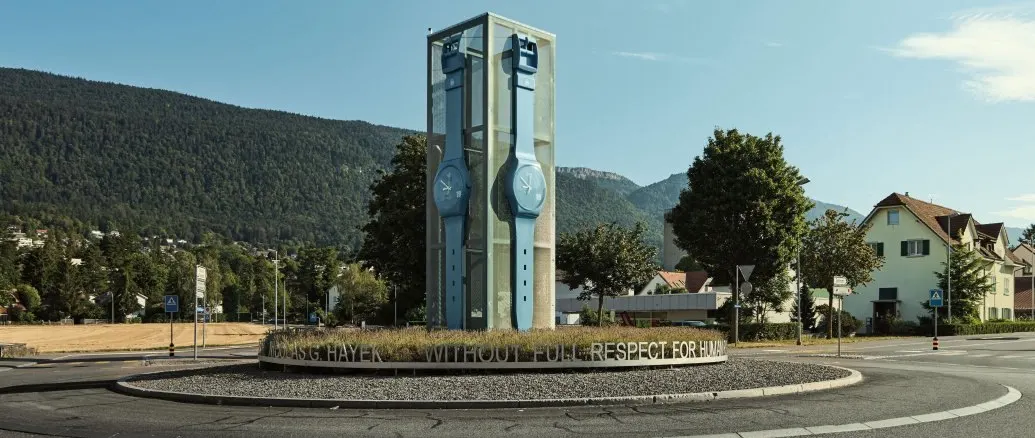
Porsche Design has opened a purpose-built timepieces manufactory in Grenchen, Switzerland, bringing personalised mechanical-watch production together with elements of the manufacturing philosophy used in the company's automotive world. A feature published by Porsche Newsroom on 10 November 2026 explores the building, the people working within it and the relationship between watchmaking tradition and individual customer choices. The site occupies a renovated building dating from 1955, with production organised around a clear sequence from component selection to assembly and inspection. For luxury lifestyle readers, the subject goes beyond a new factory. It raises questions about how a small mechanical object can express personal identity, how precision craft is maintained at scale and why the place in which an object is made remains part of its appeal.
A Swiss address with an automotive connection
Grenchen sits in a region with a longstanding watchmaking history, near the Jura Mountains and Lake Biel. Porsche Design's new facility occupies a site closely associated with its own past. According to Porsche, the building was used by Eterna to manufacture Porsche Design watches under licence between 1998 and 2014. The location also lies near the place where F. A. Porsche's first timepiece was produced in 1972. This historical connection gives the project a stronger identity than a simple relocation to a convenient industrial building. Yet heritage alone cannot guarantee quality. The processes, skills and inspection standards used inside the building matter as much as the story associated with its address.
The building has been rebuilt around watchmaking
Porsche describes an extensive renovation lasting eighteen months and covering a building of approximately 3,600 square metres. The new workflow follows a U-shaped path intended to reduce unnecessary movement as components pass through different production stages. The layout is a practical industrial choice, not a claim that Swiss watchmaking can be reduced to an automotive assembly line. Mechanical watches contain small parts that require careful handling and inspection, and production efficiency should support that work rather than undermine it. The company's approach is noteworthy because it seeks to make personal configuration compatible with organised manufacturing. The quality of the resulting watches must ultimately be judged by their performance and finish.
Component selection begins in the so-called supermarket
One unusual detail in the official account is an internal area nicknamed the supermarket. It is not a public retail shop but a component-storage system in which the parts for an individual watch are gathered into a dedicated kit. A titanium case, strap, movement components, screws and selected details can be collected before work begins. This organisation may look simple, but the accuracy of each kit is vital when customers specify individual combinations. Efficient preparation can reduce the chance that a craftsperson has to interrupt assembly to locate a missing part. The account illustrates how logistics and handcraft are related: the better a workshop prepares its materials, the more attention a watchmaker can devote to precise work.
The watch can reflect an owner's sports car
Porsche Design's configuration programme draws a direct connection between a mechanical watch and a customer's 911 or Cayenne. The company says owners can consider colours related to the paint of their vehicles and leather straps made using materials associated with car interiors. Such choices create a recognisable personal link between two objects, though they do not change the technical function of a mechanical movement. The appeal is emotional and aesthetic. A customer may enjoy carrying a reference to a vehicle even when not driving it. However, customisation should not be confused with proof that a watch is necessarily a unique investment or that all possible combinations are permanently available.
Rolf Bergmann brings a manufacturing background
Rolf Bergmann, the chief executive of Porsche Design's timepieces manufactory, previously worked in automotive production and the organisation of individual customer options. In the Porsche feature, he explains how the same discipline can help manage personalised watches. The company reports that nearly three quarters of its timepieces are configured as unique pieces for customers. That statement concerns the producer's current manufacturing mix, not an independent audit of every model's scarcity. The practical challenge is clear: a business must manage many variations while preserving reliable processes. A highly customised order becomes less impressive if the finished piece is delayed, inaccurately configured or poorly checked.
The movement links function and design
The company's watch designs take inspiration from Porsche cars, sometimes extending into a visible mechanical component. One example is a winding rotor whose appearance recalls a sports-car wheel. There is a useful engineering distinction between the two: a car wheel should be properly balanced, while an automatic-watch rotor relies on an offset mass to move with the wearer's wrist. Porsche describes the use of tungsten weights to achieve the necessary imbalance. That is more than a decorative reference because the visual idea is connected to the component's actual job. It demonstrates the opportunity for design language to communicate something functional, provided mechanical requirements remain in control.
Precision requires more than attractive finishing
Luxury watches are often admired through photographs of polished cases and intricate dials, but many of the important checks are less visible. Porsche describes tests and production procedures intended to support consistent mechanical operation. One example concerns chronograph pushers, for which the company's stated test target exceeds a common industry reference by a considerable margin. These are manufacturer-reported standards, not the results of an independent test commissioned for this article. They are relevant because controls used repeatedly over a watch's life must withstand substantial use. Buyers should still consult the current specifications and warranty conditions for any particular model rather than assume that every watch shares identical testing arrangements.
Ten workstations in a controlled environment
The new facility contains ten watchmakers' workstations inside an ISO-certified clean room, according to the Porsche report. Lighting and cleanliness receive specific attention because dust and particles can interfere with assembly or inspection. The word clean room should not be understood as a guarantee that defects are impossible. It describes a controlled working environment that can help specialists carry out delicate tasks. The benefit is particularly apparent when dealing with miniature moving parts and finely finished surfaces. The factory's reported layout is one part of the quality story, but training, tool calibration and final inspection also have an important role.
Watchmakers move between stages of production
Porsche says its watchmaking team is trained to undertake multiple stages of production rather than repeating only one narrow task. Production Manager Christoph Fröhlicher describes this approach as a source of variety and professional engagement. Cross-training can help workers understand how early decisions affect later assembly and inspection. It may also make it easier for a small team to adapt to changing orders. However, there is no reason to claim that one organisational philosophy is automatically superior in every workshop. Some specialist processes benefit from concentrated expertise. The important point is that Porsche has chosen a model intended to combine flexibility with a high level of individual accountability.
A fitting lounge makes customisation tangible
The manufacturer's configuration lounge contrasts with the more controlled atmosphere of the production rooms. Guests considering a watch can look at colour samples, materials and details before making decisions. This is a different experience from selecting a photograph on a website because texture, reflected light and the feel of a strap can change how a combination is perceived. It also reflects a wider feature of high-end personalisation: choices are more meaningful when customers understand the materials and constraints involved. The official account does not establish that all visitors may tour the factory or enter the lounge without appointment. Access and purchasing procedures should be confirmed with Porsche Design.
Why Grenchen's history matters
Grenchen developed from a small settlement into a major centre of the Swiss watch industry, a transformation described in Porsche's feature through local historical accounts. Watchmaking provided new employment and eventually supported a network of specialist businesses and training institutions. Industrial history can be easy to overlook when the final product is presented as a luxurious object, but local expertise and supplier relationships are central to many craft industries. The new Porsche facility sits within that wider regional ecosystem. Its identity comes not only from the company name but also from the accumulated skills around it. This is one reason a manufacturing location can carry genuine significance beyond a marketing label.
The natural setting around the manufacture
The original report describes the landscapes of the Jura and nearby Lake Biel, offering a reminder that a watchmaking town can also be a place of natural and cultural interest. Visitors to the region may encounter vineyards, historic museums and protected landscapes. Those experiences are not automatically included in a Porsche Design purchase or factory visit. Rather, they provide broader context for travellers interested in understanding where Swiss precision manufacturing developed. A meaningful destination itinerary can combine museums, architecture and workshops without turning every stop into a retail appointment. The setting may deepen appreciation of the craft, but it should not be confused with a warranty of technical quality.
Personalisation does not replace mechanical fundamentals
Matching a dial to a vehicle's paint is appealing, but collectors should also consider the underlying movement, materials, servicing arrangements and long-term ownership costs. A bespoke finish may require particular care if damaged, and not every aesthetic choice will remain available indefinitely. The Porsche announcement discusses the manufacturing system rather than offering a complete buyer's guide for a specific watch. Prospective customers should request current technical documentation and service information for the actual model they are considering. The relationship between appearance and performance deserves close attention, especially when a product is described through the language of automotive engineering and Swiss precision.
Connections to the luxury yacht world
Owners and guests of 12–24-metre luxury yachts often appreciate mechanical engineering, durable materials and personalised design. The watchmaking process at Grenchen may therefore be interesting beyond Porsche's own automotive community. A yacht's technical systems and a mechanical chronograph operate on vastly different scales, but both reward careful assembly, maintenance and attention to tolerances. The comparison is conceptual; Porsche has not announced a yacht partnership or maritime watch collection in the November feature. For lifestyle coverage, the relevant theme is the pleasure of understanding how a crafted object works and why its maker has chosen particular engineering and aesthetic solutions.
What Porsche has documented in 2026
Porsche Newsroom's 10 November report presents the new Grenchen manufactory as a combination of Swiss horological tradition, automotive-inspired personalisation and an organised production model. Its specific documented elements include the historic building, the renovated 3,600-square-metre site, a dedicated component-picking process, a controlled watchmaking environment and the role of customer-selected materials. The report should not be read as independent verification of every quality claim or as evidence that all models are currently available. For luxury lifestyle readers, its appeal is the unusual visibility it gives to the work behind an object that might otherwise be encountered only in a shop window.
Sources and image credits: Porsche Newsroom original report dated 10 November 2026, Porsche Timepieces: A New Era of Timekeeping, with official Porsche AG media photography supplied for journalistic reporting through Porsche Pictures. The factory layout, personnel, reported production practices and technical statements are attributed to Porsche. Historical context, design analysis and ownership considerations are independent Luxury Yacht Guide reporting.
Sources and image credits
Reporting based on Porsche Newsroom 10 November 2026 original report on Porsche Design's Grenchen timepiece manufactory.
Lead photograph: Grenchen Switzerland — Porsche Design watchmaking region, Porsche AG press image. Image: Porsche AG / Porsche Design Timepieces Manufactory, 2026. Official press photography illustrating Grenchen, Switzerland, not a photograph of a particular watch model. Original official image source.