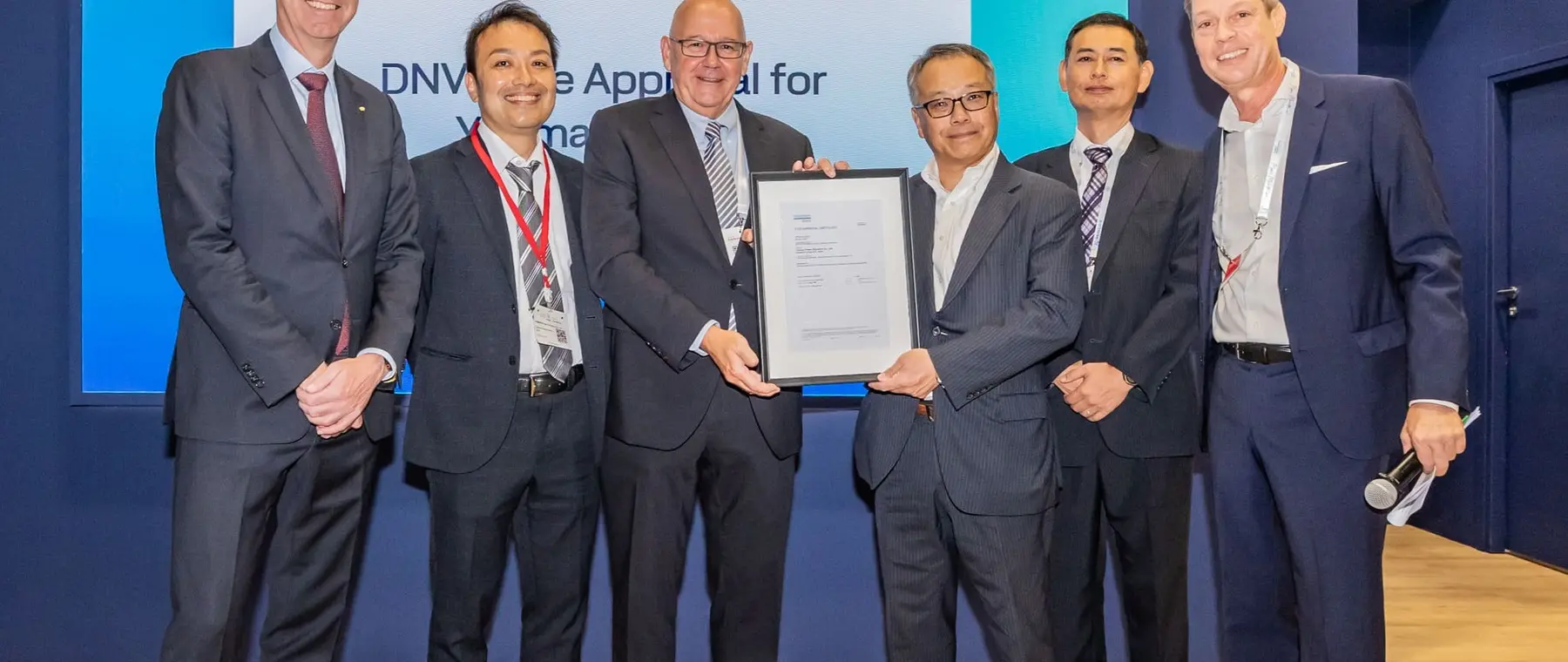
Yanmar Power Solutions has received DNV Type Approval for its GH-FC maritime hydrogen fuel cell system, a certification that confirms compliance with the classification society’s applicable rules and guidelines. DNV formally awarded the approval during SMM in Hamburg, while Yanmar described the milestone as an important step toward wider international deployment.
The approval matters to shipbuilders and system integrators because a type-approved component can reduce part of the certification burden when it is incorporated into future vessel projects. It does not remove the need for vessel-specific engineering, but it gives designers a recognised technical basis for considering the system.
The GH-FC platform is modular from 80 to 320kW
Yanmar offers the GH-FC series in output steps of 80, 160, 240 and 320kW, allowing several configurations to be matched to different vessel power requirements. The system generates electricity through an electrochemical reaction between hydrogen and oxygen and produces no carbon-dioxide emissions at the point of operation.
A modular architecture is useful in marine applications because hotel loads, propulsion support and vessel duty cycles vary widely. Designers can size the installed capacity more closely to the project rather than forcing every boat into one large fixed package, although hydrogen storage remains a separate and important design challenge.
Type Approval reduces one layer of technical uncertainty
DNV Type Approval confirms that the GH-FC design has been assessed against defined rules before it reaches an individual vessel project. For yards and integrators, that can reduce repeated component-level review and give class surveyors a clearer starting point when the wider fuel-cell installation is developed.
The approval should not be confused with automatic certification of a complete yacht or ship. Hydrogen storage, ventilation, fire protection, piping, electrical integration and operating procedures still have to be engineered for the specific vessel and approved within the relevant class and flag framework.
Yanmar already has operating experience in Japan
Yanmar has been developing hydrogen fuel-cell technology since 2015 and commercialised its maritime systems in 2023. The company lists several Japanese vessel projects using or selecting the GH-FC series, providing operational experience across passenger, workboat and other marine applications before the push toward wider international adoption.
That track record is important because marine fuel cells have to perform under vibration, salt exposure, varying load demand and the practical maintenance constraints of working vessels. Real operating hours can expose integration issues that are difficult to reproduce fully during laboratory qualification alone.
Hydrogen remains a systems-level decision
Fuel cells can provide quiet electrical generation with no CO₂ emissions during operation, but the overall environmental and operational case depends on how the hydrogen is produced, transported and stored. On a yacht, tank volume and safety arrangements can also compete with accommodation and range, making packaging one of the central challenges.
DNV approval therefore represents progress rather than a complete solution to marine decarbonisation. For the luxury-yacht sector, the GH-FC series is most relevant as evidence that hydrogen technology is moving from demonstration projects toward standardised, class-recognised equipment that designers can evaluate for future builds.