An engineering collaboration aimed at the existing fleet
Feadship and Dutch technology developer AtomicOne have unveiled a partnership intended to bring MXBuster combustion optimisation to yachts longer than thirty metres. The October announcement follows more than a year of operation of the equipment aboard an existing Feadship. That operating history is important: this is not merely a proposal for a future propulsion laboratory, although further engineering work is still needed to establish performance across different engines and vessel duty cycles.
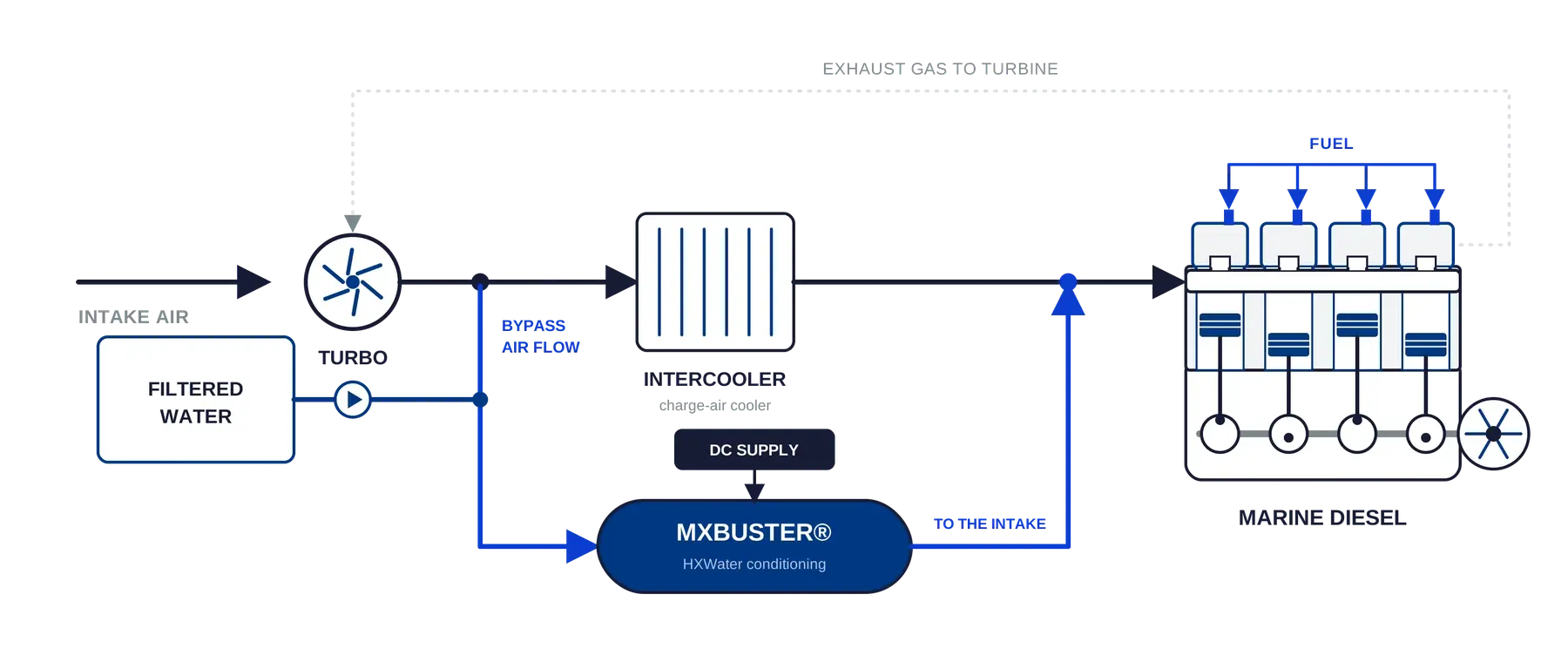
The developer’s approach places an add-on system at the engine air intake, using hydrogen generated from purified water and conditioned water vapour to influence combustion. It is distinct from the exhaust after-treatment equipment ordinarily associated with emissions compliance. For owners, the attraction is a possible reduction in soot and selected emissions without the machinery-space demands of a large conventional exhaust installation. Installation feasibility will depend on each yacht’s machinery and regulatory context.
Feadship says it has secured exclusive application rights for the technology on yachts over thirty metres. That gives the collaboration a defined large-yacht market rather than suggesting unrestricted availability for every recreational craft. The announcement is equally relevant to refit specialists and to engineers developing new vessels, although it does not constitute a promise that a particular engine will meet a higher statutory emissions tier after an installation.
What the testing actually supports
The company reports that organisations including Lloyd’s Register and SGS have evaluated the technology on medium-speed marine engines and superyacht generator sets. The data cited include nitrogen-oxide reductions of up to fifty-five per cent, with lower exhaust temperatures and particulate emissions also described. The words up to matter: an individual yacht must not be assumed to obtain the maximum reported result under every load and operating condition.
Feadship separately cites fuel-consumption reductions of up to fourteen per cent and AdBlue savings of twenty-five to thirty-five per cent in tests on modern land-based diesel engines. Those are not measurements of fuel saving across the entire Feadship fleet. Its onboard experience points towards reduced soot and emissions, while initial fuel measurements remain indicative. A responsible owner’s evaluation should request the relevant test protocol, baseline, load profile and independently verified results for the actual equipment.
The builder says Lloyd’s Register has approved installation without changing the certified engine configuration after the operational trial. That is significant because engine alterations can introduce certification complications, but it should not be read as a universal exemption from class, flag or emissions requirements. The documentation, integration method and intended operating area still need review by the yacht’s technical manager and the applicable authorities.
Why machinery-room space is a luxury-yacht issue
Older yachts with Tier II engines may find it difficult to accommodate the space needed for selective catalytic reduction systems and associated equipment. Machinery rooms are dense environments containing generators, pumps, ventilation equipment and service routes. Introducing a large after-treatment arrangement may displace existing systems or impose an expensive redesign. An intake-side unit can therefore be attractive if its claimed benefits are independently confirmed for the intended yacht.
The same layout question matters at the new-build stage. Every cubic metre allocated to machinery must be justified against maintenance access, crew circulation and the guest accommodation envelope. Feadship suggests that compact emissions solutions could make it easier to preserve simpler single-level engine-room arrangements. Such design benefits will only follow when naval architects establish the complete system’s power, cooling, service and safety requirements, not merely its headline footprint.
Feadship also identifies compatibility with both conventional diesel and hydrotreated vegetable oil, or HVO. That widens the possible operational discussion but should not be interpreted as an automatic reduction in lifecycle greenhouse gases. Fuel sourcing, certification and the engine’s approved operating envelope matter independently of the hardware. Buyers should distinguish visible soot reduction, measured exhaust pollutants and whole-life environmental effects when judging any technical upgrade.
Next steps for designers and owners
Feadship and AtomicOne are participating with Eindhoven University of Technology and maritime partners in a Machine Room of the Future programme. Its stated direction is to combine combustion optimisation with compact exhaust treatment. This broader study suggests that the builder views MXBuster as one component in an evolving machinery architecture rather than a final answer to every environmental challenge facing superyachts.
For an owner considering a retrofit, the first practical question is whether the technology has been tested on the relevant engine family at comparable operating loads. The second is whether an installation plan preserves access, warranties and documented compliance. The third is how savings would be measured after commissioning. An independently agreed baseline makes more commercial sense than promises based on ideal laboratory conditions or on engines of a different type.
The announcement offers an interesting direction for the luxury-yacht market because fuel consumption, smoke and engine-room constraints affect both operating costs and life aboard. Feadship’s initial operating experience makes the technology worth following, but every prospective claim must remain tied to its test setting. A reliable comparison of actual emissions, installation cost and service requirements will determine whether this becomes a practical fleet-wide retrofit option.
Primary source: Feadship. For specifications and availability, consult the original official announcement and current publisher information.