A familiar aircraft, a new cockpit chapter
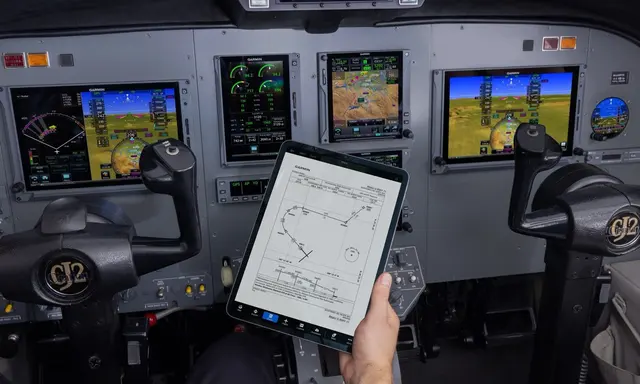
Garmin has marked the delivery of its 1,000th G1000 integrated flight-deck retrofit for the Beechcraft King Air family, with the milestone installation completed on a United States Army C-12 Huron. The announcement, dated 13 October, places a notable number on a trend that has reshaped long-lived turboprops: owners and operators can modernise a proven aircraft's flight deck while retaining an airframe that still fulfils its mission.
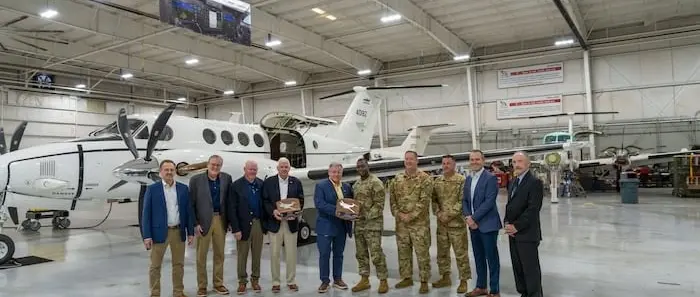
The aircraft was upgraded by Stevens Aerospace and Defense Systems with Garmin G1000 NXi and Autothrottle. Garmin says the delivery was celebrated on 6 October at Stevens, with the aircraft entering an Army fleet-modernisation programme. The 1,000 figure refers to the wider King Air retrofit programme, not to a thousand Army aircraft. That distinction is essential when interpreting both the programme's commercial scale and the military milestone represented by this particular C-12.
Why a King Air can outlive its original avionics
The King Air has become a long-serving fixture of corporate, utility and government flying, prized for its twin-engine configuration and ability to serve a variety of routes. Aircraft of this type may have significant airframe life remaining long after the design of their original analogue displays and navigation equipment has aged. Avionics modernisation offers a route to a more consistent cockpit, current operational support and features that did not exist when the aeroplane was first delivered.
That does not mean a retrofit makes an older aircraft identical to a newly manufactured type. Engine condition, cabin, pressurisation, structural status and maintenance history continue to matter. The attraction is selective renewal: an owner can direct capital toward cockpit capability rather than replacing an entire aeroplane. With any sizeable avionics project, the calculation must still include aircraft downtime, installation complexity, pilot training and the long-term support position of the chosen equipment.
The programme’s nearly two-decade development
Garmin dates its initial supplemental type certificate for a King Air G1000 installation to November 2007. Its later G1000 NXi platform received certification in January 2017, marking another stage in the programme's technical development. The company now lists eligibility across several King Air groups including C90A/B, 200, B200, 300 and 350 variants, together with military C-12 models. Individual installations remain subject to the applicable certification and aircraft configuration.
Seen across those years, the thousandth delivery is an indicator of accumulated installation experience as much as product popularity. Service centres learn to manage panel redesign, electrical integration, documentation and training through repeated work, while owners gain an established reference point for future upgrades. It is still a complex engineering decision, especially where an airframe has been modified several times. A reputable specialist should review the actual aircraft rather than promising a one-size-fits-all package.
What the Army’s C-12 installation signifies
Garmin reports that more than forty Army C-12 Hurons have received G1000 NXi upgrades. According to the manufacturer, the effort is linked to a wider objective of sustaining C-12 mission readiness through 2050. Stevens Aerospace and Defense Systems has carried out the milestone installation, and the formal announcement includes comments from both Stevens leadership and the Army's fixed-wing project management team.
Military and private operators do not have identical mission requirements, yet both can face the challenge of supporting ageing avionics across aircraft expected to remain in service for years. Standardised cockpit equipment may ease training and maintenance planning where multiple similar airframes are involved. For a private flight department, the direct lesson is to think beyond the purchase price: commonality, long-term parts availability and the availability of suitably trained crews can be equally important.
Autothrottle and the limits of automation
The milestone C-12 was equipped with Garmin Autothrottle, a system intended to help manage engine power and reduce routine crew workload. Garmin describes functions relating to selected airspeed, speed constraints and several operating protections, with features and approvals dependent on the precise installation. The ability to coordinate engine power with flight conditions is a meaningful step for an aircraft family many passengers associate with traditional manual turboprop operation.
Autothrottle should not be conflated with automatic flight in every circumstance. Pilots remain responsible for flight management, aircraft limitations and system monitoring, and a retrofit must be operated according to its approved manuals and procedures. Owners contemplating the upgrade need training time as well as installation time. The value of automation emerges when a crew understands both what the system will do and the circumstances in which it will not.
Autoland is another capability, not a feature of every C-12
Garmin also discusses the availability of emergency Autoland on properly equipped and approved King Air aircraft. It is designed to take control in a pilot-incapacitation emergency, navigate toward an appropriate landing site, communicate and land without normal pilot input. The feature has understandably attracted attention in private aviation, where passengers may value an additional layer of emergency protection in certain situations.
The press material does not state that the 1,000th Army C-12 received Autoland, so no such claim is warranted. Eligibility varies by aircraft and certification, and planned expansions should not be presented as already approved. Garmin has outlined expectations for future approvals involving certain increased-gross-weight configurations, but timing and scope remain contingent on the certification process. Any buyer should verify what is installed, enabled and approved on the individual airframe.
Cockpit information can improve without replacing judgment
Beyond the headline automation, Garmin describes enhancements that may matter to daily operation: large integrated displays, synthetic vision, clearer depictions of terrain and obstacles, and improved airport-ground awareness. Emergency descent capability and electronic stability assistance are among the functions the manufacturer identifies for eligible configurations. Such tools aim to reduce workload and increase information available to a crew, particularly in demanding phases of flight.
The sensible interpretation is support for professional flying rather than a promise that technology can eliminate human error. Display interpretation, operational discipline and recurrent training remain essential. Aircraft managers considering a purchase or upgrade should ask pilots to review the proposed cockpit and its alerting philosophy before signing off the specification. A sophisticated interface that is poorly understood may create new confusion even while removing older limitations.
How the upgrade changes an ownership decision
For a King Air owner, the key comparison is rarely just old screens versus new screens. It is the full cost of maintaining reliable dispatch capability over the next several years. A modernised flight deck may influence pilot recruitment, training commonality, maintenance support and how the aircraft is regarded by prospective buyers. None of those advantages has a universal monetary value; an aircraft flown intensively has different needs from one kept for a limited family travel programme.
An investment case should allow for engineering survey work, the approved installation scope, weight and electrical changes, software subscriptions, training and time out of service. Owners must also decide whether improvements to interior, connectivity or other aircraft systems should be coordinated during the same maintenance visit. Combining work can be efficient, but only when the schedule remains realistic and technical dependencies are understood.
A milestone with meaning beyond the number
The 1,000th King Air G1000 retrofit is a useful marker of aviation's willingness to renew capable aircraft instead of automatically replacing them. The fact that the milestone installation is an Army C-12 highlights the versatility of the platform and the different kinds of operators taking part in the same broad modernisation story. It does not establish that a retrofit is the best answer for every airframe, but it demonstrates a substantial installed base.
For luxury aviation customers, the strongest takeaway is a practical one: seek an aircraft that combines an appropriate mission profile, excellent maintenance history and a flight deck suited to the pilots who will use it. More advanced technology can contribute to comfort and confidence, provided it is approved, supported and properly understood. Garmin's latest delivery underscores how much of private aviation's future may arrive through careful modernisation of machines already in service.