The latest change is about ownership of flight data
Garmin has expanded the third-party services that can receive aircraft flight records through its flyGarmin platform. The company announced on 15 October that Class A and Coflyt have joined its integration network, broadening what participating operators can do with data already produced by compatible avionics. For private-aircraft owners, the practical story is less about another display in the cockpit than a possible reduction in the administration that follows every flight.
Flight departments spend considerable effort turning events in the air into records on the ground. Hours flown inform maintenance scheduling, engine trends may warrant closer review and insurance or management providers may request evidence of operating patterns. An owner can purchase advanced avionics yet still depend on separate spreadsheets and manual reports. Garmin's announcement addresses that gap by allowing owners to authorize selected services to work with their existing digital flight logs.
Class A brings insurance analysis into the discussion
The first newly announced partner, Class A, is described by Garmin as a technology-led aviation insurer. Its integration is intended to support flight-data analysis within a Virtual Flight Department offering, with a focus on flight operational quality assurance and flight-data monitoring. Garmin says this can inform more personalised insurance and operational support, but that statement should not be confused with a guarantee that every aircraft will earn a lower premium.
Insurance decisions involve aircraft type, history, crew qualifications, mission profile, geographic operations and the particular insurer's underwriting process. Data sharing may make some aspects of the discussion more informed, yet an owner should ask exactly what information the provider receives and how it influences a proposal. The right question is not whether a digital connection is fashionable; it is whether the reporting improves transparency without creating unexpected privacy or contractual consequences.
Coflyt takes aim at aircraft management records
Coflyt joins from a different direction. Garmin identifies it as an aircraft-management platform covering inspection and maintenance tracking, airworthiness-directive compliance, discrepancies, scheduling, utilisation, payments and communication. The attraction is the possibility of using a recorded flight to update systems that a private operator already consults throughout the ownership cycle. Re-entering the same flight time into several unrelated applications is an obvious source of avoidable mistakes.
For an aircraft with several authorised pilots, managers or advisers, consistent records become especially valuable. A discrepancy noted by a crew member should be visible to the people arranging maintenance, while aircraft utilisation can help a manager forecast the next inspection or the availability of the airframe. Integration does not replace a licensed professional, the aircraft's required logbooks or regulatory responsibility. It is a workflow aid whose reliability still needs to be checked against the operator's own records.
How a Garmin flight log reaches the cloud
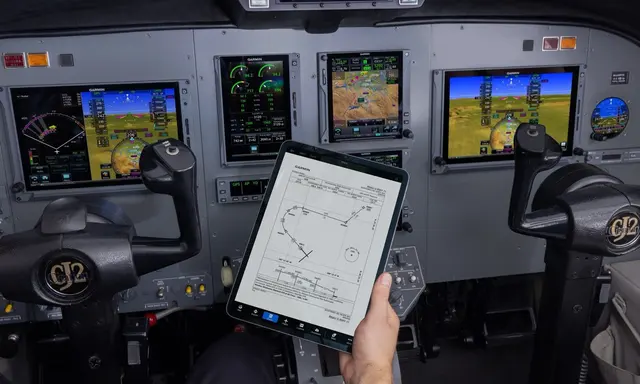
Garmin explains that appropriately equipped aircraft can capture flight tracks, timings and selected aircraft or engine parameters during operation. Its GDL 60 data link can upload logs to flyGarmin after landing when PlaneSync and a suitable ground connection are available. Other compatible equipment may transfer records through Garmin Pilot instead. The significant point is the timing: the service is described as a post-flight data process, not a replacement for the live systems used to operate the aircraft.
The distinction matters when evaluating the technology. An aircraft may have excellent connectivity at its home base but limited coverage at a remote strip, or its installed avionics may not support every available data field. A missed upload can leave a temporary gap in an otherwise automated record. Garmin's own support pages recommend verifying device eligibility and connectivity and explain that an upload needs the required connection after landing. Owners should test the complete journey, not merely the subscription activation.
Twelve integrations, with consent retained by the owner
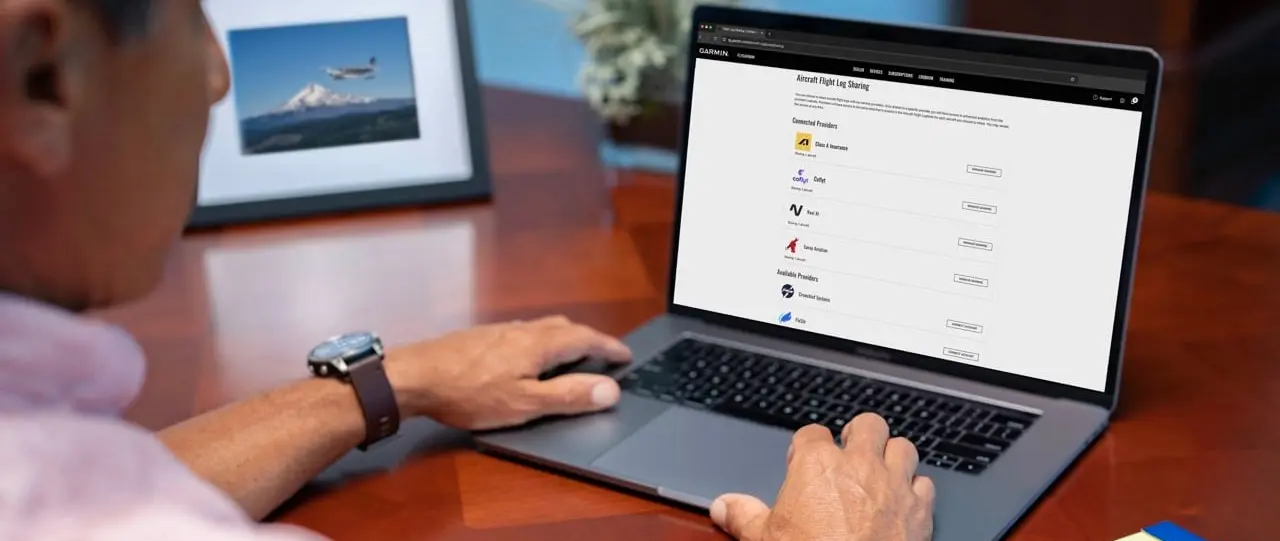
With Class A and Coflyt added, Garmin says its integrated analysis and management services number twelve. The announced group includes specialist providers for engine monitoring, flight analysis, aircraft records and scheduling. The diversity is important: a maintenance company, an insurer and a flight-data analyst may each require different information to deliver a service. No single provider is necessary for every owner, and connecting everything simply because it is available is unlikely to be good governance.
Garmin says service-sharing permissions are managed through flyGarmin and that owners can opt in to the providers they select. Once sharing is enabled, the system can transfer current and future aircraft flight logs to that selected provider until the setting is changed. This is convenient but deserves deliberate account management. Ownership transitions, changes in aircraft managers and terminated service contracts should trigger a review of who can still receive records, just as a flight department reviews physical keys and electronic access.
What private owners should check before subscribing
The sensible starting point is the aircraft's exact equipment configuration. Owners should ask their avionics shop whether the installed system supports the relevant flight-log feature and how data will reach flyGarmin. Garmin's support material distinguishes GDL 60 and PlaneSync from transfers involving Flight Stream 510 or other compatible installations. Requirements vary by hardware and service, so a demonstration on a different model is not enough evidence for a particular aeroplane.
Next comes the cost and support model. Garmin notes that a PlaneSync subscription is required for GDL 60 flight-log uploading, and that automatic database services can involve separate subscription requirements. The connected service provider may have its own commercial terms. Owners should obtain a written understanding of subscription charges, data retention, staff access, support responsibilities and what happens when an aircraft is sold or a provider changes.
Information security is part of aircraft management
Digital flight history can reveal more than engine temperatures and airborne hours. Routes, locations and operating patterns may be commercially or personally sensitive, particularly for owners who use private aviation as part of a wider travel and business programme. Garmin's opt-in model is a useful starting point, but it does not eliminate the need for reviewing a receiving provider's own data policies. Owners should evaluate who can view exported records and what sharing settings apply to each airframe.
An effective flight department assigns responsibility for access reviews and documents which integrations are active. It also keeps a practical route for identifying and correcting records that are incomplete or inconsistent. Automated logs may reduce typing, but personnel must still investigate anomalies and ensure that legally required records are accurate. Good digital administration is a combination of technology, informed people and clearly defined processes, not a switch that can be left unattended indefinitely.
A quiet but meaningful change in the ownership experience
The announcement is an example of aviation technology moving beyond the visible cockpit. High-resolution displays and emergency systems attract understandable attention, yet owners often feel the cumulative burden of maintenance coordination, documentation and data requests. When flight information moves reliably from the aircraft into services the owner has intentionally chosen, those background tasks may become easier to organise. That is where the greatest everyday value of this latest integration could emerge.
The limitations are equally clear. These connections do not remove the need for professional maintenance oversight, they do not promise a particular insurance outcome and they require compatible equipment, suitable connectivity and appropriate subscriptions. For the luxury aviation customer, the best outcome is simpler ownership with meaningful control over records. Garmin's October additions broaden the options, while leaving the decision about data sharing where it belongs: with the aircraft owner and their appointed team.