Stockholm marks a new public moment for the electric coupé
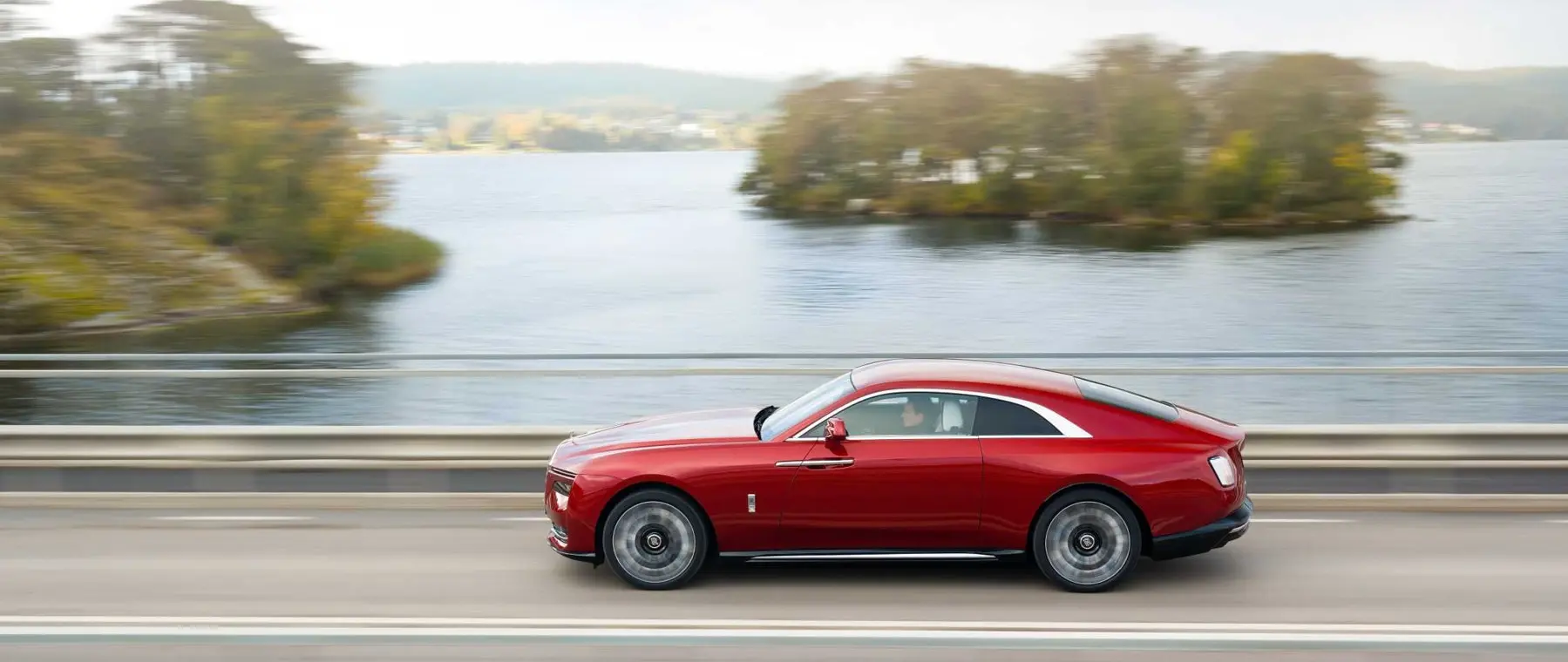
Rolls-Royce Motor Cars has taken Spectre Series II onto public roads in Stockholm, using the Swedish capital for a European presentation of its updated all-electric super-coupé. The 23 October 2026 announcement is an on-road debut for the Series II in this setting, not the car’s original global unveiling. That took place in June, when the company detailed the engineering and Bespoke changes. The distinction matters: the latest story is about showing how the revised car fits a real northern European environment and a market in which design, craftsmanship and an interest in new technology carry particular weight.
Stockholm’s setting gives the launch a different character from a conventional motor-show display. A Rolls-Royce is shaped by the time its owner spends with it, and an urban presentation brings attention to refinement, maneuvering and the experience of arriving at a destination. The company links the event to its wider Nordic presence, including a recently opened showroom in Copenhagen. That commercial expansion should not be confused with a newly announced factory or a promise of a specific local delivery timetable. For collectors and established luxury travellers, the story is an evolution of the brand’s electric flagship rather than a separate new model.
Range and charging changes address how owners use the car
The headline engineering changes come from revised battery-cell technology and drivetrain calibration. Rolls-Royce quotes a maximum WLTP range of 628 kilometres, or 390 miles, for Spectre Series II, representing an increase of up to 18 percent against its predecessor. The marque also describes charging times that can be up to 14 percent shorter under its stated conditions. Independent automotive reporting has repeated the announced figures, although the WLTP number remains a standardised test-cycle result rather than a guarantee of range during winter travel, prolonged motorway driving or a journey with unusually heavy climate-control use.
The relevance is practical rather than purely statistical. Owners using the car between homes, airports, hotels and marinas may not need its maximum quoted range every day, but a larger buffer reduces the number of stops that have to be planned carefully. On long northern European trips, temperature and charging availability still deserve attention. A private residence or seasonal property with suitable home charging is a different proposition from an unfamiliar hotel parking area. Buyers should verify local charging equipment, electrical installation and any market-specific rating before treating the figures from a press release as an itinerary promise.
Torque and Black Badge character
The standard Series II develops a Rolls-Royce-quoted 1,015 newton-metres of torque, with the company identifying output of 442 kilowatts in the wider June launch materials. Black Badge Spectre Series II is tuned differently: its Infinity Mode can deliver 500 kilowatts, while Spirited Mode releases up to 1,100 newton-metres. These figures describe different model and mode combinations, so they should not be presented as a single specification for every car. The intent is to sharpen response while maintaining the quiet, deliberately controlled character associated with the marque.
Electric drive suits the idea of effortless progress, but the luxury experience depends on calibration as much as on peak power. Throttle response, suspension behavior, cabin noise and the sense of control all shape whether a car feels composed in city traffic and reassuring on an open road. Series II retains the familiar fastback silhouette and split lighting signature rather than seeking drama through an entirely new body. That continuity makes the new drivetrain and interior refinements especially important. Owners familiar with the original Spectre will probably be interested in the differences that are felt over repeated journeys rather than those visible in a quick photograph.
Bespoke paint introduces a different visual language
Beyond engineering, Rolls-Royce has expanded what a client can specify. The Gradient Two-Tone finish changes the traditional approach to contrasting body colours by transitioning from one end of the car to the other. According to the maker, its development required months of work on paint systems and finishes, and application can take several days for an individual commission. A new Ethereal Blue exterior shade broadens the regular palette, while updated forged wheel designs add further choices. Such details are central to a car frequently ordered as a personal object rather than selected in a standard showroom combination.
The buyer’s task is to decide whether a colour treatment will age gracefully within a collection, not simply whether it makes a dramatic first impression. A commission seen under bright studio lighting can read differently in Nordic winter daylight or beside the warm stone of a Mediterranean hotel. Rolls-Royce’s Private Office process allows deeper dialogue over materials and combinations, but every bespoke option should be considered in relation to maintenance, repairability and the intended life of the car. In that respect, the Series II update gives collectors more opportunity for restraint as well as spectacle.
Interior craft connects automotive and nautical design
Among the more distinctive additions is Duality Twill, a bamboo-derived rayon fabric with an embroidered graphic inspired by the marque’s linked initials. Rolls-Royce describes a nautical reference in the weave, evoking the interlacing lines of sailing yachts and the French Riviera. The company also offers Placed Perforation leather, which uses carefully positioned openings to create an artwork across seat surfaces, together with new veneer treatments. These are not conventional options chosen only for colour: they change texture, light and the atmosphere of the cabin.
The cabin also gains a revised clock treatment inspired by aviation instruments, alongside illuminated decorative work across the fascia. That blend of maritime references, watchlike precision and interior design is relevant to buyers who enjoy commissioning yachts, aircraft or custom residential spaces. However, it would be misleading to imply that the car has been designed or equipped as a marine product. The connection is one of craft, proportion and the commissioning process. The pleasure of the specification lies in selecting a coherent personal language across surfaces, stitching and detailing without allowing any single flourish to dominate.
What the Nordic debut signals
The Stockholm presentation shows Rolls-Royce carrying the Spectre programme beyond its first announcement into the places where owners might actually encounter and drive it. Combined with the Copenhagen showroom, it suggests an effort to make the brand’s electric and Bespoke offerings more visible across northern Europe. This is a commercial interpretation of the company’s stated activity, not a claim about future sales volumes. The technical revisions also acknowledge a simple truth about expensive electric cars: a serene cabin and lavish materials are more persuasive when daily range and charging logistics become easier.
For prospective clients, the right comparison is not with a mass-market electric vehicle or a chauffeur-led limousine alone. Spectre Series II is an exceptionally personal grand tourer that the manufacturer says many owners choose to drive themselves. Anyone considering a commission should examine the confirmed specifications for their country, the implications of charging at their regular properties and the many possibilities of the interior programme. Stockholm provides the newest stage for that story; the lasting measure will be whether the updates enrich the quiet, repeatable pleasure of driving the car.