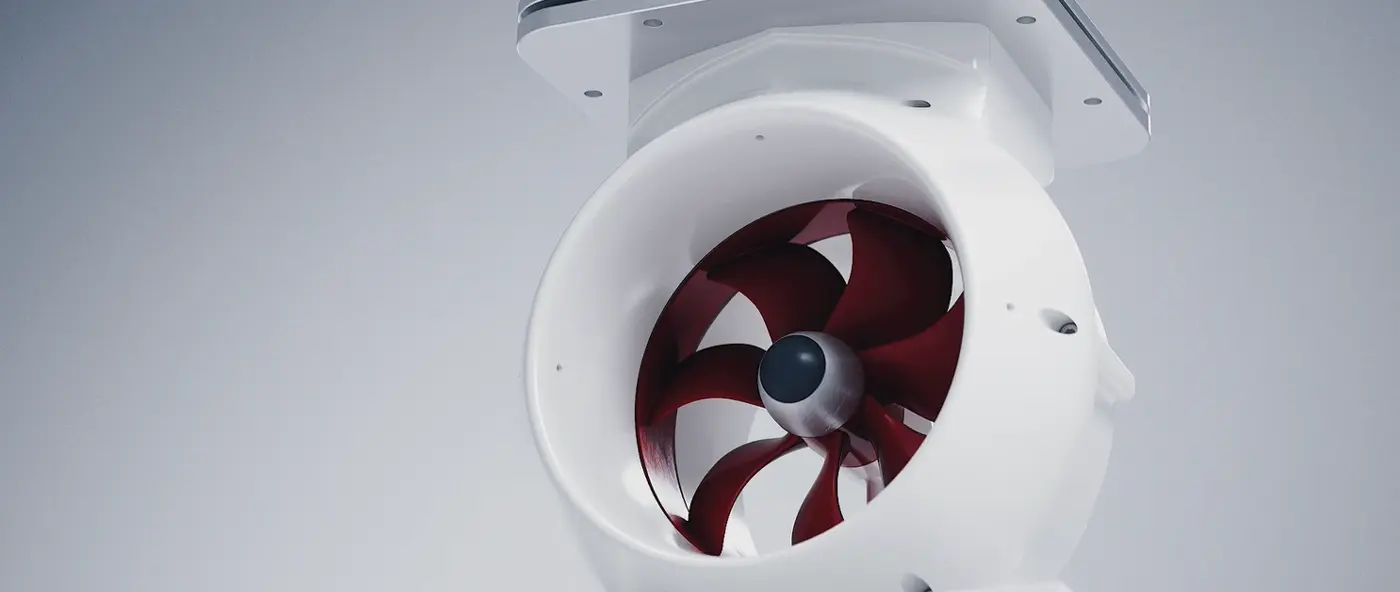
VETUS is bringing renewed attention to its E-POD electric propulsion system as builders and owners look for ways to reduce machinery volume while moving toward quieter propulsion. The unit combines the electric motor, cooling, gearing, shafting and propeller into a compact integrated package instead of distributing those components through a conventional engine-room and shaft-line arrangement.
The packaging is significant because electric propulsion does not automatically create more usable space if batteries, cooling equipment and drive components are simply substituted for diesel machinery in the same locations. E-POD is intended to change the underlying layout by moving much of the propulsion assembly into one integrated system.
Removing the shaft line can free valuable interior space
A conventional inboard installation normally needs an engine foundation, gearbox, shaft, stern gear and an alignment path through the hull. VETUS says E-POD removes the need for the usual engine box and propeller shaft through the boat, opening floor area that designers can use for accommodation, storage or technical systems.
That benefit is most meaningful on compact luxury yachts where every part of the lower deck competes for volume. It can also simplify refit planning in suitable boats, although structural work, batteries and control equipment still need to be engineered carefully around the new propulsion arrangement.
Active Electronic Braking changes reversing behaviour
Electric motors can reverse direction quickly, but a direct-drive marine installation still has to manage the inertia of a rapidly spinning motor and propeller. VETUS developed Active Electronic Braking to stop the motor before reversing its direction, aiming to give the skipper a more immediate response similar to the feel of a conventional clutch-based drivetrain.
Low-speed control is one of the most important practical tests for any alternative propulsion system because owners spend a large part of manoeuvring time around marinas, locks and anchorages. Predictable response can matter more in those situations than peak efficiency or maximum range figures.
V-CAN links propulsion with wider onboard systems
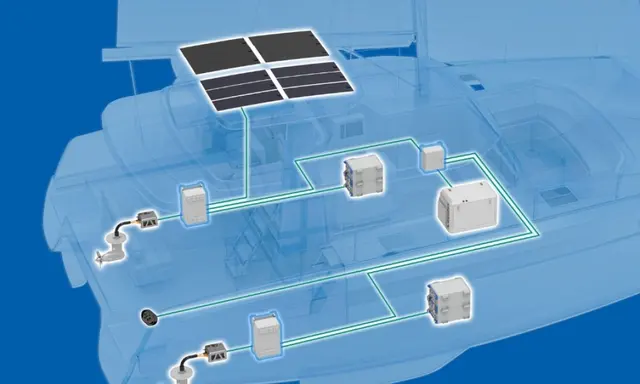
VETUS integrates E-POD with its V-CAN control network and offers monitoring panels for battery level, motor status, alarms and performance data. The company also positions the propulsion system alongside proportional bow and stern thrusters, allowing a builder to specify a broader manoeuvring package from the same supplier.
That systems approach can reduce interface work for a yard, but owners should still ask how easily the network communicates with third-party helm displays and power-management equipment. Long-term support, diagnostic access and replacement availability are central considerations when a propulsion system depends heavily on electronic controls.
Electric suitability still depends on the mission
E-POD is designed for silent and low-maintenance electric operation, but the right battery capacity depends entirely on hull form, speed and expected cruising time. A yacht intended for short coastal trips can use a very different energy package from one expected to make repeated long passages at higher speed.
The attraction of the E-POD is therefore not a promise that electric propulsion suits every yacht, but the way its integrated architecture can make electric design more practical where the operating profile already supports it. For builders working in the smaller luxury-yacht market, that can create useful new layout options as battery technology and charging infrastructure continue to develop.