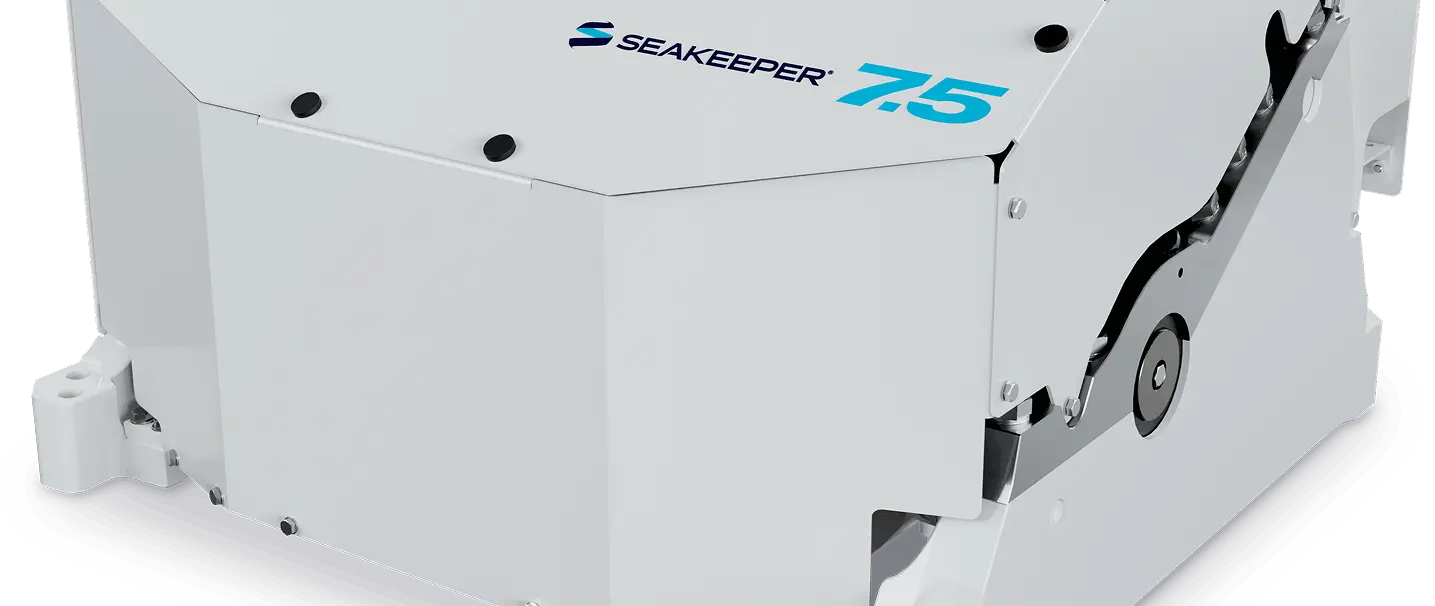
Seakeeper has added the new 7.5 gyrostabiliser to its recreational range for boats around 45 to 54 feet and up to roughly 29 tonnes. The unit is intended to deliver more roll-reduction capacity than the outgoing Seakeeper 6 while fitting into a smaller overall volume, an important combination for production yachts where machinery space is tightly allocated.
The manufacturer says the 7.5 provides 25 percent more stabilisation in 20 percent less volume than the Seakeeper 6. It can begin providing stabilising effect in about ten minutes, while full spool-up to its maximum rated speed of 9,700rpm takes longer.
A redesigned flywheel reduces overall height
The Seakeeper 7.5 uses an asymmetric flywheel with a deeper lower hemisphere, allowing the motor to sit farther inside the flywheel structure. Seakeeper says this arrangement improves the amount of stabilising performance available for the package weight and footprint while reducing overall height.
Packaging is a major design issue for gyros because the unit needs structure, cooling, electrical supply and service access as well as the physical envelope of the machine itself. A smaller volume can therefore make the difference between a clean factory installation and a compromised retrofit in a busy machinery space.
The brake system is simplified
A single-cylinder brake arm replaces a more complex arrangement and eliminates some hoses and connections, reducing potential service points. Seakeeper says the design requires no annual brake service and includes redundant safety mechanisms, while the broader cooling and protective treatments have also been revised for easier maintenance.
Owners should still budget for scheduled servicing of the overall gyro system rather than interpreting the brake change as maintenance-free operation. Access to covers, pumps and connection points remains important because a technically compact installation can become expensive to service if the surrounding yacht structure blocks routine work.
Trade-in compatibility supports existing Seakeeper 6 boats
The new model retains a similar installation footprint to the Seakeeper 6, allowing some existing boats to move to the 7.5 without starting from a completely blank engineering layout. Seakeeper is supporting that path through its trade-in programme, although each retrofit still needs structural and electrical checks before approval.
The frame can also be disassembled to help installers move the unit through tighter access routes. That is particularly useful on finished yachts where the machinery space may be large enough for the operating unit but the route through doors, hatches or companionways is much smaller.
Power and cooling remain part of the installation decision
The 7.5 weighs about 468kg and draws up to 4,000 watts during spool-up, with a lower operating demand once running. It also needs separate control and seawater-pump power, so builders have to assess the gyro alongside generators, inverters, battery capacity and cooling arrangements rather than treating it as a self-contained box.
For yachts between roughly 45 and 54 feet, the appeal is clear because stabilisation can materially improve comfort at anchor and underway. The practical value will depend on whether the yacht has enough electrical and structural capacity to support the installation without creating disproportionate weight, service or energy penalties.