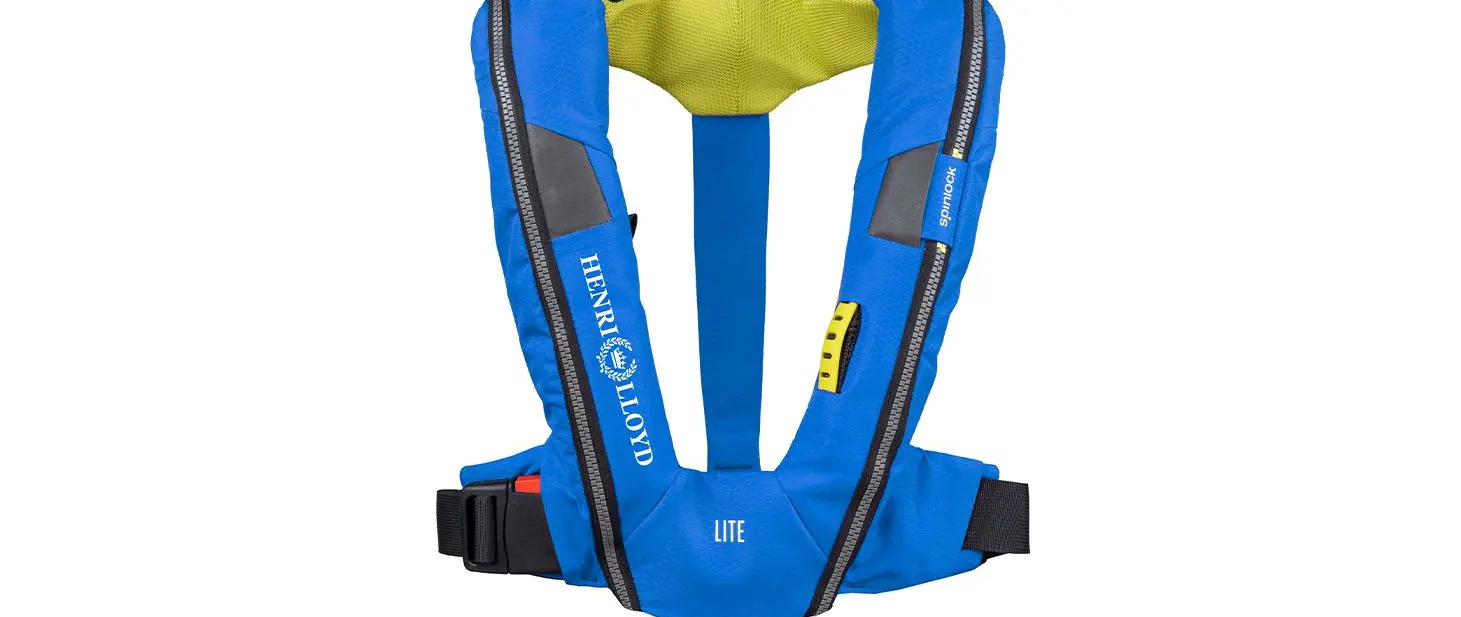
New branded safety equipment for sailors
Henri-Lloyd and Spinlock have announced a joint range of sailing lifejackets, combining the apparel company's long-established marine identity with Spinlock's specialist flotation equipment. British Marine's October announcement describes adult Deckvest Lite variants and a separate junior model. This is a new branding and distribution collaboration built around identified products, not a claim that an entirely new lifejacket mechanism has been invented. For buyers, the practical questions remain fit, suitability and the arrangements for regular inspection.
Personal flotation equipment is only effective when it is worn correctly and kept in working order. Attractive styling can encourage people to keep a jacket on, but a logo should never outrank proper specification. Different sailing activities present different risks, especially where crew work outside the cockpit. Owners should examine the actual model documentation and try on the equipment rather than choosing by appearance alone.
Adult Deckvest Lite and Lite Plus
The announced adult products are a Henri-Lloyd branded Deckvest Lite and Deckvest Lite+, the latter incorporating a deck-harness arrangement. The supplier lists Black and Pacific Blue options with reflective detailing and a conspicuous lifting strap. An integrated harness can be appropriate for certain kinds of sailing, but it only forms one part of a safe tether system. The boat's anchorage points, available movement and crew procedures must also be considered.
An owner who cruises mostly in sheltered waters may have different needs from someone making longer offshore passages. In either case, the garment must be compatible with normal deck clothing and should allow the wearer to reach controls and move safely. The existence of an adjustable adult size does not guarantee an ideal fit on every person. Retail fitting and instructions are essential before purchase or use.
Understanding automatic inflation
British Marine identifies Spinlock's UML Mk 5 automatic inflator in the collection. The mechanism relies on a water-sensitive element that enables the carbon-dioxide cylinder to be punctured when the appropriate condition is reached. The supplier explains that its design is intended to reduce unwanted activation from routine spray and rain. This is a description of a design feature rather than a promise that all wet conditions can be distinguished perfectly.
Inflatable lifejackets require care of the bladder, cylinder, inflator and closures. Before a voyage, the user needs to know how to check readiness and whether any parts require replacement or servicing. A jacket may be carried on board for months without being deployed, yet its condition still matters. Owners should follow the exact manufacturer's inspection instructions and never improvise with replacement components.
A separate junior choice
The partnership also includes a Henri-Lloyd branded Deckvest Cento for younger sailors. British Marine gives a junior weight range of 20 to 50 kilograms and describes an automatic inflation system and integrated harness arrangement. The announced colour is Pacific Blue. Those stated limits are an initial screening guide, not a substitute for fitting the jacket to the child and checking suitability for the planned activity.
Children vary in size, mobility and confidence, so adult supervision and appropriate training remain essential. Before use, a responsible adult should confirm that the jacket sits securely and that its approved attachments are understood. An adequate safety plan also includes movement on deck, recovery procedures and clear instructions for everyone involved. The product can contribute to that plan but cannot replace it.
Attachments and accessories need planning
The product announcement mentions attachment points for items including a VHF leash, kill cord, beacon and light. Such features can help sailors keep necessary equipment within reach, but attachment points do not automatically make every accessory combination compatible. Added equipment may alter weight distribution and accessibility. Buyers should check the relevant manuals before adding devices and be particularly cautious about entanglement hazards.
Where personal beacons or lights are used, crews should understand their operation and testing requirements. If a tether is attached to a harness, the boat's own safety arrangement becomes equally important. An offshore safety system is built from the person, the vessel and the crew's practiced procedures. The best equipment selection is one that fits into that whole system rather than accumulating unnecessary gadgets.
Retail availability and the practical test
British Marine says the co-branded range was introduced at Cowes Week and is sold through Henri-Lloyd retail channels. Product availability and current prices should be confirmed in the relevant market because a launch announcement does not establish permanent stock or pricing. Buyers should ask what replacement parts are available locally and how to arrange servicing. For clubs and families, individual labelling and inspection records may help manage several differently sized jackets.
The useful significance of the collaboration is the combination of familiar technical clothing with an established flotation product range. It may make lifejacket selection more accessible to sailors who already use Henri-Lloyd equipment, but the final choice should still be evidence-led. Proper fit, manufacturer guidance, required certification and the expected sailing environment remain central. A comfortable lifejacket is most valuable when it encourages correct and consistent use every time someone goes afloat.
Fitting over real sailing clothing
Lifejackets should be assessed over the jackets and mid-layers that crew actually wear rather than over a thin shirt in a warm store. A product that feels comfortable in a fitting room may behave differently under a hood, foul-weather collar or bulky gloves. A sensible demonstration includes sitting, reaching, turning and moving between deck positions while the straps remain correctly adjusted. The user should understand every closure before the boat leaves the berth.
Longer trips introduce fatigue and repeated movements that can expose an awkward fit. A crew member who constantly loosens the garment for relief may be reducing its intended effectiveness. If a particular size or design cannot accommodate someone's working movements, a different approved model may be preferable. The partnership creates another option in the market, but the correct selection continues to depend on individual evaluation rather than a fashionable colour choice.
Maintenance should be planned at the outset
Owners buying an inflatable jacket should decide how it will be inspected before it enters active service. Record the model, serial information where present, acquisition date and the maintenance instructions supplied with it. Store the equipment according to manufacturer advice and check it whenever a boat returns to use after extended inactivity. Any garment that has inflated, suffered damage or been exposed to unusual conditions may need attention before it is trusted again.
Where several crew members share a vessel, nobody should assume that another person has performed the readiness check. A simple documented procedure can identify who examines jackets, what they look for and when specialist servicing is necessary. This discipline is less newsworthy than a product launch but more important to real safety. Henri-Lloyd and Spinlock's announcement is therefore an occasion to review not only purchasing choices but also how the existing safety inventory is managed.