Riviera turns attention below the waterline
Riviera's 23 October technical advisory draws attention to through-hull fittings, seacocks and seawater strainers in its motor yachts. These components rarely define the public image of a new boat, yet they contribute directly to the vessel's ability to remain watertight and keep essential machinery operating. The manufacturer describes their role across propulsion cooling, generators, air conditioning and other systems. A fault in this equipment can interrupt a passage long before an owner notices any cosmetic problem.
The timing of the advisory is useful for anyone planning regular cruising or considering a used motor yacht. Equipment hidden inside the engine room deserves a place alongside navigation electronics, upholstery and exterior condition on the inspection list. There is no implication that Riviera is announcing a specific recall or widespread defect. The report is presented as preventive guidance, and it should be interpreted that way rather than as a warning that a particular model is unsafe.
What a through-hull fitting actually does
A through-hull fitting connects a system inside a yacht with water outside the hull. Some provide seawater to machinery, while others allow authorised drainage or discharge. Riviera lists examples including main-engine cooling, generator cooling, air-conditioning circulation, washdown arrangements and optional stabilisers or watermakers. Not every installation has the same equipment, so the number and locations of fittings will vary from one vessel to another.
The fitting must be considered together with connected hoses, clamps, valves, bonding arrangements and structural mounting. An inspection that focuses only on a visible metal component can miss deterioration elsewhere in the assembly. Boat owners should know where the openings are and which system each supports. The vessel's actual drawings and manuals are the starting point for that knowledge, especially where several systems look similar at a casual glance.
Seacocks provide an isolation point
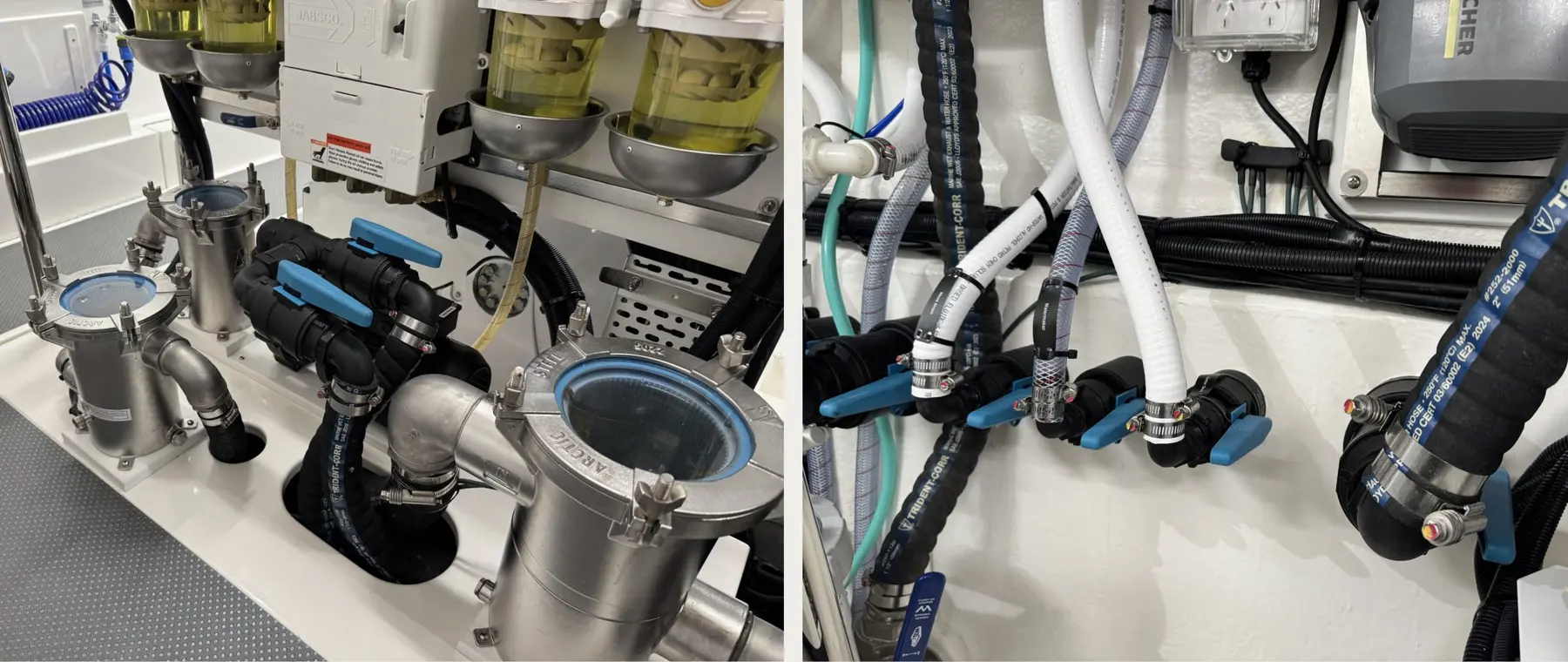
Riviera describes modern seacocks as marine shut-off valves, typically using quarter-turn ball-valve arrangements to show whether a passage is open or closed. Their purpose is simple but critical: an operator needs a reliable way to isolate seawater from an associated system. A valve is not valuable merely because a handle is visible. It must remain accessible, correctly installed and capable of operating as intended under the conditions specified by the manufacturer.
Owners should identify the inlet valves associated with each engine, generator and auxiliary appliance before urgent action is required. They should also understand any legal restrictions on overboard waste discharge in their cruising area. Routine position checks must follow the vessel's specific procedures, since cooling equipment may need an open supply while operating. Closing a valve incorrectly while machinery runs can create a separate overheating risk.
Why sea strainers matter for machinery
Raw-water strainers trap seaweed, shell fragments and floating debris before those materials can obstruct equipment that depends on seawater circulation. Their presence is easy to overlook until a flow restriction causes an alarm or a system loses cooling capacity. Riviera notes that engines, generators and air-conditioning equipment may be affected by strainer blockage. The symptoms will depend on the installation and should not be attributed to a single cause without diagnosis.
Water temperature, marine growth and the operating environment influence how often a basket requires attention. A boat moving through debris-filled waterways may face conditions quite different from a yacht resting in a clean marina. Riviera's advisory suggests more frequent checks where growth or debris is common, including warm-water regions. Owners should use the maintenance schedule for their installed equipment as the minimum reference and seek qualified help when symptoms recur.
Opening a strainer requires a safe procedure
The builder reminds operators to isolate the associated seawater supply before working on a strainer, remove the basket, inspect seals and then reassemble and check for leaks. These steps sound straightforward, but opening a seawater circuit without correct isolation can admit water into the boat. The exact sequence also depends on the equipment and its location relative to the waterline. A published summary should never replace the dedicated manufacturer's procedure.
Service should be carried out with the right tools and, where necessary, professional support. Damaged O-rings, distorted lids and improperly seated baskets can cause new leaks even after accumulated debris has been removed. Following reassembly, the operator needs to confirm that the relevant systems are returned to their prescribed operating state. Records of what was inspected and replaced make later fault-finding easier and help the next technician understand the boat's history.
Corrosion, hoses and bonding deserve attention
Riviera's wider inspection list covers evidence of corrosion, leaking connections, deteriorating hoses, clamps and electrical bonding. These elements form a related network of protections, so an apparently sound valve does not guarantee that the attached hose is safe. Water staining and unusual deposits can be early indications that a connection deserves professional examination. Any doubt about the integrity of a below-waterline assembly should be treated conservatively.
Bonding and galvanic protection arrangements are especially sensitive to system design and the materials used. Owners should avoid improvised electrical alterations based on advice taken from a different boat. The appropriate inspection relies on documentation, suitable test equipment and a technician familiar with marine installations. Preventive work is often less dramatic than an emergency repair, but that is precisely why it belongs in a disciplined service programme.
Optional protection systems are not maintenance-free
The advisory also mentions ElectroSea's ClearLine technology as an optional measure intended to reduce biological fouling in seawater systems. Such equipment may help manage a recurring operating problem, particularly where warm water encourages growth. However, an automated treatment system does not remove the need to examine seacocks, hoses, valves and physical strainers. The installation and any treatment claims should be evaluated through the manufacturer and appropriately qualified installers.
An owner deciding whether to add equipment should first establish the problem it is intended to solve. Is there recurring strainer blockage, impaired cooling, unexpected maintenance cost or a specific biological-fouling pattern? Monitoring and service history can answer these questions more reliably than marketing promises. The suitability of a retrofit depends on the actual boat and its system design, and any change must preserve safe access for regular checks.
A practical owner inspection discipline
Riviera's message is that a few routine minutes in the machinery spaces can prevent larger operational problems. An owner inspection can include visible leaks, unusual smells, changes in water flow, signs of corrosion and the condition of accessible fittings. More invasive testing or servicing belongs with competent marine technicians. Any checklist should be adapted to the vessel's manuals and the hazards present, especially where moving machinery or electrical equipment makes access difficult.
The useful editorial point is not that through-hulls are uniquely vulnerable on one brand. It is that all motor yachts with seawater-dependent systems require maintenance of their hull penetrations and connected plumbing. Prospective buyers should ask to see maintenance records and inspect these arrangements during survey. Existing owners should know the location and purpose of each isolation valve before a fault develops. That knowledge is an essential part of responsible yacht ownership.