The argument for a lighter yacht
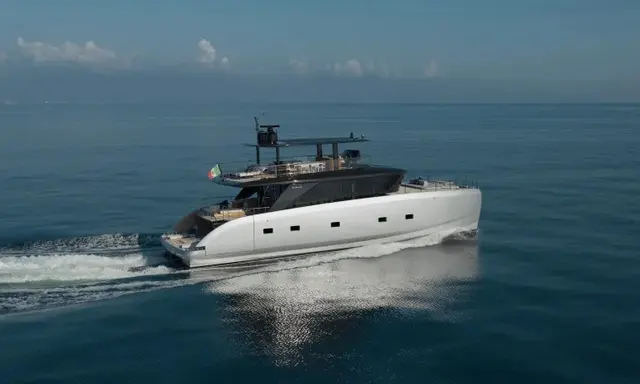
SAY Carbon Yachts gives the SAY 52 a stated dry weight of approximately 7.5 tonnes, including a Seakeeper 3 gyro. That low figure is central to the company's approach to fast, efficient performance at this size.
A lighter structure can help acceleration and reduce resistance, but real operating weight changes once fuel, water, equipment and passengers are brought aboard. Buyers should compare measured performance using the same loading assumptions rather than brochure figures alone.
The yacht's carbon-fibre construction is also visually apparent in its distinctive lines and sculpted surfaces. A lightweight roof with shaped glazing and integrated lighting helps create the enclosed-yet-open character of its cockpit.
Hull design and driving experience
The boat uses a patented Petestep hull with deflector surfaces intended to manage spray and water flow. SAY associates the geometry with a smoother ride and lower drag when travelling at higher speeds.
Maximum speed is advertised at up to 45 knots, a claim that needs to be read alongside the chosen engine configuration and conditions. The manufacturer lists multiple twin Volvo Penta power packages, and the actual experience will vary between installations.
At 15.95 metres overall, 4.40 metres in beam and a stated 1.05-metre draft, the SAY 52 occupies an attractive size for energetic coastal cruising. Berth dimensions and the precise draft of a finished boat still require confirmation before an itinerary is planned.
Comfort beyond a day at sea
The long bathing platform is designed to bring passengers close to the water at anchor. It also gives the yacht a clear focus for swimming and watersports rather than reserving every part of the deck for formal seating.
SAY describes a customisable interior intended for more than a short demonstration run. Prospective owners should examine how accommodation, storage and equipment access work together in a specification built to their needs.
The manufacturer lists a maximum capacity of twelve people, a figure distinct from the number who can sleep comfortably aboard. Safe passenger limits, overnight berths and the intended cruising pattern should be considered separately.
Range and electric assistance
A 1,200-litre fuel tank and an indicative range of about 300 nautical miles appear in the published specifications. The builder also offers an example of approximately 45 litres per hour at a 20-knot average, which is not a guarantee in every sea state.
Hybrid-electric propulsion is described as an optional feature for quiet movement in sheltered bays or additional assistance. Buyers should verify which capabilities are included in the exact boat they are considering.
The SAY 52 illustrates a distinctive approach to luxury through weight reduction and carefully considered use of space. A sea trial remains essential for assessing whether its real-world ride, noise and cruising range suit the owner's expectations.