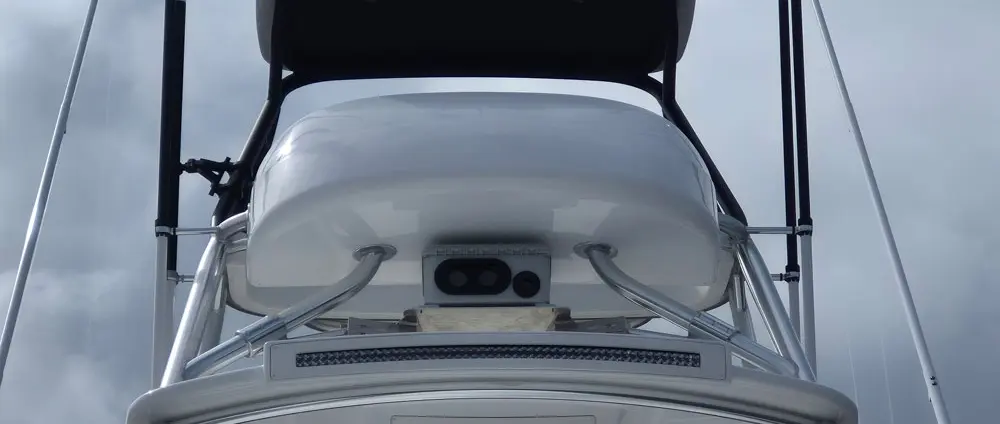
A production yacht becomes a whale-detection test platform
Viking Yacht Company is testing the WhaleSpotter whale-detection system aboard its new 70 Convertible demonstration boat, taking technology previously evaluated on research platforms into a high-performance sportfishing yacht. The builder announced the installation on 19 October 2026, ahead of the Fort Lauderdale International Boat Show.
The system uses thermal imagery and artificial intelligence to look for whales at the surface ahead of the boat. Its purpose is to provide a captain with early information that could support a change of course before an encounter becomes a collision risk.
What is actually fitted aboard the Viking 70
Viking's electronics subsidiary, Atlantic Marine Electronics, installed a combined thermal camera and processing computer beneath the tuna tower helm station. The mounting is removable, an arrangement that makes sense for a demonstration yacht whose equipment will be evaluated rather than simply marketed as a finished factory-standard package.
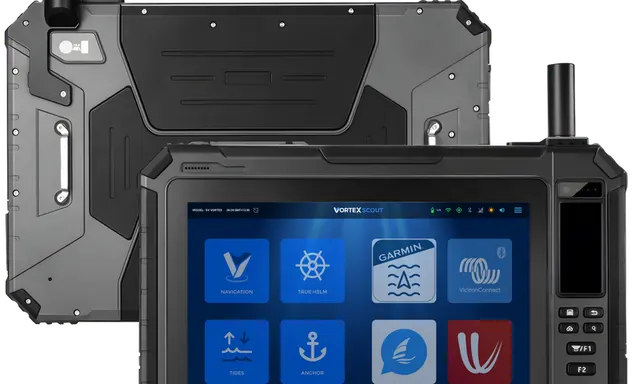
A separate tablet at the helm displays the thermal view and supplies an estimated bearing and distance to a potential whale. An audible alarm is designed to draw attention to a detection, allowing the skipper to compare the information with the scene ahead and with the vessel's other navigation systems.
Two to three nautical miles is the manufacturer's claim
WhaleSpotter says its system can detect whales at two to three nautical miles, by day or night, depending on camera mounting height and the size of the animal. Those are developer-reported capabilities, not a verified range achieved by this particular Viking installation in every visibility and sea state.
The distinction is important because a thermal camera can only interpret what is exposed or otherwise detectable at the sea surface. A whale underwater is not automatically visible, and the system is not a substitute for maintaining a lookout, using appropriate speed or following applicable whale-protection rules.
A meaningful first passage, with no whale detections
The Viking 70 collected data while travelling from New Jersey to Florida, but Viking reports that no whales were detected on that passage. It would therefore be misleading to describe this transit as proof that the yacht successfully spotted and avoided a whale.
Instead, the passage provided an opportunity to run the installation in normal travel conditions and assess the hardware and alert interface. Continued operation on the demonstration boat should allow engineers and skippers to learn how the system behaves in varied seas and alongside a busy sportfishing electronics suite.
Research roots extend beyond pleasure boats
WhaleSpotter traces its technology to work at Woods Hole Oceanographic Institution, including research by co-founder Daniel Zitterbart into recognising whale blows and other thermal patterns. The company says more than 70 systems have been installed around the world on commercial vessels and at observation sites.
That background matters, but recreational yachts present different operational requirements. A sportfishing captain may work from an elevated tower, move quickly between grounds and manage complex equipment while watching weather, other traffic and fishing activity, so alerts must be easy to interpret without overwhelming the helm.
Viking's wider Whale and Vessel Safety initiative
The WhaleSpotter trial sits within Viking's Whale and Vessel Safety task force, established in 2022 to explore tools for reducing whale strikes. Its research platform is a 24-foot Contender fitted with thermal imaging, radar, AI software and related communications equipment.
Work from Plymouth, Massachusetts, has included demonstrations to NOAA personnel and marine-industry participants, as well as manoeuvring exercises and analysis of NMEA vessel data. The objective is to understand what a detection means in practical terms: whether a skipper gets an actionable warning and how their response can be assessed.
The debate about speed limits remains separate
Viking is also active in discussions about the United States' 2008 North Atlantic right whale vessel-speed regulation. That rule has historically required most vessels of 65 feet and above to operate at 10 knots or less in specified seasonal zones, and the builder argues that detection technologies should be considered as regulators review policy.
A technical demonstration does not itself amend any regulation or give yacht operators an exemption. Owners and captains must check the currently applicable requirements for their route and date, and any claimed conservation benefit should ultimately be measured against independent field evidence.
Why an elevated tuna tower is useful
Mounting the thermal unit on a tower offers a higher sightline than placing it at deck level. Height can extend the visible horizon and improve how far ahead a camera can monitor the ocean surface, although spray, motion, background conditions and the whale's behaviour still complicate reliable classification.
Integrating the camera into an existing tower also demonstrates one path for retrofitting the technology to an equipped vessel. Questions for an owner include structural mounting, electrical load, marine corrosion protection, display integration, maintenance support and how alarms should be handled during an offshore passage.
What visitors can see at Fort Lauderdale
Viking says the WhaleSpotter installation will be demonstrated to interested visitors and media at the Fort Lauderdale International Boat Show, scheduled for 28 October to 1 November 2026. For potential buyers of the 70 Convertible, the display makes an otherwise abstract safety technology tangible at a familiar helm.
The yacht is approximately 21.6 metres long and falls within Luxury Yacht Guide's 12-to-24-metre remit. The whale-detection equipment should be viewed as an evaluation aboard the company's demo boat, not a claim that every Viking 70 Convertible will include it in its standard specification.
The next proof will come from more time at sea
AI-based detection is potentially valuable because a meaningful warning delivered earlier gives a captain more choices than a last-second sighting. But false alarms, missed animals, watchkeeper workload and the link between seeing and avoiding a whale all need sustained testing before broad performance claims can be justified.
For now the official announcement confirms an installed trial system, one data-gathering delivery passage without whale detections and plans to keep the equipment aboard. The most useful next reporting will follow documented detection events, independent testing and what the evaluation teaches yacht builders about practical wildlife-aware navigation.