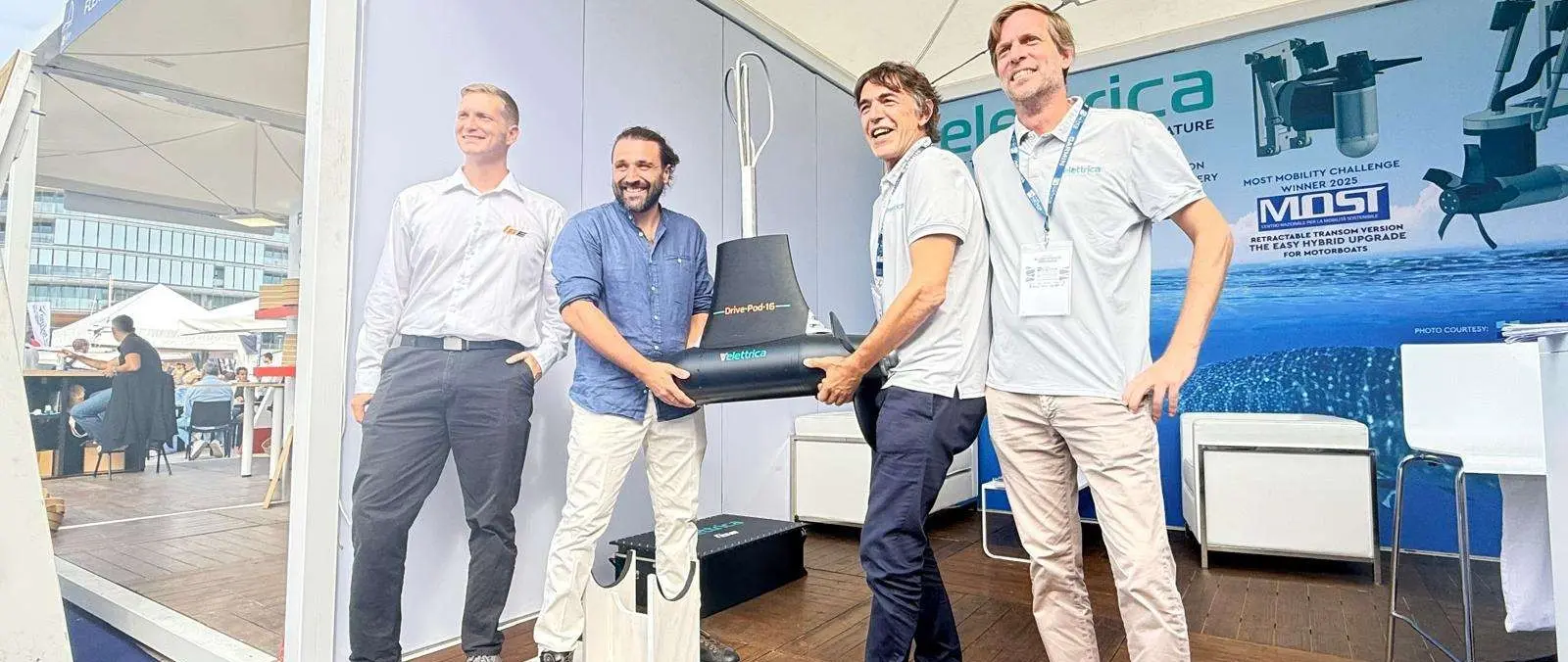
An electric system designed around refitting
Velettrica has presented its Drive-Pod-16 electric propulsion system as a possible route for upgrading existing displacement boats rather than relying exclusively on new yacht construction. The system combines an underwater pod, motor controls and modular battery storage.
According to the company, its intended applications include primary propulsion for sailing and displacement motor yachts up to 14 metres and auxiliary propulsion on motor yachts up to 20 metres. This distinction matters: a system suited to moving a smaller displacement yacht is not automatically suitable as the main engine of a much larger, faster vessel.
Why the propeller was redesigned
Instead of simply attaching an electric motor to a propeller selected for diesel propulsion, Velettrica says it developed the propeller geometry around the electric drivetrain's characteristics. The engineering aim is to improve efficiency across the low and moderate speeds that displacement vessels frequently use.
In practice, propulsive efficiency can influence the size and cost of the battery bank required for a chosen journey. However, no universal cruising range follows from the system name alone, because hull resistance, loading and weather can vary considerably between boats.
Battery energy becomes part of a larger system
The Drive-Pod-16 can be linked to modular batteries as well as optional range extenders, including generators, solar panels, wind generation and potentially hydrogen fuel cells. The intention is to coordinate stored and produced electricity with both propulsion and onboard domestic loads.
For owners, this can affect life at anchor as well as travel under power. Refrigeration, lighting and other hotel services depend on available electrical energy, and different combinations of charging equipment may be appropriate for short trips or longer coastal cruising.
Hydrogeneration under sail
Velettrica says the pod can operate as a generator while a yacht is sailing, using energy from water movement past the propeller to replenish the batteries. This could make a sailing yacht less dependent on an engine-driven generator at anchor.
There is an engineering trade-off: hydrogeneration draws energy from the boat's movement and can add drag, so production must be evaluated against boat speed and sailing performance. Owners should ask for measured charging results under realistic conditions rather than relying only on a headline capability.
An approach to yacht refit
The company describes installation options that include replacing an existing sail-drive or using a retractable stern arrangement. That may make the concept attractive to owners who wish to modernise a sound existing hull instead of replacing the entire yacht.
Every refit needs a survey of structure, weight distribution, waterproofing, cooling and access to high-voltage equipment. The manufacturer describes reduced need for structural change, but the feasibility of any individual conversion must be established by a qualified yard.
Motor without permanent magnets
Drive-Pod-16 uses a synchronous motor developed with technology partner Settima that does not require permanent magnets or rare-earth materials. The company identifies magnetic steel, copper and conventional steel as important materials in the design.
Removing rare-earth magnets may reduce reliance on certain critical materials, although environmental performance depends on sourcing, manufacturing and the total service life of the installed equipment. No single component choice can establish the full lifecycle footprint of a yacht.
Recycled material in the propeller system
Velettrica also uses a composite incorporating recycled nylon and carbon fibre for the propeller and fin. According to the project's partners, some nylon comes from recovered fishing nets, with associated material-processing work supported by the University of Pisa.
The manufacturer claims the selected materials and approach could reduce lifecycle carbon dioxide emissions by more than 40 per cent compared with traditional solutions. This is a company claim and cannot be treated as an independently confirmed saving without details of the comparison and assumptions.
Battery chemistry and future changes
The current battery design uses lithium iron phosphate cells, which the company chose for durability and marine use. Velettrica says it is considering future compatibility with sodium-ion cells, though those remain in testing rather than regular deployment in the product.
The distinction between installed components and future-ready architecture is important. Buyers should ask what chemistry is supplied today, what upgrades will actually be supported and what approvals or warranties apply after changing battery technologies.
Where this fits the luxury-yacht market
For privately operated yachts in the 12-to-20-metre sector, an auxiliary electric pod or a full displacement-boat conversion could be attractive when it reduces noise and adds an option for low-speed operation. But the strongest use case will depend on realistic energy calculations and suitable local support.
Before commissioning a refit, owners should obtain a documented power and endurance assessment, electrical safety plan and independent estimate of installed cost. Drive-Pod-16 illustrates a direction in marine technology, not proof that every cruising boat can move to all-electric propulsion without compromise.