A West Australian fleet gathering
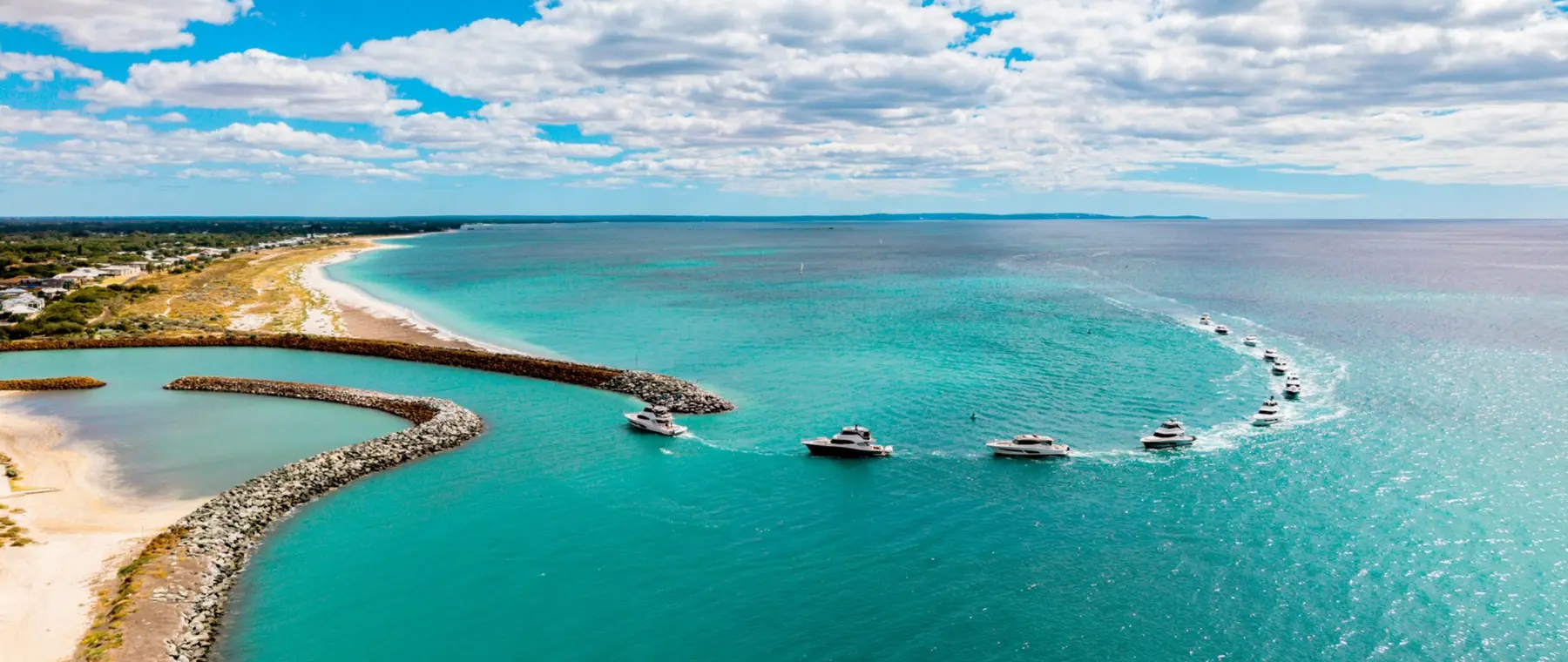
Riviera's latest owners' report describes a four-day Port Geographe gathering organised by R Marine Perth in Western Australia. The builder says 14 motor yachts and more than 50 owners and guests took part, making the occasion both a social event and an exercise in cruising together. Those participation figures come from the organiser's account, but they are not the only reason to pay attention. The more interesting feature is the opportunity for owners to navigate an unfamiliar coastline with support from people who know the area.
Group cruising appeals to people whose boats can travel well beyond their usual home marina but who have not yet explored every possible destination. A shared itinerary can remove some uncertainty while still allowing individual skippers to command their own vessels. That distinction matters on the water, where hull size, draft, experience and equipment differ among participants. An organised group should never be mistaken for permission to set aside independent judgement.
The passage south from Fremantle
Riviera reports a coastal passage of about 90 nautical miles from the Fremantle area, with further boats joining near Mandurah before the fleet reached Geographe Bay. The voyage introduced participating owners to sections of Western Australia's south-west shoreline that some had not previously explored together. The published distance describes the organised journey, not an exact route for every yacht or a promise about the time required. Actual tracks, weather and operating conditions can change the practical calculation.
Before setting out on a group passage, skippers need clarity on departure times, radio procedures, rendezvous points and the plan if a boat falls behind. Each skipper remains responsible for the seaworthiness of their vessel and crew, even when experienced organisers provide a route outline. The benefit of travelling in company should be reassurance and knowledge-sharing. It should not create pressure to maintain an unsuitable speed or enter conditions beyond a particular crew's comfort.
Port Geographe becomes the base
After arriving at Port Geographe Marina, the boats became a common base for a weekend of activities. Riviera says a welcome gathering in nearby Busselton helped participants get acquainted and receive information about the days ahead. It included discussion of the flexibility needed if changing weather affected the planned programme. This is a useful model for owners' events: people need to know the operational framework before they can relax and enjoy the social side.
A marina-based schedule gives organisers options when the sea is less inviting, and it also gives families time to explore ashore. Owners can exchange first-hand experiences about route choice, berthing and maintenance without trying to hold a conversation over engines or radio traffic. The informal setting may be especially helpful for newcomers who do not want to interrupt a formal technical briefing. Social connection can therefore have practical seamanship benefits.
Learning together near Eagle Bay
The organiser recounts a cruise toward Eagle Bay, at the southern part of the wider Geographe Bay coastline. Some owners reportedly gained confidence from exploring in company and felt better prepared to return on their own. That is a reasonable benefit of a carefully run expedition, particularly if participants compare their planning decisions rather than simply follow the boat ahead. Local hazards still require individual attention, so confidence is valuable only when supported by better knowledge.
The vessels involved were not identical, and different motor yachts may respond differently to the same wind, swell or shallow approach. Responsible briefing should therefore leave scope for different cruising speeds and stopping decisions. Observing how experienced crews read conditions can be instructive, but skippers must translate that observation into a plan suitable for their own boat. The educational value lies in improved judgement, not in merely having travelled the distance.
Owners exchange skills and advice
Riviera's account includes owners discussing knowledge they have developed through recreational and professional boating. Natasha and Rob Collins, who cruise a Riviera 5400 Sport Yacht, were among those sharing experiences with other participants. These exchanges are part of what makes an owners' event different from a sales demonstration. The discussions concern everyday use, including the little decisions that make a boat easier and safer to operate.
Advice passed among friends still needs context. A docking method that suits one model's visibility and propulsion may need adjustment on another, while advice about systems maintenance must be checked against the correct manuals and qualified professionals. Asking practical questions during a relaxed event can help owners discover gaps in their understanding. The ideal outcome is not to copy another skipper exactly, but to return home better equipped to make independent decisions.
A programme that respected the weather
According to Riviera, rough conditions interrupted some planned time afloat, and organisers substituted a light-hearted activity ashore. The change was described positively by participants, suggesting that a flexible schedule helped preserve the spirit of the gathering. This small detail carries a substantial lesson for anyone arranging a cruising rally. A successful occasion should not depend on forcing every planned passage to happen regardless of conditions.
Good alternatives ashore allow guests to enjoy the destination while skippers make conservative weather decisions. Those decisions become harder if guests believe the advertised itinerary cannot change. Organisers can reduce pressure by explaining from the outset that comfort and safety determine what happens each day. The reported experience shows how a convivial programme can continue even when the sea does not cooperate.
The raft-up at Busselton Jetty
The weekend included a coordinated raft-up off Busselton Jetty. Riviera highlights this as both a memorable visual moment and an opportunity for less-experienced owners to learn from more practiced skippers. Bringing large powered yachts alongside one another needs planning, communication and a realistic assessment of conditions. Fenders, line loads, approach speed and the ability to separate are all more important than producing an attractive group photograph.
An organised raft-up works best when everyone understands the approach and when skippers are free to opt out. Crew members need agreed responsibilities, safe places to stand and a clear understanding of when lines should be handled. Conditions can change while the boats are together, so an exit plan is part of the activity from the beginning. This practical dimension explains why a shared cruising event can be far more educational than a sequence of shore-based receptions.
A different form of after-sales support
The programme also took the owners into the Busselton and Margaret River areas for meals, informal events and time together away from their yachts. Those outings were not incidental to the organisers' larger aim. They helped build relationships that participants might draw on for future advice or companionship on longer voyages. An enthusiastic owners' community cannot replace technical service, but it can make learning about a complex vessel less isolating.
The manufacturer did not provide a sales conversion figure or evidence of broader market growth arising from the event, and it would be misleading to invent one. The concrete result described is a completed gathering involving group cruising, adaptable scheduling and practical boat-handling experience. Future participants should ask what assistance, briefing and contingency planning an organiser provides before joining. The strongest owners' events deliver both enjoyment and a greater ability to cruise responsibly afterward.