YANMAR has given its third-generation VC30 Vessel Control System a Cannes Yachting Festival debut, bringing a new display, updated joystick architecture and simplified integration to its electronically managed marine engines. The system is intended to reduce installation complexity while giving owners and skippers a cleaner interface for engine, transmission and manoeuvring control.
VC30 is not a new engine but the electronic layer that ties YANMAR's compatible propulsion components together. That distinction matters because modern yacht usability increasingly depends on how engines, controls, displays, joysticks and onboard networks communicate rather than on engine output alone.
A new 4.3-inch control display
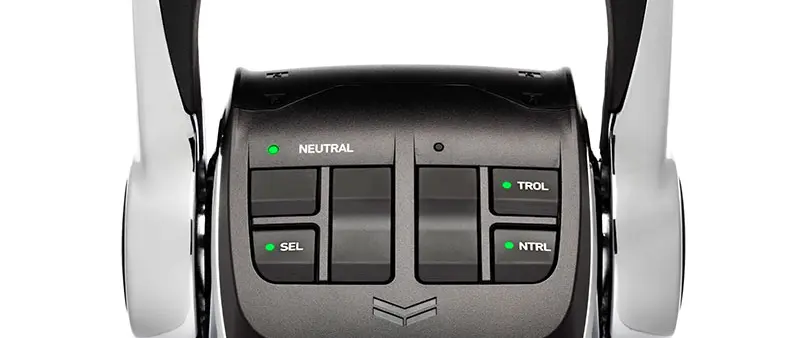
The VC30 uses a 4.3-inch optically bonded colour TFT display designed for better visibility at the helm. YANMAR also integrates NMEA 2000 connectivity, allowing engine and system information to be shared more easily with compatible marine electronics.
The display is paired with a CAN-based joystick and revised control hardware, with additional buttons integrated into the joystick itself. For owners, the objective is to reduce the number of separate interfaces needed for low-speed handling and routine propulsion control.
Fewer control components should simplify installation
YANMAR says the third-generation architecture combines functions that previously required more individual electronic control units, reducing component count and wiring complexity. The company positions that change as useful both to boatbuilders fitting new yachts and to service teams dealing with increasingly dense machinery spaces.
Simpler wiring is not merely a production advantage because every connector, separate module and additional harness can become another diagnostic point during a fault. A more consolidated system can therefore improve installation consistency, although real serviceability will depend on documentation, dealer capability and access to replacement components.
Designed for YANMAR common-rail engines
The VC30 supports YANMAR's electronically managed common-rail engine families and is designed to integrate with compatible transmissions, controls and displays. YANMAR's published material also describes configurations for single, twin and triple-engine installations, making the system relevant across a broad range of sailing and motor yachts.
That breadth matters for builders because a common control architecture can be used across several propulsion packages instead of creating a completely different helm environment for every model. Owners may benefit from more familiar operation when moving between YANMAR-powered boats or upgrading within a range.
Cannes puts vessel control alongside propulsion choice
At Cannes, YANMAR displayed the VC30 alongside its 4LV150 with SD150 saildrive and its electric E-Saildrive. The combination reflects a wider industry shift in which propulsion choice and digital control are increasingly developed together rather than treated as separate systems.
For Luxury Yacht Guide readers, the important measure will be how intuitively VC30 behaves in everyday use and how well it integrates with third-party helm electronics. The Cannes debut makes the system easier to evaluate in person, while long-term reliability and service support will determine its value after the show.