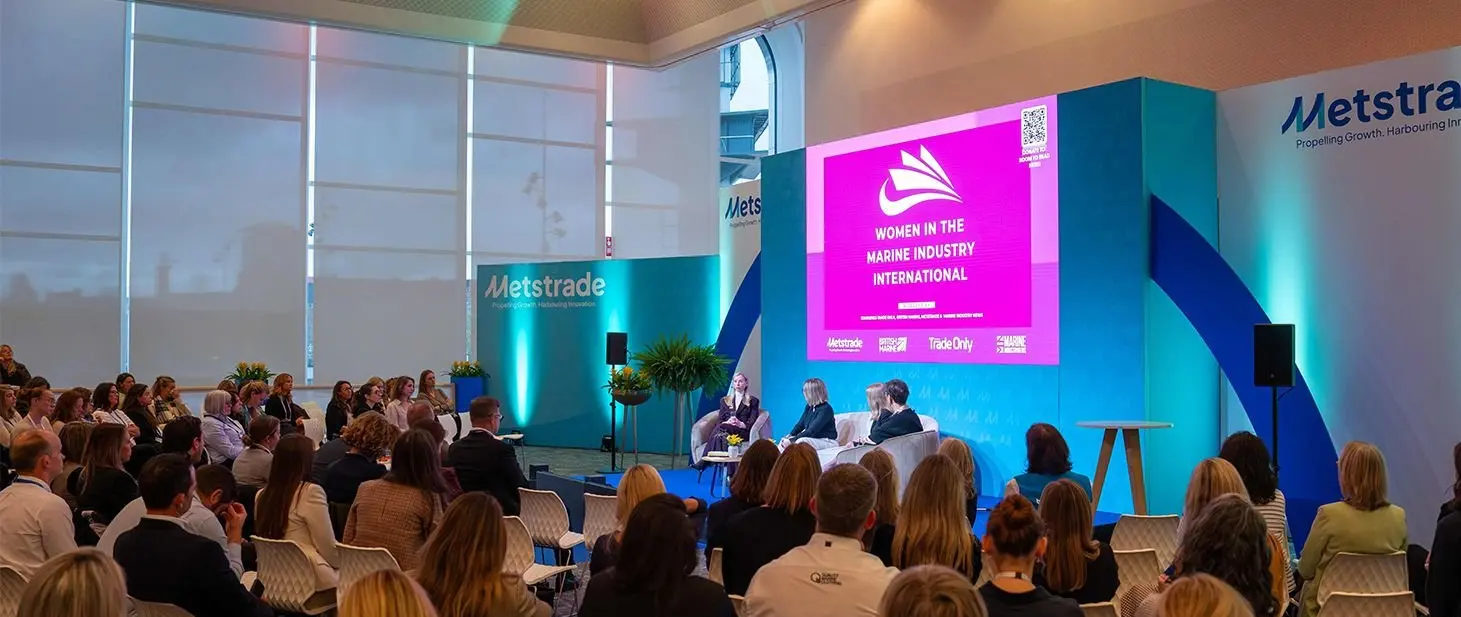
An anniversary with a practical agenda
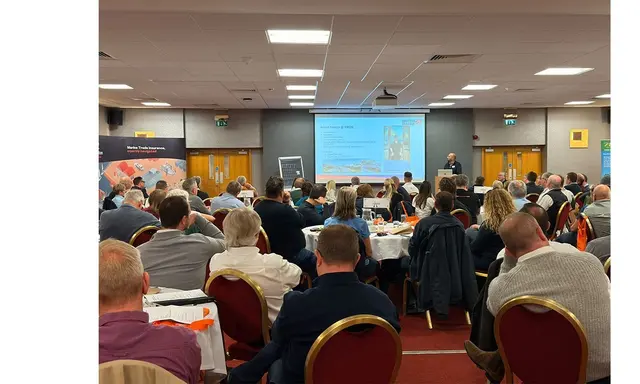
Women in the Marine Industry International marked its fifth anniversary at METSTRADE 2026 with a leadership breakfast attended by more than 200 marine professionals. Held at RAI Amsterdam on 18 November, the event brought together speakers from marine retail, technology and professional development to explore how companies can identify, support and retain future leaders.
British Marine published its account on 25 November, identifying the anniversary as more than a social gathering. The central theme concerned the future workplace, including the transition from recognising talented individuals to giving them meaningful responsibility and career opportunities. The discussion has direct relevance to shipyards, brokerage businesses, equipment suppliers and yacht operations that depend on experienced people.
A partnership across the marine sector
The annual Panel and Networking Breakfast was hosted by British Marine, METSTRADE, the Soundings Trade Only Group and Marine Industry News. That collaboration helped bring together people from different sections of an industry in which skills often move between sales, engineering, service and management.
The mix of organisations matters because workforce challenges rarely belong to one type of business. A boatbuilder may struggle to recruit specialist technicians while a dealership needs customer-service experience and a marine technology company seeks managers who understand complex product development. Shared discussions can help identify approaches that can be adapted across those environments.
More than two hundred participants
The organisers reported over 200 attendees, including women and men from the global marine industry. That is the event's attendance figure, not a census of industry employment or proof that women now occupy a particular share of executive positions. Its significance is the scale of professional engagement with the topic.
A well-attended event can generate useful contacts and visibility, but participation alone does not demonstrate long-term change. Progress requires organisations to translate conversations into recruitment practices, career development and opportunities that can be measured over time.
The 2026 panel spans different leadership roles
The discussion featured Paulee Day, president and chief executive of West Marine; Fiona Richardson, vice-president of human resources at Navico Group; and Victoria Low, chief executive of The Magenta Project. Michele Goldsmith, vice-president and general manager of the Soundings Trade Only Group, guided the conversation.
Their backgrounds offer different perspectives. Retail and customer-facing organisations rely on developing large teams, technology companies need specialist skills and The Magenta Project focuses on pathways into professional sailing. Combining them highlights the fact that marine careers are broader than a single occupation.
Moving beyond identifying potential
One of the panel's recurring points was that noticing a promising employee is not enough. A company must provide learning opportunities, responsibilities and support that allow the person to progress. Those measures can include structured development, mentoring and practical experience of decisions normally handled by senior staff.
This is important in smaller marine businesses where leadership opportunities may not be advertised through a formal internal programme. Owners and managers can still create clear responsibilities and regular conversations about career goals, provided the expectations and resources are realistic.
Mentoring and sponsorship are different
Mentoring generally involves sharing advice, expertise and experience. Sponsorship goes further by actively recommending someone for an opportunity, introducing them to decision-makers or supporting their candidacy for a role. The panel emphasised both forms of help rather than treating them as interchangeable.
The distinction can make a difference in an industry where relationships and reputation are important. A capable professional may gain valuable knowledge from a mentor yet still lack access to assignments where their abilities can be demonstrated. Supporters can help bridge that gap through appropriate, transparent opportunities.
Early development can retain talent
Fiona Richardson discussed the value of spotting promising people and talking with them before they become frustrated or leave. Development is most effective when organisations consider what employees want to learn rather than assuming everyone follows the same path toward a management title.
For a company dealing with advanced marine electronics, this could mean a technician receiving project-management experience or a customer-support specialist learning about product development. Each organisation has different needs, and a successful programme should match genuine business requirements with the individual's goals.
Networks can open doors
Victoria Low addressed the role of professional networks in creating opportunities, stressing that experienced people can use their relationships to help others move forward. In the marine industry, access to a project, a sea-going role or a specialist supplier can sometimes depend on connections that newcomers have not yet had time to develop.
An open and well-managed network can reduce that disadvantage. Introductions should be based on suitable skills and professional conduct, and the receiving organisation must still assess candidates fairly. Networking is most useful when it broadens access rather than reproducing a closed circle.
The importance of collaboration
Paulee Day highlighted the relationship-driven nature of the marine business and the value of professionals working together. Boatbuilding and yacht ownership depend on a wide range of specialists, many of whom operate in different companies and countries. Strong relationships can support problem-solving as well as career development.
Cooperation does not remove commercial competition, but it can help the industry address shared challenges such as training, safety and recruitment. The most effective initiatives make participation accessible without requiring every company to use identical human-resources structures.
An interactive format brings in the audience
The 2026 event introduced real-time audience participation, allowing attendees to contribute experiences and perspectives beyond the three principal panellists. The organisers reported positive feedback on that approach, including from Emma York of Fresh Approach Digital.
Audience contributions can prevent a leadership event from becoming a one-directional presentation. They may reveal barriers that are less visible to senior executives, although anonymous responses and informal comments should not be mistaken for representative scientific research without an appropriate method.
Five years of professional connection
The breakfast's anniversary recognised people who had supported the series over its previous five years. Five former panellists returned and received commemorative gifts, while participants were offered an anniversary e-book compiling reflections and advice from speakers and partners.
The event is a milestone for the programme, not a claim that it has solved every obstacle in marine-sector employment. Its continuing role may be to create contact between experienced professionals and people considering the next stage of their careers.
The value of giving time
Returning speaker Jemma Lampkin, global business director for Yacht Coatings at AkzoNobel, reflected on her own experience of mentoring. Her participation demonstrates the breadth of the network, extending from professional sailing into the companies supplying materials and services to yachts.
Time spent mentoring can be a valuable contribution, but it requires consistency and clear expectations. A brief meeting may offer inspiration, while sustained development often needs repeated contact, feedback and the chance to apply new skills.
An event for the whole workforce
Joe Lynch, chief executive of ICOMIA, described the gathering as relevant to the wider industry rather than only to women. That framing matters because leadership development depends on managers, business owners and colleagues who may influence hiring, training and promotion decisions.
An inclusive programme should encourage broad participation while keeping its purpose clear. Marine businesses can improve opportunities when the people with responsibility for staffing and budgets actively take part, not merely endorse the idea from a distance.
The relevance to luxury-yacht operations
A luxury yacht depends on technical, hospitality and operational skills delivered by people with different backgrounds. Experienced deck officers, engineers, interior professionals and shore managers must work together. Access to advancement can influence whether capable personnel remain in the industry.
The anniversary discussion is not a new crewing regulation or a certification programme. Its relevance lies in offering practical thinking about career pathways that yacht managers and service providers can adapt to their own staffing needs.
Shipyards need an evolving skills base
Modern yacht production combines composite and metal structures, software, electrical systems, interior work and project management. Companies cannot assume that talented people will automatically develop the right skills by remaining in the same job for many years.
A thoughtful progression plan may include training on new materials, opportunities to shadow senior staff and clear pathways from technical roles into leadership. The appropriate sequence should be set by the work and by the employee's demonstrated capabilities, not by assumptions about who is likely to lead.
The role of visible leadership
Seeing experienced professionals in senior positions can help newcomers understand which careers are possible. Visibility is most effective when accompanied by specific information about the qualifications, decisions and responsibilities involved, rather than presenting success as effortless.
The three panellists brought recognisable careers from different parts of the industry, allowing attendees to compare routes into leadership. Their participation does not imply that every person must become an executive. Professional advancement can also mean deeper technical expertise or a more influential specialist role.
Why retention deserves attention
Recruitment attracts considerable publicity, but the cost of losing an experienced employee can be substantial. A company may lose product knowledge, customer relationships and continuity on an important yacht or build programme. Supportive management and opportunities to grow can form part of a retention strategy.
No specific retention percentage was established by the breakfast report. The event identifies practices worth examining, not a guaranteed reduction in staff turnover. Businesses should assess results through their own employee feedback and workforce data.
Smaller companies can participate
Many marine firms are small or medium-sized businesses without large human-resources departments. They can still establish realistic development goals, offer constructive feedback and introduce promising staff to professional networks.
A structured conversation about the next year's responsibilities may be more useful than a complicated policy that the business cannot maintain. The objective is genuine opportunity, supported by available resources, rather than an impressive document without practical follow-through.
An international industry benefits from shared pathways
The marine sector operates across national boundaries. A person may begin in a local sailing club, move into technical sales or work aboard yachts in different regions before taking a management role. The international makeup of METSTRADE provides a useful setting for professionals to compare these routes.
Cross-border careers also involve qualifications, language, immigration and employment requirements. A networking programme cannot override those rules, but it can help people identify the skills and organisations relevant to a lawful career move.
What should be measured after the anniversary
A useful follow-up would look at mentoring relationships established, training opportunities offered and participants' later career progression. Organisations could also report whether they have changed recruitment practices or opened new pathways into skilled roles. Those outcomes would provide evidence that the discussions had effects beyond the event itself.
The organisers' current announcement does not provide a completed impact assessment covering all five years. It would be premature to assign numerical workforce improvements to the breakfast without comparable data.
A practical leadership milestone
The fifth-anniversary Women in the Marine Industry International gathering brought more than 200 professionals together around the question of how future leaders are developed. The combination of experienced panellists, audience participation and cross-industry partnerships offers a credible basis for continued work.
The immediate news is the completed 2026 event and the emphasis placed on mentoring, sponsorship and career access. For the luxury-yacht sector, the challenge now is to make those principles visible in real opportunities, where the results can be observed and evaluated rather than merely celebrated.
Primary reporting and image credit
Primary report: https://www.britishmarine.co.uk/news/2026/november/five-years-inspiring-change-women-marine-industry-international-celebrates-milestone-anniversary-metstrade-2026. © British Marine / Women in the Marine Industry International and original event photographer. Authentic 18 November 2026 METSTRADE breakfast photograph. Image is used only for correctly attributed factual editorial coverage and never represented as open-licence stock photography.