A move beyond limiting damage
The marine industry is beginning to discuss whether yachts and supporting infrastructure can make a positive contribution to their surroundings rather than only reducing environmental harm. At the 2026 Superyacht Forum associated with METSTRADE in Amsterdam, participants examined experimental marina structures, alternative boatbuilding materials and the potential for large yachts to supply clean water after natural disasters.
METSTRADE's first-hand account, published on 26 November 2026, brought together several distinct initiatives rather than announcing a single completed global programme. The proposals range from marine habitat design to data collection and humanitarian assistance. Each needs its own evidence and realistic operating boundaries before it can be described as delivering measurable benefits.
What regenerative design means here
Traditional environmental measures often focus on using less fuel, reducing waste or replacing materials with lower-impact alternatives. Regenerative design asks an additional question: can an activity help restore the environment or improve conditions for communities affected by damage?
That is a demanding standard. A project cannot simply call itself regenerative because its promotional material uses natural colours or mentions biodiversity. Evidence would have to show a positive effect against an appropriate baseline, including maintenance and any unintended consequences.
Students bring a different perspective
A group from Besign School of Design in Cagnes-sur-Mer, near the French Riviera, challenged forum participants to think about yachts that could contribute positively to the natural environment. The school was founded in 2013 with involvement from people whose backgrounds include technical education, automotive design and yacht design.
The school's involvement highlights how marine innovation can benefit from people trained outside conventional shipbuilding disciplines. Students may question assumptions that experienced professionals take for granted, although ideas from a classroom still require engineering, testing and consultation with the people affected.
VPLP's influence on the design discussion
One of the school's founders has links to VPLP, a design office known for high-performance sailing vessels and marine engineering concepts. That connection gives the environmental discussion a practical route into the world of yacht design. A novel idea can be tested against structural, operational and commercial requirements before it becomes a product.
The existence of a link to an established designer does not mean VPLP has certified each student proposal or agreed to construct every concept discussed at the forum. The significance is the exchange of expertise between disciplines.
Ocean data as a potential contribution
One idea raised at the forum was that yacht crews could collect water-quality and ocean-condition information during their voyages. The resulting records might support scientific studies and help researchers understand areas that are otherwise costly to monitor.
The value would depend on suitable instruments, calibration, consistent reporting and appropriate data-sharing arrangements. A few casual observations cannot substitute for a defined scientific programme. Owners considering participation should work with qualified research organisations that can specify the information they need.
Private yachts travel to useful locations
Yachts visit anchorages, coastlines and offshore areas that may not be covered continuously by research vessels. That mobility could make them useful participants in voluntary observation networks, particularly when a crew follows established procedures without interfering with normal navigation.
Participation should remain compatible with passenger safety, local laws and the yacht's actual itinerary. A vessel is not automatically transformed into a research station by installing a sensor. Data quality, maintenance and the consent of the owner and crew are essential.
A wider policy background
The METSTRADE discussion referred to developments following the 2025 United Nations Ocean Conference in Nice and to European initiatives concerning ocean protection and restoration. Those international frameworks provide context for new marine projects, but they do not establish approval of each specific yacht or marina concept.
Policy documents, treaty obligations and individual building permits are different things. A project proposing new equipment in coastal waters must still address the laws and environmental requirements of the location where it will operate.
Rethinking marina infrastructure
Marinas are usually evaluated for berthing capacity, shelter, access and the services provided to yachts. The environmental discussion suggests adding another measure: whether structures can provide habitat or conditions that help aquatic life. That might influence the selection of underwater surfaces, construction methods and monitoring.
A marina operator needs to balance ecological goals with safety, durability and maintenance. A structure that encourages growth might still have to be cleaned or repaired, and not every species or location would benefit in the same way. Good intentions are not a substitute for local scientific assessment.
Coralliance presents a habitat approach
The forum account highlighted Coralliance, which develops underwater structures and coatings intended to encourage marine growth. The idea is to make parts of the built waterfront more hospitable to aquatic organisms rather than treating every submerged surface only as an object to be kept clean.
Whether an individual installation helps biodiversity must be measured. Local conditions, water quality and the specific species present will affect results. It would be inaccurate to describe the technology as proven to restore every reef or eliminate all impacts from marina construction.
Ocean Reef Marina in Western Australia
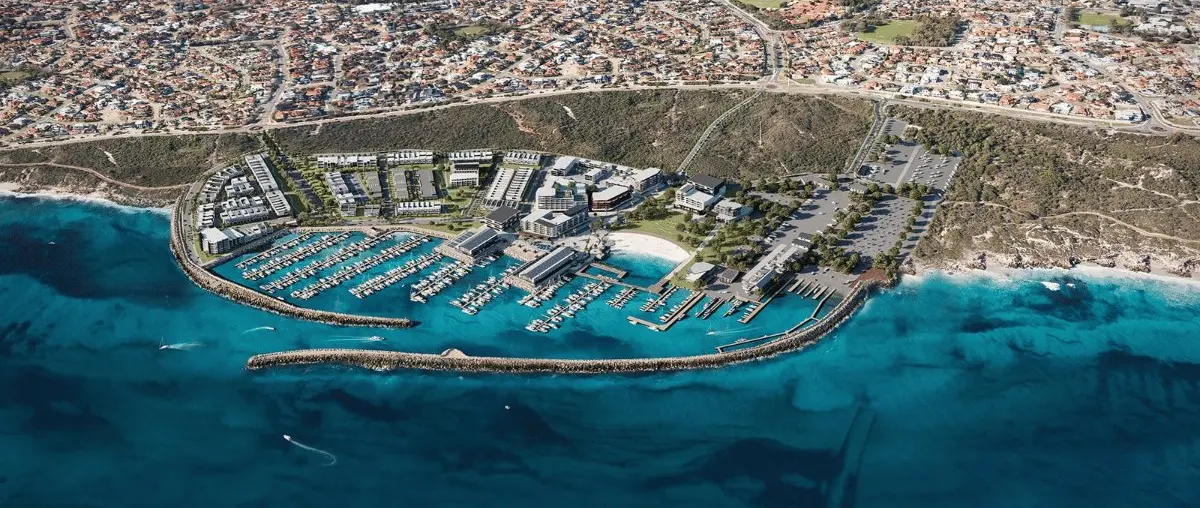
The development at Ocean Reef in Joondalup, north of Perth, was identified as an example of waterfront infrastructure where reef-supporting ideas could be considered. The METSTRADE report describes Ocean Reef Marina as being under development, not as a completed marina whose environmental outcomes have already been independently demonstrated.
A future project update should verify the detailed construction programme, habitat measures and monitoring arrangements directly with the responsible developer or authority. The picture accompanying this article is official event imagery relating to the marina discussion, not proof of a finished ecological restoration outcome.
The need for baselines and monitoring
To demonstrate ecological improvement, researchers need to understand the condition of a site before construction or intervention. They can then compare later observations with the baseline, taking into account seasonal variation and other influences. Without that method, a visible increase in marine growth may be difficult to interpret.
Monitoring also requires appropriate duration. Some effects appear quickly, while others develop over years. A responsible announcement should state what has been measured, by whom and over what period, rather than treating a concept illustration as evidence of a successful restoration.
Bamboo as a boatbuilding material
Another initiative discussed was Geoversity, a project investigating bamboo for watercraft construction. Bamboo grows quickly and can provide useful fibres, making it an interesting candidate for certain structural or non-structural applications when properly selected and processed.
The initiative described a first canoe being built in the Netherlands by Roelof van der Werff and Henk Bergsma. This is not evidence that a large production yacht made of bamboo has been certified for ocean service. The scale and operating demands of a canoe differ substantially from those of a luxury cruiser.
Materials need whole-life evaluation
Rapid plant growth alone does not establish that a finished product is environmentally superior. The treatment required to resist moisture, the adhesives used, transport, repairability and the expected service life all contribute to its real impact.
Marine designers must also consider mechanical properties and the consequences of damage or deterioration. Testing and lifecycle assessment should accompany new materials before builders make broad claims about durability or sustainability.
The problem of yacht-generated impact
Forum participants were challenged to find ways for luxury yachting to generate genuine positive environmental outcomes. The account notes that many groups first proposed familiar measures for reducing pollution or improving energy efficiency, rather than solutions that actively restore something.
That distinction is constructive. Reducing harm remains important and should not be dismissed, but a regenerative claim requires an additional demonstrable benefit. Clear terminology helps owners understand which environmental measures are proven and which remain aspirational.
Drinking water after natural disasters
A particularly practical example came from Captain Glenn Dalby, who described how a yacht operating in the Caribbean had provided humanitarian support following a hurricane in Trinidad. The broader lesson concerned the ability of larger yachts to produce and potentially share drinking water using onboard desalination systems.
The story is an account of one captain's experience, not the announcement of a standing emergency-response fleet. Supplying water responsibly requires suitable quality controls, storage, distribution and coordination with local relief organisations. A yacht's equipment may be useful, but the needs of the affected community should guide any action.
Desalination is not a complete relief plan
Many large yachts have watermakers designed to turn seawater into freshwater for passengers and crew. Their potential to help people ashore depends on production capacity, operating condition, available power and appropriate testing. Water that is suitable for onboard use must still be handled safely during transfer and distribution.
Road access, tanks and transport are also necessary to get water to people who need it. The captain's example included the practical idea of a tanker vehicle collecting potable water at a suitable dock. The concept is straightforward, but implementation must follow local authorities' instructions and emergency-management procedures.
Owners can contribute through existing equipment
One attraction of water-based relief is that it could use systems already installed aboard some yachts, avoiding the need to transport an entirely new water treatment plant. The opportunity may be greatest when a yacht is near the affected area and the crew can assist without putting itself or others at risk.
Owners should not assume all yacht watermakers are suitable for external humanitarian supply. Certification, maintenance, disinfection and testing may be required. Any effort should be coordinated with established relief services to ensure that resources reach the right people.
Local communities must be partners
A marina restoration or disaster-relief programme can fail if it is designed without the people who live and work in the affected area. Residents, local businesses, researchers and public authorities can provide knowledge about actual needs and environmental conditions that visiting yacht operators do not possess.
Positive-impact yachting therefore needs more than technology. It requires respectful partnerships, clear communication and a willingness to measure results honestly, including outcomes that do not match the original expectation.
Commercial opportunities and limits
Regenerative infrastructure could eventually offer marina operators new ways to differentiate their facilities and demonstrate environmental performance. Builders and equipment suppliers may find opportunities in monitoring, construction materials and water treatment.
Those possibilities remain conditional. The forum account did not provide audited revenue forecasts for Coralliance or a guaranteed market for bamboo craft. A sustainable business case must be built alongside environmental evidence rather than assumed to follow from it.
What the next reports should establish
For Ocean Reef Marina, the key future evidence will be officially documented installation and monitoring of any ecological features. For bamboo construction, it will be controlled testing and a completed boat with clear material specifications. For yacht-based water relief, it will be verified partnerships and safe operating procedures.
The Amsterdam discussions are valuable because they identify practical directions, but they should not be recast as completed achievements. Regenerative yachting will be judged by what is actually restored or delivered, not by the strength of an idea alone.
A more demanding direction for the industry
METSTRADE's 26 November reporting shows marine professionals considering how boats, marinas and yacht crews might contribute to oceans and communities. Some proposals are experimental, while the humanitarian-water example illustrates an immediate possibility where appropriate resources and coordination exist.
The wider lesson for luxury-yacht owners is to distinguish reduced negative impact from measured positive benefit. Both deserve attention, but the latter requires an especially clear account of results. That evidence-led approach offers a stronger foundation for responsible marine development.
Primary reporting and image credit
Primary report: https://www.metstrade.com/news/innovation/yachting-looks-for-positive-impact. © METSTRADE / RAI Amsterdam and project image contributors. Official project picture issued with 26 November 2026 regenerative-marine report. Image is used only for correctly attributed factual editorial coverage and never represented as open-licence stock photography.