Luxury Yacht Guide News | 21 November 2026
Fresh water in a portable package
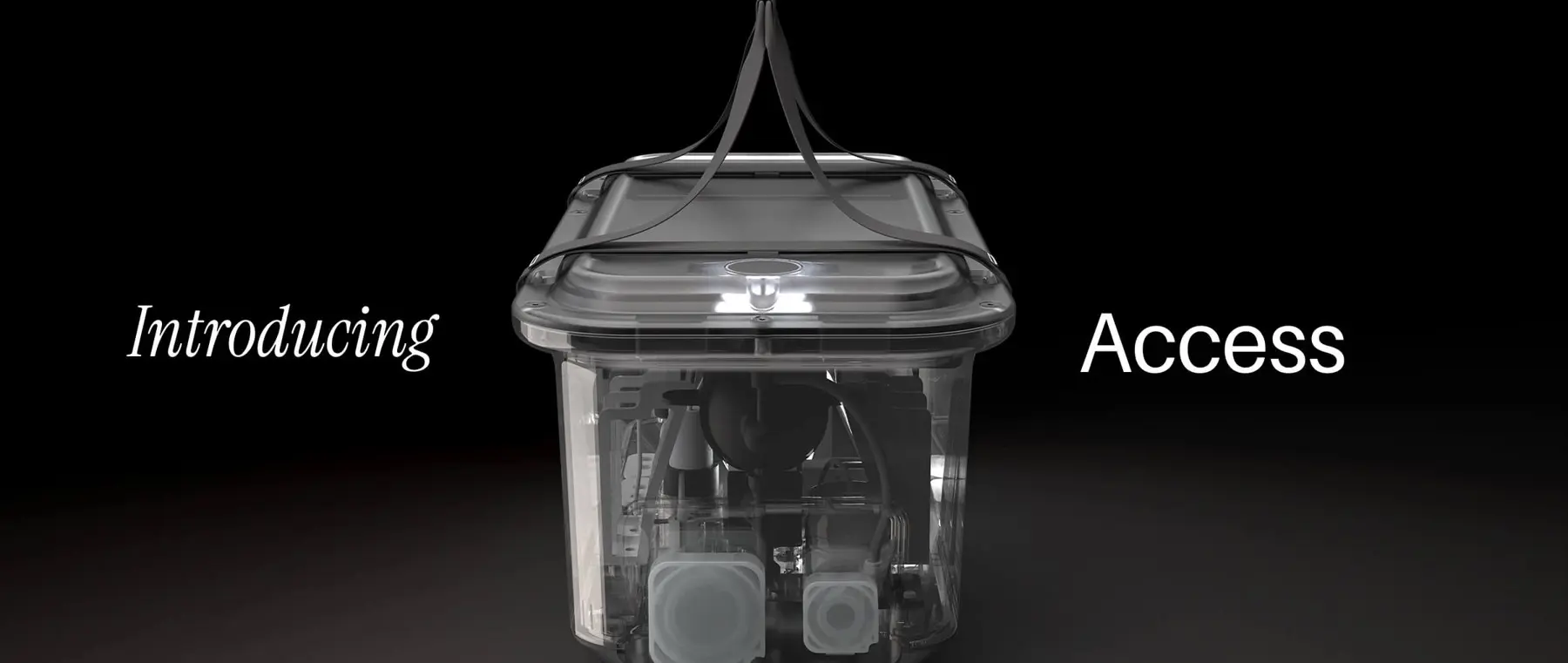
Vital Lyfe has brought its Access water-purification system into the marine industry conversation following the company's appearance in the METSTRADE 2026 start-up programme. The supplier presents Access as a portable, self-contained unit capable of processing seawater and contaminated freshwater without the permanent plumbing arrangements associated with many conventional yacht watermakers. Its published specifications list a weight of approximately 11.3 kilograms and a body measuring roughly 508 by 230 by 205 millimetres. For owners of luxury dayboats and mid-size cruising yachts, the appeal is easy to understand: a watermaker that can be carried between vessels or taken ashore is different from a fixed installation sized for continuous household demand. However, portability must be assessed alongside throughput, energy use, filtration maintenance and the requirements of safe drinking-water production.
The specified rates are meaningful but limited
Vital Lyfe lists a seawater production rate of approximately 22.7 litres per hour and a freshwater treatment rate of roughly 45.5 litres per hour. The distinction reflects the greater energy and pressure required to remove dissolved salts from seawater compared with treating a less saline source. These figures should be understood as manufacturer specifications under stated test conditions, not as guaranteed output in every harbour, temperature or water quality. The company's technical information refers to seawater at approximately 32,000 parts per million total dissolved solids when discussing energy use. Extremely turbid or contaminated feedwater can create additional maintenance needs. On a 20-metre yacht, the system might provide a useful supplemental supply or emergency flexibility, but its rated production is not comparable with a large professionally installed plant designed to meet showers, laundry and galley demand for a substantial guest complement.
What is contained in the unit
The product materials describe a membrane-based purification process supported by a pump, electronics and an integrated battery. Vital Lyfe also refers to ultraviolet treatment, sensors and a water-quality monitoring system on its more detailed product page. The supplier publishes a nominal salt-rejection figure above 99.5 percent. That specification addresses dissolved salt removal, but it should not be interpreted as a blanket certification that any unknown water source can be consumed safely under every circumstance. Water treatment is affected by contamination type, membrane condition, handling and storage after production. Owners should request independent performance and safety certifications appropriate to their intended application, together with clear instructions for flushing, cleaning and replacing consumables. A portable device is particularly likely to encounter variable sources, making disciplined operating procedures essential.
An onboard battery changes the installation equation
According to the product's published figures, the integrated battery provides approximately an hour of operation under specified conditions, with a stated operating requirement near 200 watts and support for external electrical power. This offers a different operating pattern from a conventional installation connected permanently to the vessel's electrical and water systems. A crew member may be able to deploy the unit for a specific task without initiating a large generator solely for a modest amount of water. But the total energy balance remains relevant. Recharging the internal battery still requires power, and the unit's actual freshwater output depends on the source and operating conditions. A yacht already equipped with solar panels or a suitable DC system may find external power practical, provided voltage compatibility, protection and safe connections are verified through the manufacturer.
Why a removable watermaker can be useful
A fixed marine watermaker is part of the vessel's plumbing and generally requires carefully planned seawater intake, filtration, discharge, storage and access for service. The Access concept shifts some of that complexity into an enclosed box, potentially giving owners more flexibility during short trips, maintenance periods or visits to remote locations. The manufacturer emphasises use both aboard and ashore, a feature that may appeal to crews supporting tenders, beach excursions or temporary shore facilities. These applications should not be confused with a claim that the device meets the needs of a remote residence or a full crewed yacht on its own. The practical benefit will depend on how easily feedwater is collected, how purified water is transferred into clean containers and what maintenance is necessary after exposure to sand, salt and other contaminants.
The importance of post-treatment handling
Producing purified water is only part of a safe supply chain. Storage containers, hoses and taps can introduce contamination if they are not maintained appropriately. A portable machine may encourage ad hoc use, so the operator should have a routine for keeping clean-water and feedwater components separate. The supplier's claims concerning filtration capability and ultraviolet treatment need to be interpreted within the actual process described in its manual. Owners should not use unverified water as drinking water merely because a device has produced a clear-looking output. Appropriate testing and manufacturer guidance are particularly important after long storage or when the unit is being used in an unfamiliar environment. Those precautions do not diminish the product's potential; they are what allow a compact system to be used responsibly rather than simply conveniently.
Durability claims for marine environments
Vital Lyfe lists environmental protection including an IP66-related rating and resistance to shock, vibration and ultraviolet exposure. Such specifications are relevant because equipment used on deck or carried into a tender is exposed to much more than the controlled conditions of a domestic kitchen. However, an environmental protection rating does not make a unit immune to accidental immersion, improper storage or damage to fittings. Buyers should verify the exact certification language and the operating temperatures and conditions permitted by the manufacturer. Carrying handles, hose connections and battery contacts deserve close attention during a product demonstration. A portable watermaker that is difficult to lift securely or has vulnerable external fittings may offer less practical benefit than its compact dimensions initially suggest.
Timing and commercial availability
The company's product page describes a pre-order process and lists an indicative US price around $749, with shipping arrangements beginning in the United States and international expansion dependent on the market. These details are time-sensitive and should be confirmed directly before purchase. A product shown at a trade exhibition may not yet have established a widespread marine service network or stocks of consumables in every cruising destination. A buyer who relies on the unit for a particular voyage should confirm not just when it can be delivered, but also what replacement membranes, filters or components will be available while abroad. The presence of a refundable reservation option is not the same as evidence that an individual unit has been shipped or that its performance has been independently demonstrated in long-term marine service.
A potential role beside conventional systems
For a small owner-operated cruiser, the Access system could serve as a supplementary source during extended anchoring or as an option when the vessel is away from shore-side water facilities. For a larger luxury yacht, its more likely role would be flexibility and backup rather than replacement of the primary plant. A useful purchasing calculation would compare the expected water requirement per day against the rated output, the battery's available duty cycle and the time required for maintenance and recharge. A few tens of litres can be significant for drinking and food preparation; they are a small fraction of the water used by several people showering. An owner should define the intended task before deciding whether the product solves it. Portability is only valuable when the operating method fits the real cruising routine.
What METSTRADE exposure means
The unit was discussed among technology-driven marine start-ups participating in the 2026 exhibition programme, bringing it to the attention of builders, dealers and yacht owners seeking alternatives to established onboard equipment. Exhibition exposure is a useful way to invite scrutiny, but the more demanding phase follows: repeated use in harsh conditions, transparent performance information and effective after-sales support. Vital Lyfe's compact form, published treatment rates and battery-powered operation make it a product worth investigating for yachts that cannot justify or accommodate a conventional permanent plant. Buyers should approach the promise of clean water anywhere with appropriate technical questions. The most valuable innovation will be the one that delivers predictable performance and safe handling when the novelty of the portable design has passed.
Sources and image credits
Reporting based on Vital Lyfe official Access detailed 2026 engineering specifications, Vital Lyfe official Access product order and specification page.
Lead photograph: Vital Lyfe Access portable reverse-osmosis watermaker official product photo. Vital Lyfe, original Access watermaker manufacturer photograph on the official 2026 product page. Original official image source.