Luxury Yacht Guide News | 21 November 2026
High-load blocks enter the METSTRADE conversation
Italian sailing hardware specialist UBI Maior has used its presence at METSTRADE 2026 to draw attention to a line of high-load blocks for increasingly demanding cruising and performance sailing yachts. Industry coverage during the November Amsterdam show identified the Ultra range and X3M Flight snatch-block family among the company's products. The manufacturer's official catalogue and X3M technical pages provide the more useful detail, describing carefully machined components, specialist bearings and textile attachments designed to manage substantial rig loads while limiting unnecessary weight and bulk. The story matters for the 12-to-24-metre luxury sailing market because deck and rigging hardware can strongly influence how comfortably an owner and small crew operate a large sail plan. A block is a relatively small component, but its friction, dimensions and load rating can affect the equipment around it, including winches, line leads and supporting deck structures.
Why the load-to-weight ratio matters
On a sailing yacht, blocks redirect the force carried by a rope. Depending on their position, they may be subjected to considerably greater loads than the line's apparent tension suggests. At the same time, their weight can become significant when equipment is positioned high on a mast or repeated across multiple control systems. Designers therefore seek a combination of strength, low friction and appropriate dimensions rather than the heaviest possible fitting. UBI Maior presents the X3M Flight family as intended to support very heavy loads with an attractive relationship between rating, weight and available space. The manufacturer's catalogue provides a broad working-load range across sizes, but this does not mean any individual block can handle the maximum figure listed for the family. Proper selection requires reference to the exact model, line direction and anticipated dynamic loads.
The X3M Flight structure
The company's technical description identifies components made from AISI 316 stainless steel, optional titanium and 6082T6 aluminium alloy with silver-ion anodising. It also describes a resin body designed to contain and guide the rigging. The X3M range relies on machined load-bearing pieces rather than treating the housing as a purely decorative shell. That design philosophy reflects the challenges of transferring force reliably through a compact assembly. For a customer, it is worth understanding the difference between the load-bearing metal elements and the surrounding form, which may have a different material and function. A block can look substantial without being rated for the intended application, or look relatively light while relying on a well-considered internal load path. The manufacturer's stated materials offer a starting point for technical evaluation, not a replacement for the actual product data sheet.
Textile attachment and the T-bone fixing
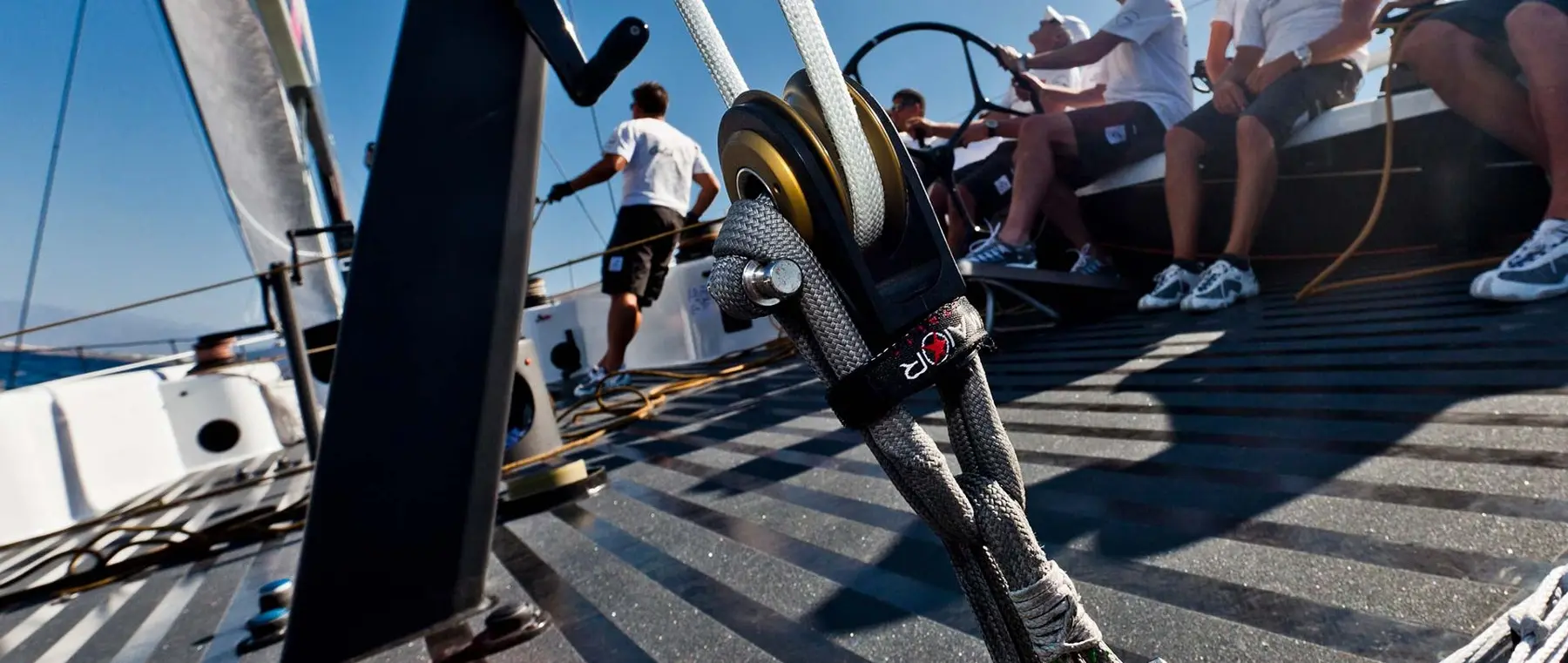
Rather than relying on a conventional metal shackle for every application, the X3M Flight arrangement uses a covered unidirectional Dyneema loop in combination with a steel T-bone fixing system. The manufacturer says this approach helps centralise the load and supports the geometry needed for a compact, efficient block. Textile connections can save weight and offer flexibility in how a component is mounted, but they demand their own maintenance practices. Chafe, ultraviolet exposure, correct orientation and periodic inspection are important. A textile loop is not inherently safer or less safe than an appropriately sized metal fitting; suitability depends on its rating and the intended environment. Owners should follow the manufacturer's installation instructions, confirm how the loop is to be secured and replace consumable components according to their condition rather than wait for a visible failure.
Bearing choices and friction control
UBI Maior describes technopolymer bearing components intended to cope with substantial primary and lateral loads without demanding the maintenance associated with some more complex roller arrangements. A high-load sheave must continue rotating efficiently while a rope is under tension, because unwanted friction increases the work demanded of winches and can make sail adjustments less predictable. Bearing technology therefore affects both performance and the feel of the yacht's controls. The company says the construction can accommodate heavy static loads and offers reduced maintenance, but actual service life depends on installation quality, line routing and exposure. A block that is frequently subjected to sideways loading beyond its intended geometry may wear rapidly despite sophisticated materials. Selection should therefore include the angle through which the rope changes direction, not only the headline capacity.
The distinction between X3M S and X3M SO
The supplier's official range describes soft blocks and snatch-block variants, allowing riggers to choose between different installation and handling arrangements. A snatch block can be especially useful when a line must be redirected temporarily without being threaded through a permanently enclosed assembly. This flexibility may help a crew adjust sail-handling arrangements for a particular passage or sailing condition. Yet any opening mechanism introduces additional design considerations: the side plate must remain secured under load, and the line must be positioned correctly before tension is applied. Riggers should confirm the manufacturer-approved operating sequence and limits rather than assume that every type of snatch block is interchangeable. For owner-operated luxury yachts, clear procedures are particularly important when people who do not routinely handle racing hardware may be participating in a sail change.
Ultra blocks address demanding racing use
The company's wider Regata Ultra range reflects a related focus on reducing size and weight while accommodating high loads. The catalogue gives examples with sheaves from 55 to 120 millimetres and working loads increasing across the product family. The design uses machined aluminium components and textile attachments intended to place the connection close to the primary load path. Such hardware is associated with demanding performance boats but can also be relevant to fast luxury cruisers carrying modern sail plans. The distinction between racing and cruising applications should nevertheless remain clear. A race team may accept specific maintenance or replacement intervals in pursuit of marginal gains, while a family cruising yacht may prioritise a longer service interval and widely available spares. The right block is the one that meets the actual operating requirement, not necessarily the lightest item on the catalogue page.
Fittings as part of a complete rig system
Replacing one deck block with a high-specification alternative can be worthwhile, but it should be considered within the entire line-handling arrangement. A lower-friction block may change how much load reaches a winch or clutch, while different attachment geometry can alter the position of a sheet or halyard. The deck fitting or mast bracket must be capable of carrying the forces involved. On a sizeable sailing yacht, the interaction among blocks, ropes, winches and sail shapes is complex enough that professional rigging advice is often appropriate. UBI Maior's product pages provide information about materials and ratings, but they cannot determine the correct installation for an unknown boat. A prudent owner should have a rigger calculate or verify the relevant loads before purchasing new equipment.
The role of specialist manufacturers at METSTRADE
A trade show devoted to marine equipment is an effective place to present products that require detailed technical conversation rather than a short public display. Builders, mast makers and professional riggers can inspect components, compare fitting options and ask about material choices and support. The X3M Flight family is not necessarily a brand-new invention unveiled for the first time during November 2026; its established product documentation predates the exhibition. The current industry story is the manufacturer's renewed presentation of those options and the way they fit contemporary high-load deck systems. Accurate coverage should distinguish that exposure from a claimed first launch. For buyers, the practical benefit of an exhibition is the ability to discuss their own requirements with a supplier rather than purchase a block solely from its appearance in a photograph.
What luxury yacht owners should verify
Before ordering hardware of this kind, owners should confirm the exact working-load rating, compatible rope diameter, bearing arrangement, permitted attachment geometry and inspection schedule. The availability of replacement textile loops and the support network in likely cruising regions may be as important as the purchase price. Products mounted near the masthead can be difficult to inspect at sea, giving reliability and traceability additional value. UBI Maior's high-load ranges demonstrate continuing innovation in components that rarely receive the publicity of a new yacht model. Their significance lies in the way precise engineering can reduce friction, improve handling and make powerful sail plans more manageable. For Luxury Yacht Guide readers, that is a useful reminder that a yacht's daily character depends on the quality of many small fittings as much as on the decisions visible in its overall design.
Sources and image credits
Reporting based on UBI Maior Italia first-party X3M Flight manufacturer technical specifications, Yachting News first-hand METSTRADE 2026 company product show coverage, November 2026.
Lead photograph: UBI Maior X3M Flight high-load sail block, official product demonstration photograph. UBI Maior Italia, original manufacturer X3M Flight product image. Original official image source.