Luxury Yacht Guide News | 21 November 2026
A familiar piece of yacht equipment is redesigned
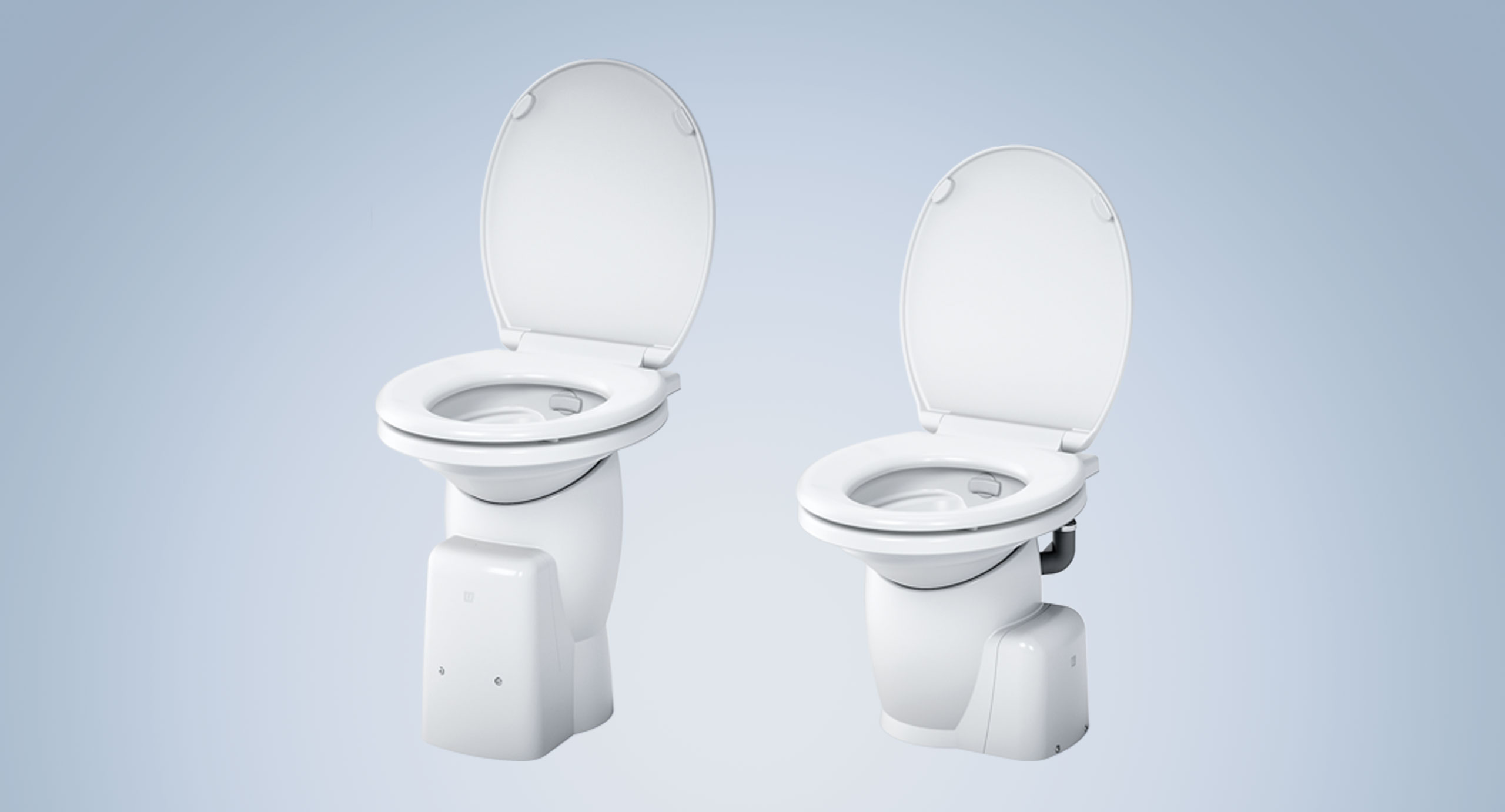
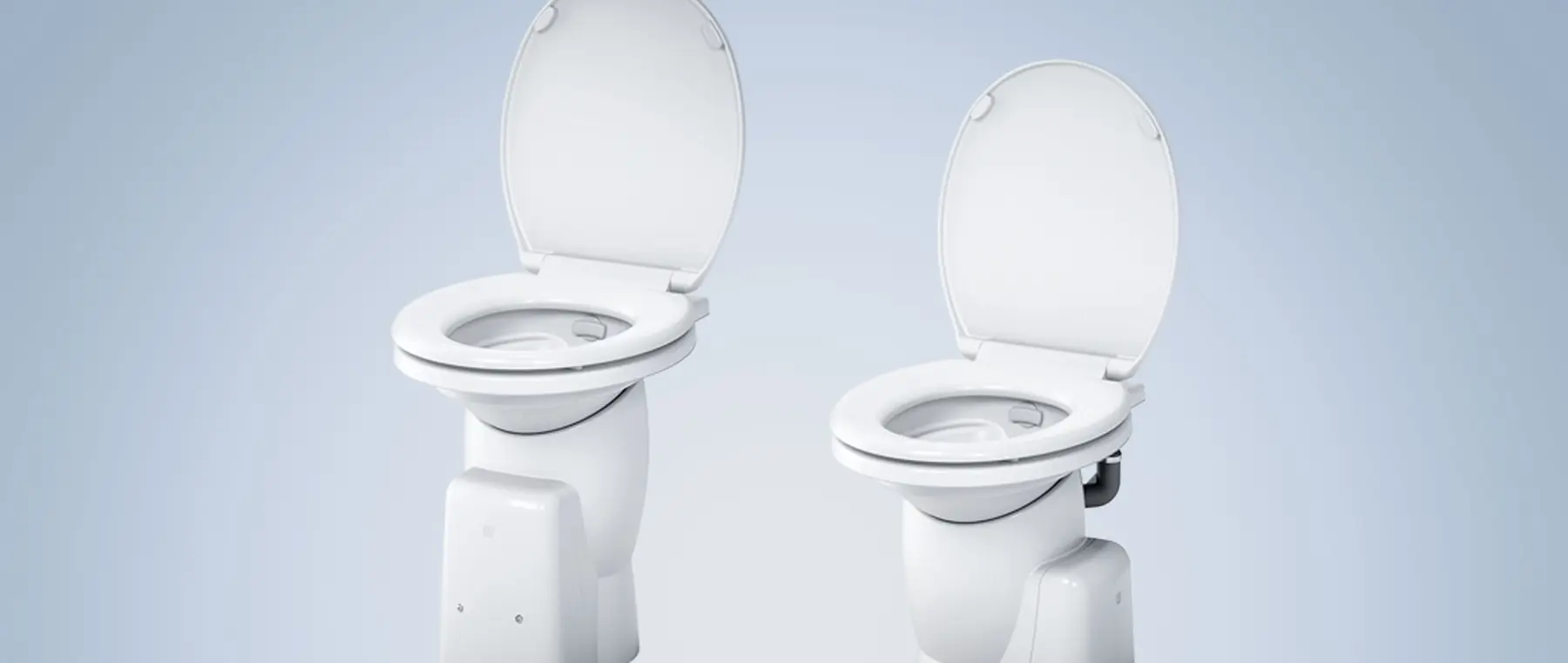
VETUS has introduced Remo, an electric marine toilet built around a modular design that allows owners and boatbuilders to change the way the unit is mounted and maintained. The manufacturer announced the system on 12 November 2026 before presenting it at METSTRADE in Amsterdam from 17 to 19 November. Remo is described as the first member of a wider modular toilet family and is intended to offer more flexibility in the small but frequently used bathrooms aboard boats. VETUS claims that the chosen material construction makes the unit approximately 50 percent lighter than a conventional ceramic toilet and that an eco-flush mode can reduce water consumption. Those features may appear modest beside a new propulsion system, but sanitation equipment is fundamental to comfort and reliability on a luxury yacht. A well-designed toilet should work predictably, remain serviceable and fit the actual space available rather than force the accommodation plan to revolve around a standard fixture.
Why mounting flexibility matters
A yacht bathroom must accommodate more than the toilet. It needs sensible circulation, safe handholds, adequate headroom and access to other fixtures even when the boat is moving. The hull's curvature, tank positions and plumbing routes can make a small compartment difficult to design. Remo is presented as a modular solution in which the bowl may be fitted in multiple fixed orientations and installed directly on the floor, on a raised step or at a different height. This flexibility allows a builder to consider the position of the user and surrounding fittings more carefully. It does not mean the toilet can simply be mounted anywhere without checking plumbing, structural support and clearance. The more important point is that the equipment becomes adaptable to the layout, rather than requiring every boat to be arranged around an identical ceramic shape.
The relevance of a lighter fixture
According to VETUS, the unit's materials allow it to be approximately half the weight of a conventional ceramic toilet. The manufacturer does not present that comparison in the brief announcement as a universal figure against every ceramic product, so prospective buyers should request the actual weight of the configuration they intend to order. Weight savings matter more in some locations than in others. A compact cruising sailboat may benefit from every reduction in installed mass, while a substantial motor yacht may place greater emphasis on durability and ease of installation. Lighter equipment can also be easier for technicians to bring through narrow doors and service openings during a retrofit. However, a lightweight fixture still needs to be stable, comfortable and resistant to normal impacts. Material choice is valuable only when those essential qualities remain satisfactory.
Modular parts and the repair problem
The Remo design is intended to allow individual modules to be serviced or replaced without discarding the entire toilet. This can be a meaningful advantage aboard yachts because access to sanitation equipment is often awkward and a failed small component may otherwise require an expensive replacement or major disassembly. The manufacturer presents modular construction as a way to lower maintenance time and reduce unnecessary waste. Its effectiveness will depend on whether the components remain available throughout the vessel's service life and whether they are genuinely accessible once installed. A boatbuilder should be wary of enclosing a theoretically replaceable module behind permanent furniture. Owners should request a maintenance diagram showing the room required to remove each part and confirm which replacement parts will be stocked by service agents in likely cruising regions.
Water use and holding-tank autonomy
VETUS describes an eco-flush mode intended to reduce freshwater consumption. Such a feature can be valuable where the toilet is connected to the domestic water system and the vessel relies on limited tankage or watermaker capacity. Every litre saved may help extend a period at anchor, but the actual benefit depends on the volume used per flush, how often the fixture operates and the size of the holding tank. An owner should ask for documented figures for normal and economy operation rather than infer a precise saving from the existence of an eco setting alone. Low water use is not automatically better if it compromises the ability to move waste reliably through the piping. The right balance depends on pump design, hose runs, treatment equipment and the crew's maintenance procedures.
Noise is part of the hospitality experience
Electric toilets can be particularly noticeable in small cabins at night. A motor and discharge pump that are only briefly active may still disturb occupants in neighbouring spaces if vibration or noise is transmitted through the hull. VETUS highlights quiet operation as a design objective, reflecting the broader importance of acoustic comfort on luxury yachts. The announcement does not provide a universally applicable sound measurement under identical installation conditions, so the claim should be verified during an onboard demonstration. Pump mounting, hose routing, insulation and the stiffness of nearby structures can influence perceived noise. A technically quiet unit may become objectionable if fixed directly to a resonant panel. Boatbuilders and owners should therefore examine the complete installation rather than judging the fixture only as a standalone product.
A family of products rather than one rigid shape
Remo is described as the starting point for a larger modular toilet platform. That strategy could allow VETUS to use common components across units intended for different spaces, simplifying stockholding and potentially improving servicing consistency. It could also help builders accommodate varying design preferences without sourcing completely unrelated mechanisms for each yacht. However, the November announcement establishes only the first product and the intended architecture. It should not be read as a guarantee that every possible configuration is already available for ordering. A buyer should confirm the exact reference, orientation options and included equipment rather than assume future family members can be substituted later without modification. The benefit of modularity ultimately depends on how consistently the manufacturer maintains compatibility through subsequent product generations.
Installation choices for an existing yacht
Retrofitting a marine toilet can be more complicated than its compact dimensions suggest. The supply and discharge hoses must connect safely to the existing plumbing; electrical protection, pump capacity and seacock arrangements may need review. The location of the holding tank and any macerator can further influence pipe routing. A different bowl or base may expose older mounting holes that require proper sealing. Remo's variable orientation might make the physical fit easier, but it cannot bypass basic installation requirements. Owners contemplating a refit should obtain a competent technician's assessment, including the condition of old hoses and the suitability of the yacht's electrical system. A well-planned installation is especially important where access is limited or where work will be undertaken during a short maintenance period between cruises.
The environmental significance of repairability
Marine equipment sustainability is often presented through claims about alternative materials or reduced energy use, but the ability to repair an object is another important factor. Replacing a serviceable pump or valve rather than removing an entire fixture can reduce waste and avoid manufacturing a new assembly unnecessarily. Remo's modular architecture is intended to address that issue. Yet the overall environmental result depends on the durability of the materials, the actual number of repairs carried out and the availability of components over time. A system with many replaceable parts may still be wasteful if those parts fail prematurely or become unavailable after a few years. The manufacturer's design ambition deserves recognition, while its real benefit should be measured through years of maintenance experience.
A relevant launch for the luxury-yacht sector
The November launch at METSTRADE puts a familiar domestic system in front of boatbuilders, distributors and specialist service companies who must solve everyday problems across thousands of different vessel layouts. For a 12-to-24-metre luxury yacht, sanitation comfort can influence the guest experience as much as larger and more visible equipment. Remo's principal innovations concern installation flexibility, service access and an attempt to reduce weight and water use. Those are credible topics for marine equipment development, but they remain manufacturer claims until assessed in actual service. Prospective owners should ask for technical specifications, installation drawings and evidence of noise and flushing performance. The strongest result would be a fixture that crews rarely need to think about because it is quiet, reliable and straightforward to maintain.
Sources and image credits
Reporting based on VETUS original 12 November 2026 official Remo modular marine toilet press release.
Lead photograph: VETUS Remo official modular marine toilet product press photograph. VETUS, official manufacturer Remo modular toilet photograph, November 2026. Original official image source.